Water Purification System In Water Works

Okay, let’s talk about something you probably take for granted every single day. No, not your Wi-Fi signal. I’m talking about the magical, weird, and frankly heroic process ha...

Okay, let’s talk about something you probably take for granted every single day. No, not your Wi-Fi signal. I’m talking about the magical, weird, and frankly heroic process happening at your local water works. You know, the place that turns swampy lake juice into the crisp stuff you drink.
The Great "Yuck to Yum" Pipeline
Imagine if your tap water was just straight out of the river. You’d be drinking fish tears, old leaves, and probably a rogue shopping cart. Gross, right? That’s why the water treatment plant exists—to save you from that nightmare.
First up, we have the screening stage. Think of it as a bouncer at a very exclusive club. This giant metal grate says, “Sorry, sticks. Sorry, rocks. You’re not on the list.” It catches all the big chunks so your glass doesn’t come with a souvenir twig.
Must Read
Let’s Get Sedimental
Next, the water gets a little lazy. It flows into a huge basin where it just... chills out. All the heavy dirt and sand get tired of swimming and sink to the bottom. We call this sedimentation. I call it the “nap time” of the treatment process. The clean water on top? That’s the VIP section now.
But wait—it’s still cloudy, like a bad Instagram filter. We need to fix that.
The Chemistry Party (Featuring Alum)
This is where it gets weird. They add a chemical called alum. Don’t worry, it’s safe. Alum acts like a magnetic party host. It grabs all the tiny, floating dirt particles and says, “Hey, you. Come here. Let’s form a clump.” Those clumps are called floc. Sounds like a Dr. Seuss character, doesn’t it?
The floc gets heavy and sinks, just like your motivation on a Monday morning. The water now looks much clearer. But it’s still full of bacteria and tiny freeloaders.
The Sand Trap (Seriously)
Now, the water goes through a filter. Not a coffee filter—a giant bed of sand and gravel. Imagine crawling through a sandbox, but the sand is clean and it’s catching all the microscopic crud. Who knew sand could be so useful? This step snags over 99% of the remaining nasties.
The water is clear now. It looks beautiful. But it’s still technically raw. It needs the final boss battle.
The Disinfection Finale
Here comes the star of the show: chlorine. Or sometimes, ozone gas or UV light. This is the nuclear option for germs. It zaps bacteria, viruses, and parasites so hard they don’t even leave a forwarding address.
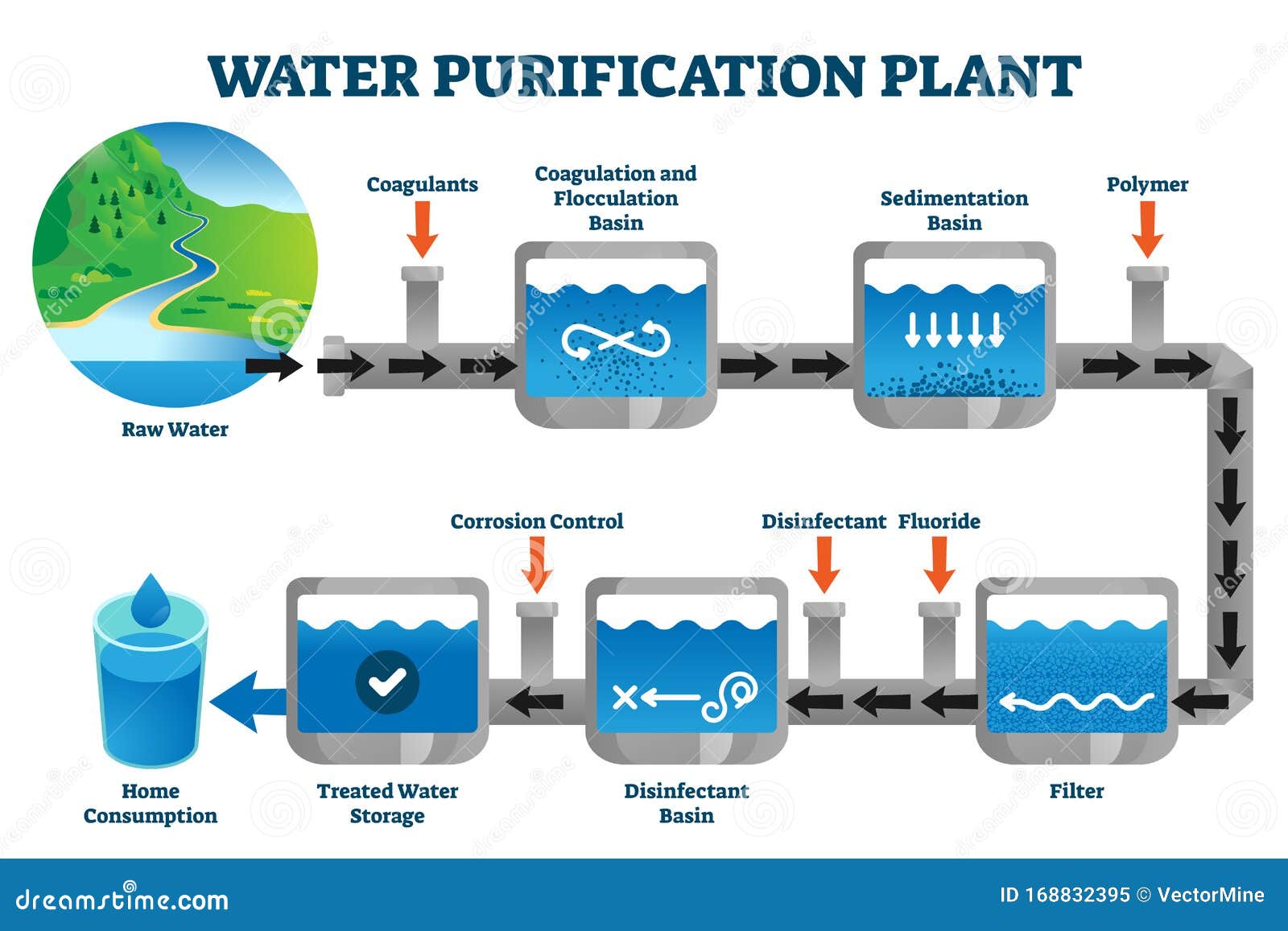 Filtration Process
And just for safety, they add a tiny bit of fluoride. That’s not for purification—that’s for your teeth. So when you brush your teeth with tap water, you’re basically giving your enamel a tiny bodyguard. Fancy, right?
That "Water Works" Smell
Ever drive past a water plant and smell that weird, clean pool smell? That’s the chlorine doing its job. But here’s a fun secret: they have to monitor that smell carefully. Too much, and your morning coffee tastes like a swimming pool. Too little, and your water is a petri dish. It’s a delicate balance of chemistry and vibes.
There are also those giant concrete tanks you see outside. Those are clearwells. They’re basically holding tanks where the water sits and says, “I made it. I’m clean now. Time to go to a sink.”
What About the Gunk?
So where does all the nasty stuff go? The sludge from the bottom gets pumped out and treated separately. In some plants, they even recycle that sludge into fertilizer or construction materials. Student: “What did you do with my dirty water?” Water Works: “I turned it into a brick.” Boom. Circular economy.
The "Oh No" Moments
But it’s not all smooth sailing. Water works have to deal with algae blooms in the summer. Imagine green slime clogging the filters. They have to add extra chemicals like a frantic chef fixing a burnt sauce. Or heavy rains can bring mud and fertilizer runoff. That’s a “red alert” day for the plant operators.
And you know what? They rely on you too. Pouring grease down the drain or flushing “flushable” wipes (they’re not flushable, folks) makes their job way harder. Be nice to the water works. They’re not asking for a valentine, just less kitchen sludge.
Why You Should Care
Look, water treatment is not sexy. It’s not a Tesla or a new iPhone. But it’s the reason you don’t get cholera every time you take a sip. It’s the reason your toilet doesn't smell like a swamp. It’s the unsung hero of modern life.
So next time you fill up your glass, give a little nod to the giant metal bouncers, the chemical party hosts, and the sandbox layers. They’re all working together to save you from a very, very bad day. Cheers to the water works—and to never tasting a leaf again.
