How Often To Replace Water Softener Salt

Let’s talk about salt. Not the kind you sprinkle on fries. We mean the chunky, mysterious stuff that lives in your water softener. It’s like a silent, bubbly spa for your pipe...

Let’s talk about salt. Not the kind you sprinkle on fries. We mean the chunky, mysterious stuff that lives in your water softener. It’s like a silent, bubbly spa for your pipes.
But here’s the question nobody asks at cocktail parties: How often should you replace it? The answer is both simpler and weirder than you think. Buckle up.
The Golden Rule: Don’t Let It Go Empty
You don’t replace salt on a strict calendar. You replace it when the tank looks sad. Imagine a hamster’s water bottle—if it’s dry, the hamster throws a tantrum.
Must Read
Your water softener is that hamster. It needs salt to scrub the hard minerals from your water. Run out, and you’ll get crusty showerheads and angry dishes.
Pro tip: Check the salt level once a month. Mark it on your fridge with a googly-eyed magnet. Seriously, do it.
Why “Replacing” Is a Slight Myth
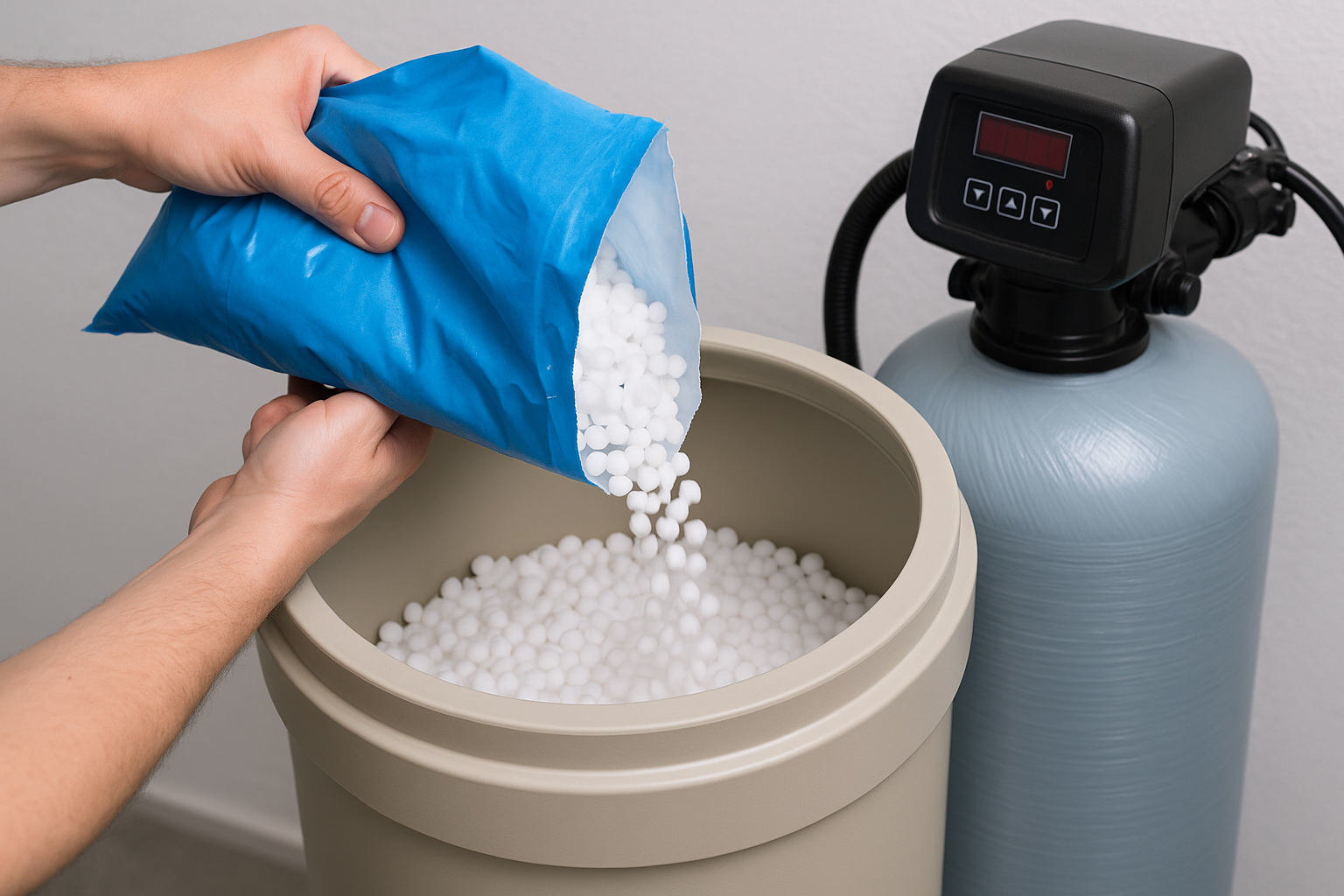
Here’s the fun part: you don’t actually replace the salt. You add to it. Think of your tank as a bottomless chip bowl. You eat chips (salt dissolves), and you add more chips.
The real job is keeping the salt level above the water. If it dips below, you get a gooey, salty mess called a “mushroom.” Yes, that’s the technical term.
A salt mushroom is not delicious. It’s a crusty boulder that clogs everything. Avoid it like cold pizza left out too long.
How Often? The Sneaky Math
A typical family of four uses about 10 to 20 pounds of salt per week. That’s roughly a bag of those fluffy, snow-like crystals every two to three weeks.
But wait—hard water changes everything. If your water is super-hard (like a diamond’s evil cousin), you’ll burn through salt faster. You might need a bag every week.
How do you know? Get a water hardness test. They sell cheap strips at hardware stores. It’s like a pregnancy test, but for calcium. Weirdly satisfying.
The Quirky Sign You’re Doing It Wrong
Look at your salt tank. See a solid, crusty bridge forming over the water? That’s called “bridging.” It’s the salt’s way of saying, “I’m sick of your neglect.”
Bridging means the salt can’t dissolve properly. Your softener panics. Fix it by gently breaking the crust with a broom handle—like cracking a frozen lake in a fairy tale.
If you hear a gurgling sound? That’s your softener crying for help. Or just a bubble. Don’t ignore it.
The “Every Season” Trap
You might think “I’ll just dump a ton of salt in once a year.” Bad idea. Salt doesn’t age well in a damp tank. It clumps faster than old sugar.
Instead, add salt every 4 to 6 weeks during normal use. In summer, when you use more water (spinklers, kids, random hose fights), bump it up to every 3 weeks.
 How Often to Replace Water Softener Salt: A Practical Guide - Custom
Winter? Your water usage drops, but salt can ball up in cold garages. Keep an eye on it, ya winter warrior.
The High-Tech Hack You Didn’t Ask For
Some modern softeners have a sensor that tells you salt is low. They beep or light up like a UFO. If yours does this, you win at life.
No sensor? No problem. Use the “poke test.” Whack a long stick into the salt. If you hit mush or water, time to add more. If it feels like a rock concert mosh pit? You’re good.
This is the most fun you’ll ever have with a stick and brine. Don’t overthink it.
The Strange Costs of Laziness
Running a softener without enough salt is like running a car without oil. It’s a slow-motion disaster. Your brine tank will fill with sludge, and the resin beads (the real heroes) get coated in calcium gunk.
Replacing those beads costs hundreds of dollars. That’s a lot of money for something you could have avoided by tossing in a $10 bag of salt every few weeks.
Your wallet will throw confetti. Your pipes will sing. Your glasses will sparkle like a vampire’s teeth.
The “But What Kind of Salt?” Magic
Not all salt is equal. Use solar salt (from evaporated seawater) for cleaner systems. Or evaporated salt (the pure, sparkly kind) if you’re fancy. Avoid rock salt—it’s dirty and leaves red gunk.
Also: never use table salt. That’s for fries, not frizzy water. Table salt has iodine and anti-caking agents that turn your softener into a science experiment gone wrong.
Think of it like this: your softener prefers the spa, not a greasy diner.
The Final, Most Important Rule
There is no perfect “every X days” schedule. Life is chaotic. You’ll forget. That’s okay. The key is to make checking salt a habit, like brushing your teeth but with more brine.
Set a phone reminder: “Salty check, bro.” Or tie it to something fun—like every time you binge a show, peek at the tank.
You are now a water softener whisperer. Go forth. Add salt. Save your pipes. And maybe high-five your shiny faucets.
