Disinfection Byproduct Reduction Product

Hey, let’s talk about something you probably never think about: disinfection byproducts. They sound like a villain from a sci-fi movie, right? But they’re actually tiny, pesky...
Hey, let’s talk about something you probably never think about: disinfection byproducts. They sound like a villain from a sci-fi movie, right? But they’re actually tiny, pesky chemicals that form when we clean our drinking water. It’s a classic “best intentions” problem—we add disinfectants to kill germs, and they have a little pool party with organic matter, creating unwanted guests.
These byproducts, like trihalomethanes (try saying that five times fast), aren’t exactly welcome at your dinner table. Studies link them to health risks, which is like finding out your favorite superhero has a secret evil twin. Don’t panic yet—your water is safe, but there’s a clever solution on the rise: the Disinfection Byproduct Reduction Product. Sounds fancy, but it’s basically a cool tool to boot those uninvited party crashers out.
What Exactly Is a Disinfection Byproduct Reduction Product?
Imagine a tiny water treatment hero that swoops in before the byproducts can form. That’s the core idea. These products use smart chemistry, like advanced filtration or specific additives, to remove the organic matter that feeds the byproduct party. It’s like cutting off the pizza supply before a frat house rager—no fuel, no mess.
Must Read
Some use activated carbon, which is like a sponge with a grudge against bad chemicals. Others employ ion exchange, where tricky ions get swapped out for harmless ones. The goal? Let the disinfectant do its germ-killing job without creating those awkward byproduct leftovers. Basically, you get clean water without the weird aftertaste.
Why Should You Care? (Hint: It’s Not Just for Lab Nerds)
You care because you drink water, take showers, and maybe even brush your teeth with the stuff. Those byproducts don’t just hang out—they can vaporize into your shower air and hitch a ride into your lungs. That’s right, your morning rinse could be a low-key chemical hotbox. No judgment, but you deserve a steam session that’s purely about relaxation.
Reduction products are popping up everywhere, from municipal treatment plants to fancy home water filters. If you’ve ever bought a pitcher filter that promises “better taste,” you’ve probably used a basic version of one. The advanced ones are like the VIP section of water cleaning—they remove more than just the chlorine smell.
Let’s be real: nobody wants to think about chemistry when they’re chugging water after a run. But knowing that a small gadget or smart treatment step is silently fighting off genetic-irritating molecules is kind of a relief. It’s like having a designated bouncer for your hydration.
The Playful Science Behind It
Here’s the fun part: the science includes a process called precursor removal. That’s a fancy way of saying, “We grab the ingredients that would make the bad stuff before they get cooked.” Think of it as hiding the eggs and flour before someone tries to bake a lumpy chemical cake. You’re not banning the oven (disinfection), you’re just being smart about the pantry.
Some products use ultraviolet light to break down byproducts after they form. UV is basically the tanning bed for water molecules, but way more productive. It zaps the bad guys into harmless bits, leaving your H2O as pure as a mountain stream (minus the altitude sickness). And no, you don’t glow in the dark afterward—promise.
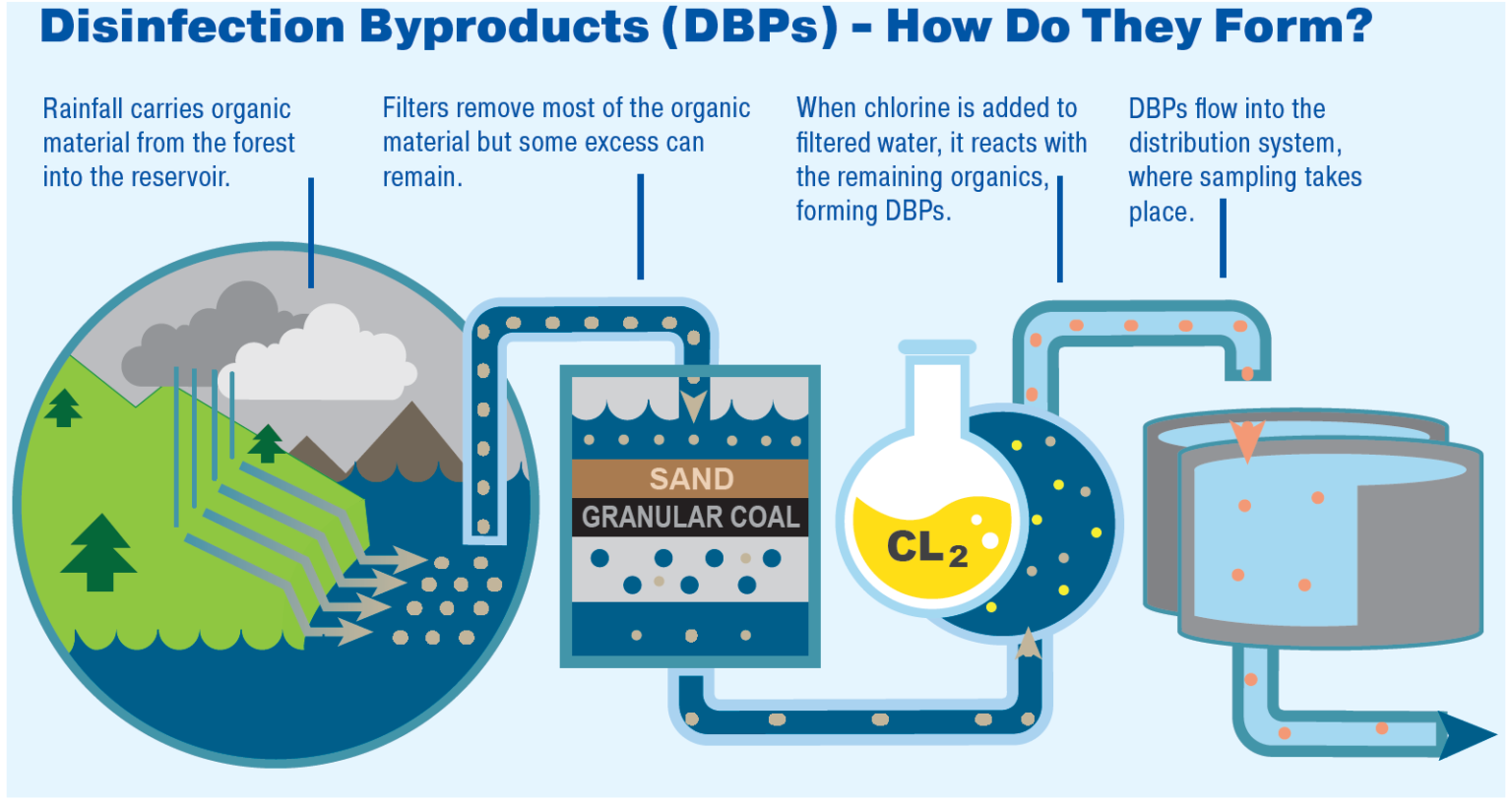
 Disinfection Byproducts - Calaveras County Water District
Another trick? Chlorine dioxide instead of regular chlorine. It’s like the cool, eco-friendly cousin of bleach. It forms way fewer byproducts and still keeps your water pathogen-free. Water treatment nerds call this “choosing your fighter,” and I respect that.
Real-Life Heroes: Where You’ll Find These Products
You’ll spot them in municipal water plants, where giant tanks hum quietly, doing the heavy lifting for millions of people. They look boring—just metal and pipes—but inside, they’re executing a highly choreographed ballet of chemical removal. Those engineers deserve a round of applause.
For home use, look for under-sink filters labeled “catalytic carbon” or “chloramine reduction.” They’re the ninjas of your countertop. Some even have real-time monitors that flash a little green light when the water is pristine. It’s like a mood ring for your tap.
If you’re on a well, these products are a game-changer. Well water often has higher organic matter, meaning more byproduct potential. A reduction system can turn your “eh, it’s fine” farmhouse water into something that rivals a boutique brand. Your coffee will thank you.
The Uplifting Conclusion (You Knew It Was Coming)
So here’s the beautiful truth: technology is making our water smarter. You don’t have to choose between safe and tasty, or between clean and healthy. The Disinfection Byproduct Reduction Product is like that friend who shows up with snacks, cleans up the mess, and leaves you feeling genuinely cared for. It’s a quiet, humble hero.
Next time you pour a glass of water, give it a little nod. Somewhere in that clear liquid, a chemical tug-of-war was won just for you. The byproducts lost, the germs lost, and you get to hydrate like a champion. It’s a small victory, but it’s yours. And honestly, isn’t it nice to know that even the invisible things in life can be fixed with a bit of cleverness and a dash of good humor?
So here’s to clean water, clear minds, and the unsung products that make both possible. Go drink up—you’ve earned it. And if anyone asks why you’re smiling into your glass, just say you’re appreciating a byproduct-free life. They’ll either get it or think you’re a water sommelier. Either way, you win.
