Whole House Well Water Treatment Systems

Let me tell you about the day I discovered my water smelled like a swamp creature’s bathwater. I’d just moved to a charming little house with a well, and after a month, my mor...

Let me tell you about the day I discovered my water smelled like a swamp creature’s bathwater. I’d just moved to a charming little house with a well, and after a month, my morning coffee tasted like rusty pennies dipped in pond scum. That’s when I learned the joyful reality: you are on your own, pal. You’ve become the mayor of your own water district, with all the thrilling responsibilities—like fighting off invisible iron monsters and sulfur demons.
The Dirty Truth About Well Water
First, let’s get one thing straight: well water is not magic bottled water from a fairy spring. It’s groundwater that has been romping through dirt, rock, and ancient mineral deposits for years. One study found that nearly 40% of private wells contain contaminants at levels that would make a municipal water inspector faint dramatically. You might get iron that turns your bathtub orange, or hydrogen sulfide that makes your water smell like farts. Yes, I said farts. Geology is rude.
Surprising fact: The “rotten egg” smell is actually caused by sulfur-loving bacteria that live inside your well. They’re not evil—they’re just partying in the dark, releasing gas like a frat house at 2 AM. You can shock the well with chlorine, but they’ll be back. They always come back.
Must Read
Your Enemy List: Iron, Manganese, and Hardness
Iron is the most common villain. It turns your water reddish-brown, stains your laundry, and makes you look like you’ve been in a terrible accident with rusted pipes. Manganese is its sneaky cousin—it leaves black stains that look like mold but are actually science being difficult. And hardness? That’s calcium and magnesium building up inside your water heater until it sounds like a dying robot every time you shower.
Here’s the kicker: most well water isn’t dangerous—it’s just deeply annoying. You won’t die from rusty-looking water, but you might die of embarrassment when guests ask why your white socks are now brown. The EPA regulates public water, but your well? That’s between you, God, and whichever local contractor you accidentally hire.
The Whole-House Fix: A Water Treatment System That Actually Works
Enter the whole-house well water treatment system. Think of it as a bouncer for your plumbing. It’s a series of tanks and filters installed right where your well pipe enters the house, tackling everything before it reaches your faucet. The basic setup usually includes a sediment filter, a water softener, and an iron filter—or a magical combo unit that promises to solve all your problems.
Playful exaggeration alert: Some systems look like a mini sci-fi lab with giant blue tanks, digital screens, and enough plumbing to make a plumber weep with joy. I saw one that had a UV light sterilizer—basically a tanning bed for your water to kill bacteria. Your water gets a spa day before it touches your coffee cup.
How It Works (Without Boring You to Death)
The water first hits a sediment filter—a big screen that catches sand, dirt, and small rocks. Then it travels into a water softener, which swaps calcium and magnesium for salt. This stops your pipes from scaling up like a prehistoric fossil. Next, the iron filter uses air or chemicals to turn dissolved rust into solid particles it can catch. Some systems even add a carbon filter to remove that lovely fart odor.
And for the truly paranoid? A reverse osmosis system for your kitchen sink, which pushes water through a membrane so tight it can’t even pass a virus. It’s like a bouncer who checks DNA at the door. But whole-house? That’s overkill unless you’re building a pharmaceutical cleanroom.
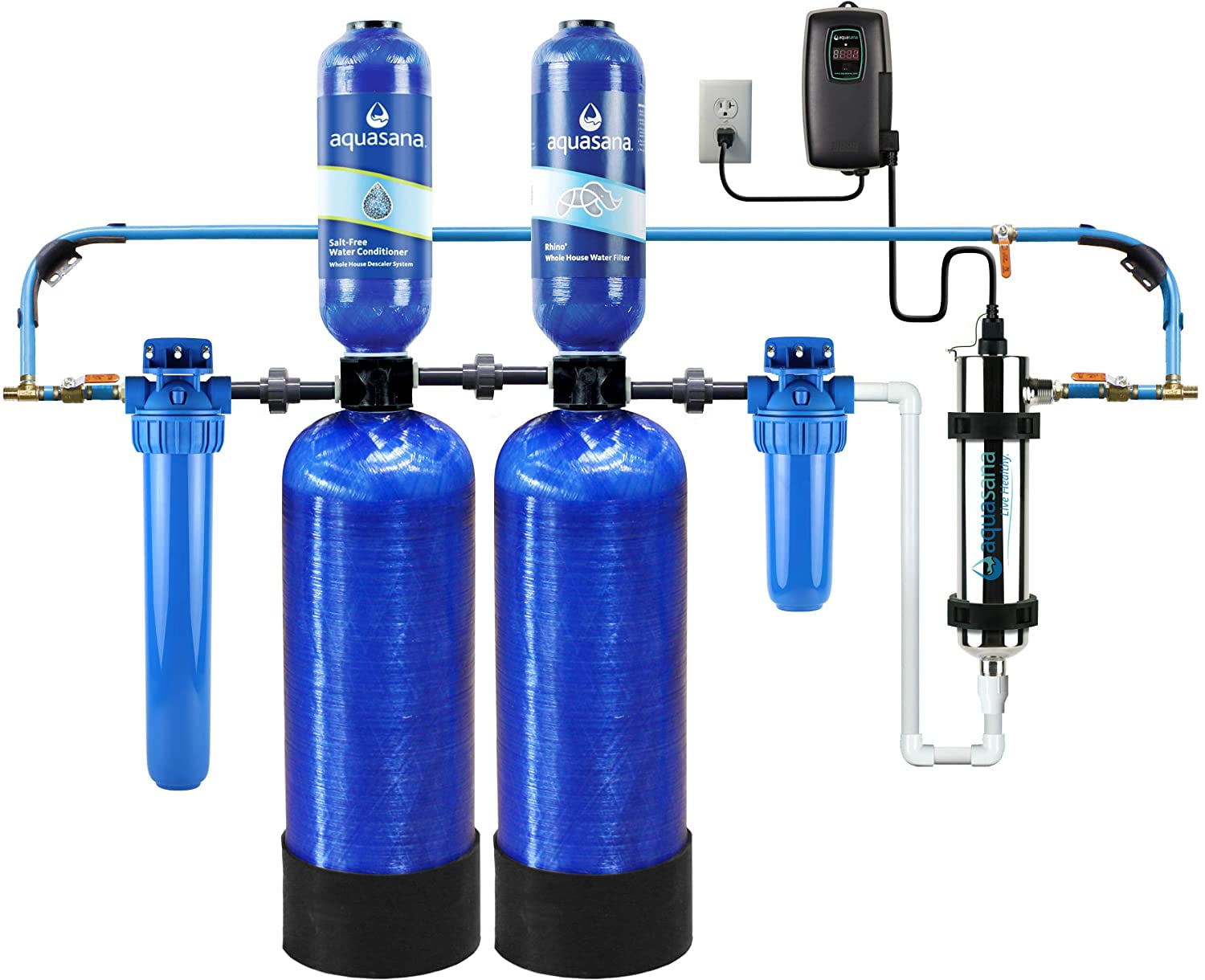 Buy Aquasana Whole House Well Water Filter System - Water Softener
The Cost: Your Wallet Will Cry, But Your Skin Will Thank You
Here’s the part where I make you laugh nervously: a decent system costs between $1,500 and $5,000 installed. That’s the price of a used sedan or a small indie film budget. But if you neglect it, your water heater will die in five years instead of fifteen, and your faucets will look like they’re from a rusty shipwreck. I replaced a water heater that had six inches of rock-hard mineral scale inside. It was like a stalactite from hell.
Surprising fact: Hard water can reduce your appliance efficiency by up to 50%. Your washing machine is basically pumping rusty mud around your clothes. Do you want to win that argument? I didn’t think so.
DIY vs. Pro: The Sad Reality
Could you install this yourself? Sure, if you enjoy swearing and leaking. Most systems require cutting into your main water line, running drain lines, and programming a control head that speaks in cryptic symbols. I tried it once. My neighbor called the fire department because my yard looked like a geyser. Hire a pro. It’s like heart surgery—you can technically do it, but the YouTube video won’t have your back when you’re bleeding.
But wait, there’s more! You also have to maintain the system. The salt tank needs filling, the filter cartridges need replacing, and the iron filter might need media renewal every ten years. It’s a small price for the joy of not drinking swamp juice. Think of it as a house plant that requires a PhD to keep alive.
The Final Verdict: Is It Worth It?
Yes, absolutely, unless you enjoy showering in a science experiment. Clean water changes your life. Your skin stops itching, your coffee tastes like actual coffee, and your friends stop making jokes about your “antique” laundry. Whole-house treatment is the unsung hero of rural living. It’s not sexy, but neither is explaining why your ice cubes are brown.
One last joke: After I installed my system, I sent a water sample to a lab. The report came back: “Water quality: Excellent. Rust content: Zero. Fart gas: Defeated.” I framed it. That’s how you know you’ve won the well water war. Now go forth, filter fiercely, and may your showers never smell like regret.
