Ultra High Purity Water Systems Designer

So, picture this: I’m staring at a vending machine in a biotech lobby, trying to buy a bottle of water. It costs three bucks. For water. And I think, “What a scam.” But then m...
So, picture this: I’m staring at a vending machine in a biotech lobby, trying to buy a bottle of water. It costs three bucks. For water. And I think, “What a scam.”
But then my friend—a process engineer—leans over and whispers, “That’s not just water. That’s Ultra High Purity Water. It’s worth more per gallon than almost anything else in this building.” I nearly choked on my overpriced sip.
That’s when I met the ghost in the machine: the Ultra High Purity Water Systems Designer. You’ve never heard of them, but they’re the ones making sure your microchips don’t explode and your dialysis machines don’t kill you. (Fun, right?)
Must Read
Wait, what is “Ultra High Purity” anyway?
Let’s get this straight: we’re not talking about filtered tap water. We’re talking about water so pure it’s basically aggressive. It will strip ions from metal pipes. It will grow bacteria just by looking at them wrong.
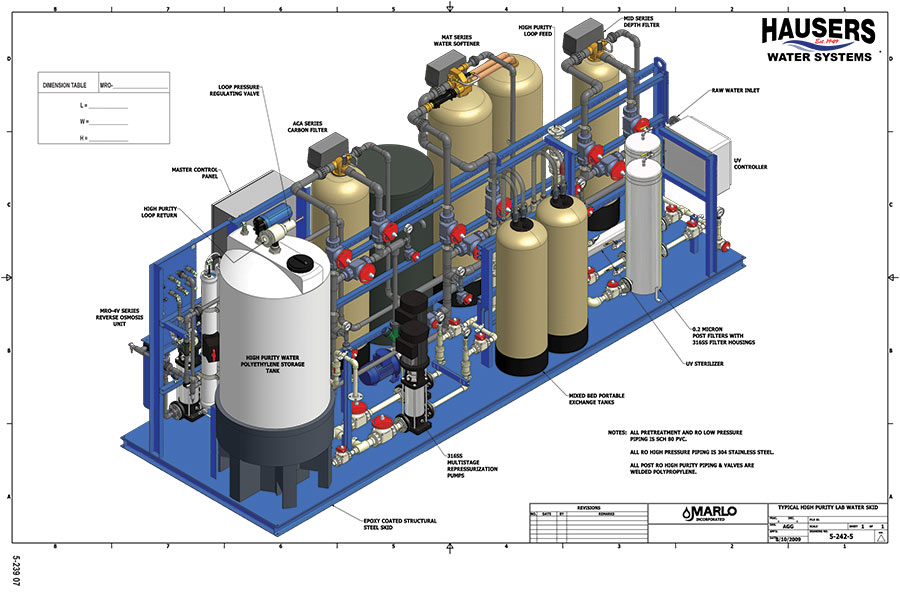
An Ultra High Purity (UHP) water system takes municipal water and runs it through a choreographed circus of reverse osmosis, UV light, deionization, and ozone. The result? Water with a resistivity of 18.2 megohm-cm. (If that number means nothing to you, just know it’s about as clean as water can physically get. Science, baby.)
The designer? They’re the ringmaster. They decide which filters, pumps, and monitors go where—and they make sure the whole thing doesn’t turn into a slime factory. Because it will, if you blink.
The real problem? Water is a brat.
Here’s the kicker: water wants to be dirty. Thermodynamically, pure water is a princess who gets angry the moment she’s left alone. She’ll absorb CO2 from the air and turn acidic. She’ll eat through your expensive stainless steel piping.
So a UHP designer spends half their time saying things like, “No, we can’t use brass valves—the copper will leach. And no, you can’t have a dead leg in the piping—bacteria will throw a party there.” It’s like being a plumber and a chemist and a witch doctor all at once.
I once overheard a designer mutter, “I don’t design systems. I design paranoid systems.” And honestly? That’s the job description.
So, what does a day in their life look like?
Picture a desk covered in P&IDs (piping and instrumentation diagrams) that look like a rainbow threw up on a blueprint. They’re calculating flow rates, pump head pressures, and the exact micron rating of a filter that will catch that one specific particle before it ruins a wafer fabrication.
Then they go on site. They stand next to a skid of equipment—full of tubes, tanks, and humming machines—and they put a hand on a pipe. “This feels warm,” they say. And the installer goes pale, because warm in a UHP loop means biofilms. It means flushing the whole system for a week. The designer just nods like a prophet delivering a warning.
They’re the ones who insist on electropolished tubing. Because regular pipe might leave a tiny scratch where bacteria can hide. Yes, it’s that ridiculous. Yes, it’s necessary.
 Resources | Atlas High Purity Water
Why should you care? (I bet you secretly do.)
If you’ve ever used a smartphone, taken a prescription drug, or had a blood test—you’ve touched the work of a UHP designer. All of that stuff depends on pure water. The chips in your phone? Fabricated in baths of UHP water. The vials for your vaccine? Rinsed in it.
And here’s the ironic part: nobody notices them. They’re like the stagehands of modern life. If they mess up, you get a recalled product or a contaminated batch. But if they get it right? You never even think about the water. It’s the opposite of glamorous.
But they love it. One designer told me, “I get a factory tour, and I see the whole line running smoothly. That’s my payoff. That, and the fact that nobody died.” Dark humor is a requirement for this job—seriously, don’t apply if you’re squeamish about temperature and conductivity logs.
The tools of the trade (you won’t believe #3)
So what’s in their toolbox? First, a good flow meter. They’re obsessed with flow velocity, because if water slows down, life finds a way. Second, a spreadsheet that should be encased in glass for how many variables it tracks. Third—and this is true—a flashlight. They shine it through the pipe to inspect the internal weld polish. I’m not kidding. They literally stare at a pipe with a flashlight to see if it’s shiny enough. It’s the most engineer thing I’ve ever heard.
They also carry a deep distrust of “water” in general. Once, a designer told me, “I don’t drink tap water anymore. I know too much.” I laughed, but I’ve since switched to bottled. Thanks for the paranoia, friend.
So, how do you become one?
Most start as chemical or mechanical engineers, then spend a decade regretting it before realizing pure water is actually a cool niche. (Or, they join a company that builds these systems and learn on the job by making mistakes in the test skid—not the real one. Ideally.)
You’ll need to know a bit about microbiology, a lot about chemistry, and the patience to argue with a client who wants to save $500 by using a cheaper pipe. Spoiler: that cheaper pipe will cost them $50,000 in downtime later. The designer will say “I told you so” with a smile.
And if you’re the kind of person who gets a weird thrill from looking at a perfectly polished stainless steel weld? Welcome home. You’ve found your people.
So next time you drop that three bucks on fancy water, remember: there’s a designer out there who sweats every drop. They’re the unsung heroes of the cleanest water on Earth—and they’ve probably got a flashlight in their car for emergencies. Respect the craft. And maybe don’t drink from the garden hose.
