Industrial Reverse Osmosis Water Systems

So, picture this. My cousin bought a shiny, expensive water pitcher because he was convinced his tap water tasted like a swimming pool. He’d proudly fill it up, wait ten minut...

So, picture this. My cousin bought a shiny, expensive water pitcher because he was convinced his tap water tasted like a swimming pool. He’d proudly fill it up, wait ten minutes, and drink his “purified” victory. Last week, he found a black, slimy film inside the reservoir. He almost gagged. He looked at me and said, “I feel like I’m just brewing bacteria tea.” That’s when I explained the difference between a cute gadget and a real Industrial Reverse Osmosis Water System. He was shocked. You mean there’s something that actually works?
That slimy film? That’s the natural result of a filter sitting in a warm kitchen. It’s a breeding ground for microbes if you don’t change it every two weeks. Industrial RO systems, however, are the heavy-lifters of the water world. They don’t play games. They handle thousands of gallons a day, choking out contaminants like a bouncer at a club full of heavy metals. Think of it as the difference between a toy water gun and a fire hose that saves lives.
How Do These Beasts Actually Work?
Okay, let’s get into the guts of it. The magic happens through a semi-permeable membrane—basically a super-thin, super-picky screen. You’ve got dirty water on one side, immense pressure pushing it through, and only the tiny water molecules make it to the other side. Everything else—lead, arsenic, chlorine, fluoride, even some viruses—gets kicked to the curb. It’s like playing “Red Rover” for water, but the contaminants are all stuck in the middle, screaming.
Must Read
Side note: You know how your mom told you that you can’t get water from a rock? Well, RO can get it from a runoff pipe. That’s how insane the pressure is. In industrial settings, they need that force—usually between 100 and 1,000 psi—to push through the buildup. Without that pressure, you’re just making dirty water wetter. Not helpful.
Why Do Factories Even Need This?
Think about a car factory. They use water to paint your car doors. If that water has even a hint of calcium or silica, the paint job looks like a leopard’s face after a rainstorm. RO systems strip the water dead clean. Same goes for pharmaceutical companies. They can’t have weird bacteria living inside your heart medication. One bad batch of water? That’s a lawsuit in a bottle.
But here’s the ironic twist: RO systems are also notorious water wasters. For every gallon of clean water they produce, they usually dump 2-4 gallons as “reject” water down the drain. I know, it sounds terrible. Wait, you’re saving water by wasting water? In a way, yes. But modern industrial systems are getting smarter. They recycle that reject water to flush toilets or cool machinery. It’s not perfect, but it’s leaps better than using bottled water for a whole assembly line.
What About Energy? (Spoiler: It’s a Beast)
Electricity bills are the villains of industrial RO. Pushing water through that membrane at high pressure is like trying to squeeze a watermelon through a straw. It takes real energy. A big system can eat up as much power as a small neighborhood. That’s why engineers are always arguing about “energy recovery devices.” Fancy gadgets that capture the leftover pressure from the reject stream and reuse it. It’s like turning your car’s exhaust fumes into free gasoline—if that were a thing.
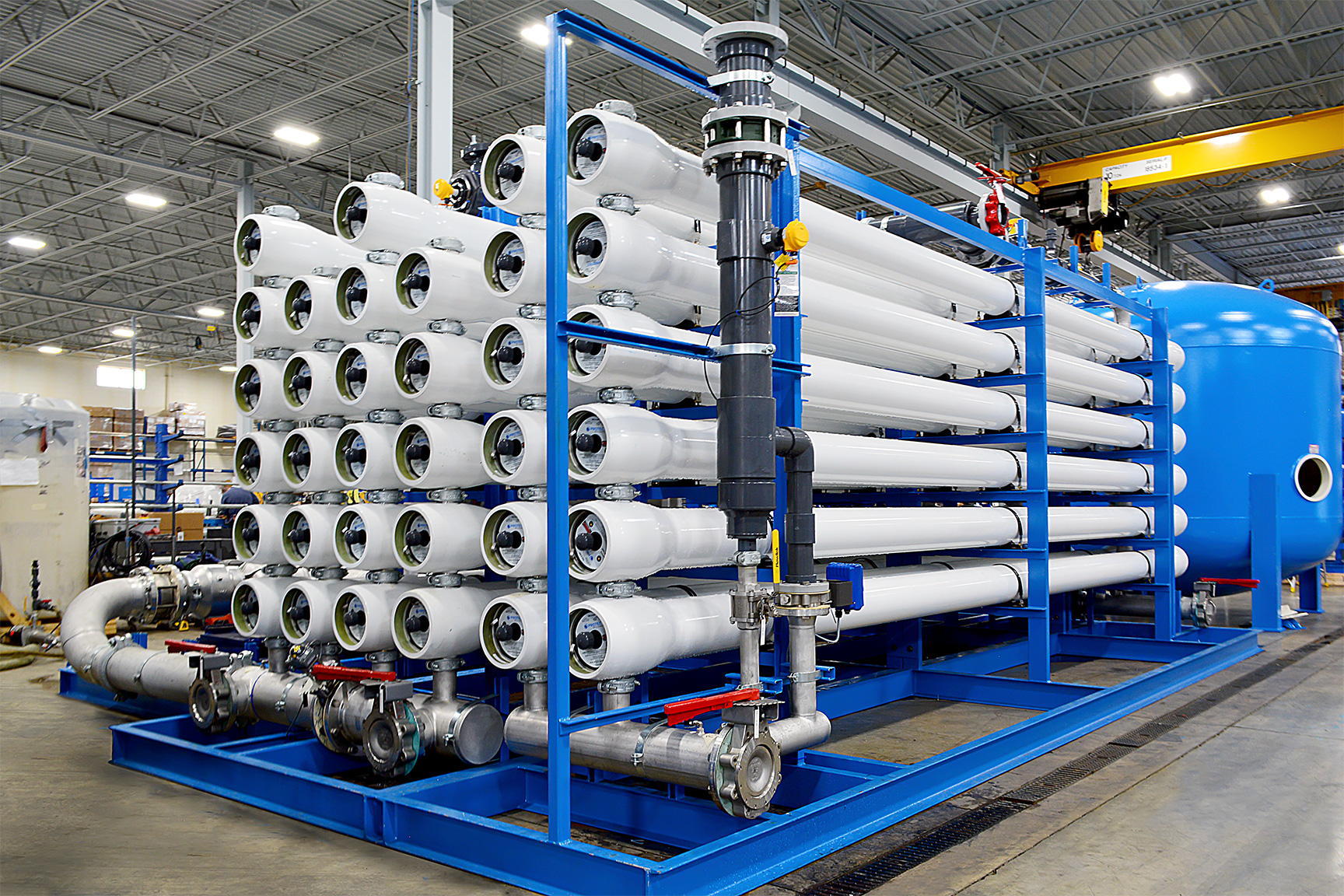 1000-GPM Reverse Osmosis (RO) System | MARLO
But don’t let the energy talk scare you. Compared to boiling water (distillation) or running chemical treatments, RO is still a superhero. Distillation takes five times the energy because you have to boil and condense everything. RO just squeezes. And with renewable energy becoming cheaper, industrial plants are starting to run their RO systems on solar power. Imagine: a water plant inside a desert, powered by the sun, turning brine into drinking water. That’s not science fiction—it’s happening in California right now.
The Real Gross Part: Maintenance
Okay, let’s get real. These systems are divas. They clog. They foul. They grow biofilms on the membrane if you don’t clean them every few weeks. Industrial maintenance crews spend half their lives swapping out pre-filters and running chemical “clean-in-place” cycles. One missed cleaning, and your membrane turns into a slime castle. It’s like owning a pet that never stops eating and occasionally leaks.
And the cost? An industrial RO membrane can cost $1,000 to $5,000 a pop. Replace them every 2-5 years, and you’re looking at a bill that could buy a used Honda. But here’s the kicker: if a hospital’s RO system fails, people die. So that cost is just the price of not poisoning anyone. Funny how perspective changes things, huh?
So, Should You Get One for Your House?
Probably not. Unless you live next to a toxic waste dump and have a money tree. Home-sized RO units exist, but they’re slow (a gallon an hour) and wasteful (lots of dumped water). My cousin? He finally bought a countertop RO machine. It cost $200. He still complains about the ticking sound it makes at night. But he’s not drinking bacteria tea anymore. For industrial operators? It’s non-negotiable. If you need water that’s 99.9% pure, or if your local supply tastes like a rusty pipe, industrial RO is the only way to go. Just be ready for the energy, the maintenance, and the occasional existential crisis about how much water you’re flushing away.
In the end, water—the stuff we flush toilets with—is surprisingly complicated. We take it for granted until it’s weird. Industrial RO systems are the silent workers making sure your microchip factory, your brewery, and your dentist office don’t explode. They’re not pretty. They’re loud. But they’re honest work. And honestly? I’ll take a loud, thirsty RO system over a slimy pitcher any day. Wouldn’t you?
