Deionized Water Systems For Laboratories

You know that feeling when you’re baking cookies and your tap water tastes weird, so you worry it’ll mess up the dough? Now imagine you’re a scientist trying to culture a rare...

You know that feeling when you’re baking cookies and your tap water tastes weird, so you worry it’ll mess up the dough? Now imagine you’re a scientist trying to culture a rare bacteria or run a crucial DNA test. Tap water isn't just a buzzkill—it's a total disaster. That’s where deionized water systems for laboratories come in, saving experiments from what I like to call ‘the mineral mosh pit.’
Let’s be honest: tap water is a party for random chemicals. Calcium, magnesium, chlorine—they’re all there, dancing like it’s 1999. For a lab, that’s like using a garden hose to fill a fine wine glass. Deionized water is the bouncer who kicks out all the unwanted guests. It strips away dissolved ions—positively and negatively charged particles—until you’re left with water so pure it practically glows. It’s water that has gotten an extreme makeover.
How It Works: Not as Scary as It Sounds
Think of a deionized water system as a fancy spa for H2O. Water flows through special resins that grab onto ions like a greedy toddler grabbing candy. Positive ions (like calcium) cling to negative resins, and negative ions (like chloride) stick to positive resins. Swap, swap, gone. The result is water that’s so neutral it doesn’t know how to throw a chemistry fit. Labs love this because it means no surprises in their test tubes.
Must Read
I once watched a lab tech fill a beaker with tap water by accident. The experiment fizzed up like a volcano science fair project. Deionized water? It sits there, peaceful as a Zen monk. That’s the difference between chaos and control. For a lab, control is everything—especially when you’re handling stuff that costs more per gram than gold.
Everyday Life Meets Lab Water
You’ve probably used deionized water without knowing it. Ever had a car battery topped up? That’s often DI water. Or those fancy contact lens solutions? Yep, deionized. It’s the silent hero of your daily routine. But in a lab, it’s the quiet boss. Without pure water, a simple pH test can go haywire, and an entire batch of medicine could become worthless. Talk about pressure.
Here’s a funny comparison: using tap water for a critical lab test is like wearing a wool sweater to a swimming competition. Sure, you’re technically there, but you’re dragging down the whole vibe. Deionized water systems are the swim goggles and sleek suit of the water world. They eliminate all the drag—no minerals to mess with reactions, no bacteria to spoil the party.
The Setup: It’s Not a Giant Tub
Laboratory deionized water systems come in all sizes. Some look like sleek coffee makers on a bench. Others are massive units that could filter a small pool. The smaller ones use cartridges you swap out like printer toner—easy, but messy if you fumble. I once saw a guy drop a cartridge, and water went everywhere. He looked like his goldfish had done a cannonball. Lesson: always put the lid on before turning it on.
The systems usually have a gauge that shows water purity, measured in resistivity (how well it resists electricity). Pure water is a terrible conductor—like a grumpy teenager ignoring your questions. If the number drops, it means ions have snuck back in. That’s your cue to change the cartridge. It’s like your car’s check engine light, except less expensive to fix.
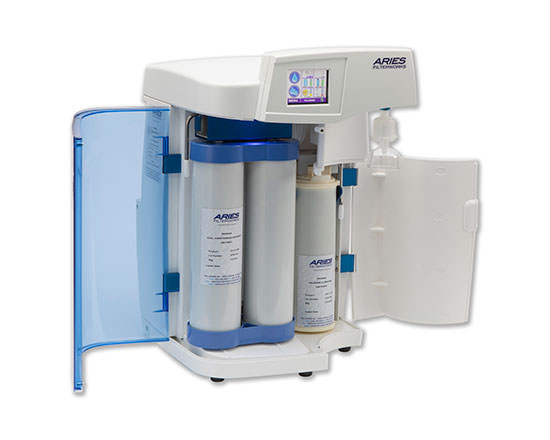 Deionized Water Systems | DI Water Exchange High Purity Water
Why You Should Care (Even If You’re Not a Scientist)
Think about this: every time you take a pill at the pharmacy, chances are it was made using deionized water. Every time a doctor checks your blood work, the machines likely used DI water for calibration. Your health depends on this water behaving itself. It’s not just about avoiding a bad experiment; it’s about avoiding a bad day at the hospital.
I remember a friend joking, “So labs have their own fancy water because they’re too good for faucet water?” I said, “Exactly. And you should be grateful.” Because if a lab used tap water, your antibiotics might lose their mojo. Nobody wants weak antibiotics. Deionized water systems are the unsung heroes ensuring your cold medicine actually works.
Maintenance: The Two-Second Rule
Keeping a DI system happy is like owning a pet rock—easy, but you gotta check on it. You need to monitor the resin cartridges and change them when they get old. Ignore this, and your pure water turns into fancy tap water. It’s the difference between a martini and dishwater. Most labs have a sticker that says “DI water—for lab use only.” They mean it. One time I saw a guy fill his water bottle from the lab tap. The system let out a beep of disapproval. He never did it again.
Another maintainace trick: run the water for a few seconds before using it. Stagnant water can grow bacteria, even in a DI system. It’s like leaving a soda can open overnight—gross, but fixable. A quick flush, and you’re golden. Golden, not gunky.
The Bottom Line: H2-Oh Yeah!
Deionized water systems for laboratories are the quiet, reliable friends who never show up late and never cause drama. They remove all the impurities that would otherwise turn a brilliant hypothesis into a sad puddle. Next time you see a lab coat walking by, give them a nod. They’re probably running their experiments with water so pure it could cry tears of joy.
And if you ever get a chance to taste deionized water? Don’t. It tastes flat and weird—like drinking a cloud with no personality. It’s not for sipping; it’s for science. But that science keeps your world running smoothly, from your car battery to your next pill. So raise a glass of the stuff—just don’t drink it. Your experiments will thank you.
