Commercial Activated Carbon Water Filter

Let’s be honest: that glass of water in your hand might look clean, but have you ever really thought about what’s *in* it? Don’t worry, I’m not here to scare you—but I am here...
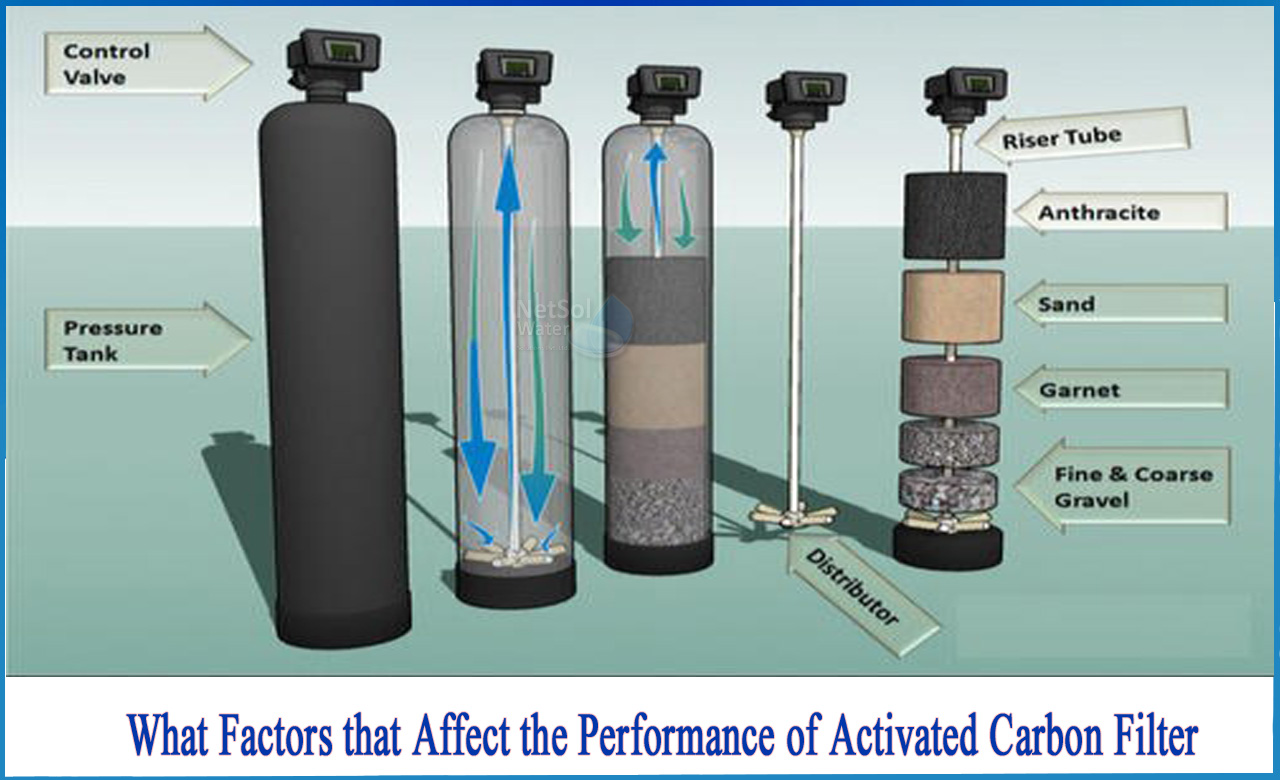
Let’s be honest: that glass of water in your hand might look clean, but have you ever really thought about what’s in it? Don’t worry, I’m not here to scare you—but I am here to talk about a little helper that makes a huge difference. It’s called a commercial activated carbon water filter, and trust me, it’s way cooler than it sounds.
Think of it like a superhero sponge for your tap. Activated carbon is basically charcoal that’s been treated to be super porous, like a tiny, microscopic honeycomb. When water passes through, it grabs onto weird stuff—like chlorine, bad tastes, and funky odors—and locks them away.
You know that “swimming pool” smell in tap water, especially in the summer? That’s chlorine, and it can make your morning coffee taste like a chemistry experiment. A carbon filter kicks that chlorine to the curb, so your water actually tastes like, well, water.
Must Read
Why your morning coffee deserves better
Picture this: you wake up, groggy, and brew your favorite cup of joe. You take a sip, and instead of rich, smooth flavor, you get a weird, metallic aftertaste. That’s not the coffee’s fault—it’s the water’s.
Commercial activated carbon filters are the unsung heroes of a perfect brew. By removing the stuff that messes with your taste buds, they let the real flavors shine. Your morning ritual gets an instant upgrade—no fancy equipment needed.
I tried it myself a few years back, and honestly, I felt a little silly for not doing it sooner. My iced tea went from “meh” to “oh wow,” and I stopped adding sugar just to hide the taste.
It’s not just about taste (but that’s a big part)
Sure, better flavor is a win, but there’s more to this little gadget. Carbon filters also trap some common contaminants, like sediment and volatile organic compounds—stuff that can leach from old pipes or treatment chemicals.
No, it doesn’t remove everything (like heavy metals or fluoride), but for everyday water, it’s a solid first line of defense. Think of it as a friendly bouncer at the club of your kitchen: it keeps out the riffraff while letting the good stuff through.
And let’s be real—anything that makes your tap water cleaner means you’ll drink more of it. That means fewer plastic bottles, less money wasted, and a happier planet. It’s a win for you and a win for the turtles.
The “gym water” story
My buddy Dave used to refill his huge water bottle at the gym fountain. One day, he complained it tasted like “old sock and metal.” I handed him a bottle of filtered water from my kitchen, and he looked at me like I’d given him liquid gold.
He went home and bought a simple activated carbon filter pitcher. Now he’s the guy bragging about his “crisp, clean hydration” at the squat rack. Yes, water can be a conversation starter—who knew?
That’s the beauty of it: you don’t need a fancy under-sink system costing hundreds. Many commercial filters are as simple as a pitcher, a faucet attachment, or a countertop unit. Easy, cheap, and instantly effective.
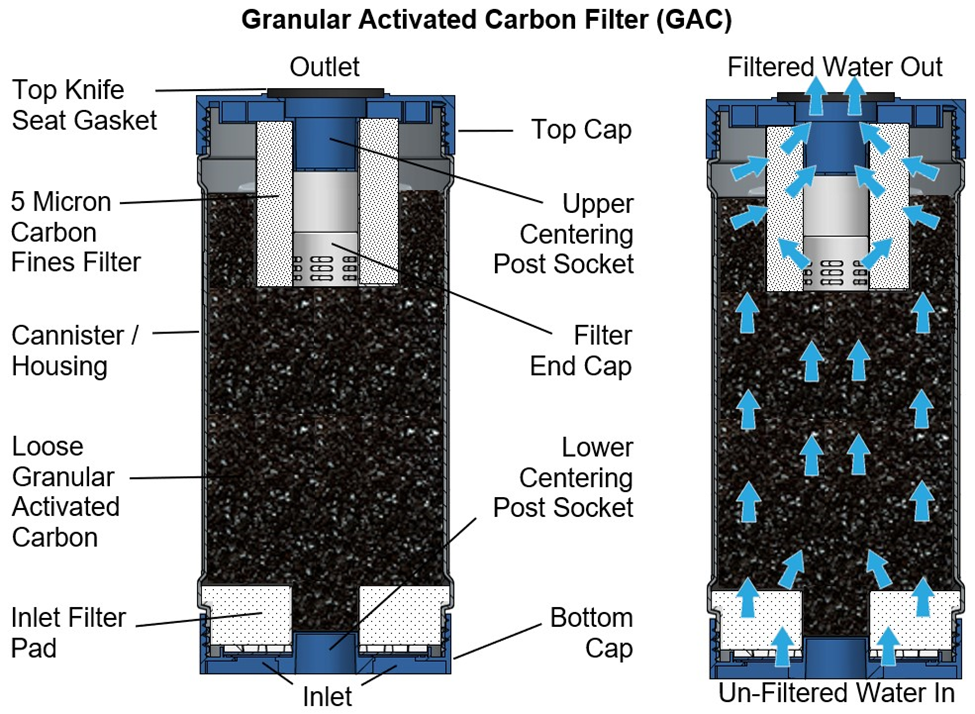 Granular Activated Carbon (GAC) vs. Activated Carbon Block (CB) Water
Why you should care (even if you’re not a water snob)
Maybe you drink soda or juice instead of water. That’s fine, but here’s a secret: better-tasting water might actually make you ditch the sugary stuff. I started drinking way more water after filtering it, and my skin and energy levels thanked me.
It’s not about being perfect—it’s about making one small change that pays off every single day. Your filter works 24/7 without complaining, unlike your phone battery or your WiFi.
Plus, if you cook pasta, rice, or soup with filtered water, you’ll notice a difference. No more starchy, chlorine-tasting spaghetti. Your food just tastes cleaner and more alive.
A little maintenance goes a long way
Alright, I’ll be straight with you: these filters aren’t magic forever. You have to swap the cartridge every couple of months—usually when the water starts tasting “meh” again. But that’s a tiny price for consistently great water.
Think of it like changing your car’s oil. Annoying? A little. Worth it? Absolutely. Neglect the filter, and it becomes a petri dish—so set a reminder on your phone.
Most commercial brands come with a little indicator light or a sticker to remind you. Follow the instructions, and you’ll be sipping happily for years. Your taste buds will be loyal to you forever.
The bottom line (no fancy jargon)
Here’s the thing: we all deserve water that doesn’t taste like a swimming pool or a metal pipe. A commercial activated carbon filter is one of the easiest, cheapest upgrades you can make to your daily life. No installation drama, no hocus-pocus science.
It’s like giving your tap a spa day, every single time you turn it on. Your water becomes your favorite beverage—and isn’t that a nice thought?
So go ahead, pour yourself a glass. If it smells funny or tastes flat, maybe consider a little carbon friend. Your coffee, your tea, and your hangry self will all thank you. Cheers to that.
