Can You Filter Microplastics Out Of Water

So, you’ve heard the news: microplastics are everywhere—oceans, clouds, your morning coffee, probably even in your pet goldfish’s secret stash. It’s enough to make you want to...

So, you’ve heard the news: microplastics are everywhere—oceans, clouds, your morning coffee, probably even in your pet goldfish’s secret stash. It’s enough to make you want to drink water through a cheesecloth while wearing a hazmat suit. But let’s be real: can you actually filter those tiny, invisible plastic bits out of your tap water?
The Short (and Surprisingly Happy) Answer
Yes, you can filter out a huge chunk of microplastics, but it’s not as simple as grabbing a random Brita pitcher. Think of it like trying to catch glitter in a net—magnets help, but you need the right tool. The good news? You don’t need a PhD in polymer science or a lab budget to do it.
Most microplastics in tap water are smaller than a grain of sand, ranging from 5 millimeters down to microscopic specks. Standard faucet filters (like activated carbon ones) are a great start, but they’re not superheroes. They catch the bigger chunks, but the tiniest nano-plastics? They laugh and swim right through.
Must Read
Enter the Real Heroes: Reverse Osmosis
If you want to get serious about plastic-free H2O, meet reverse osmosis (RO) systems. These bad boys push water through a semi-permeable membrane with holes so tiny that even water molecules have to squeeze. Microplastics? They get bounced like a bouncer at a VIP club.
Studies show RO removes up to 99% of microplastics. The downside? They’re pricey (think $200–$600) and waste some water. But hey, you can’t put a price on not drinking yesterday’s disposable fork, right?
Another solid option is distillation. You boil water, catch the steam, and leave the plastic bits behind like a bad ex. It’s effective but slow—perfect if you enjoy watching water boil while contemplating your life choices.
Wait, What About Those “ZeroWater” or “Brita” Pitchers?
Great question! Standard pitcher filters (activated carbon + ion exchange) are good at removing taste, chlorine, and larger particles. For microplastics? They’re decent—catching about 80-90% of larger microplastics. But the tiniest ones? Sayonara—they slide right through the carbon pores.
Don’t throw your Brita away just yet! A recent study found that refrigerator filters and countertop cartridges can remove over 95% of microplastics, especially if they’re NSF-certified for “particulate reduction.” Check the label for “NSF 53” or “NSF 58”—it’s like a gold star for plastic removal.
Pro tip: Always boil your water before filtering if you’re worried about bacteria. Boiling won’t remove plastic, but it kills germs—and hot water moves faster through filters, which feels mildly satisfying.
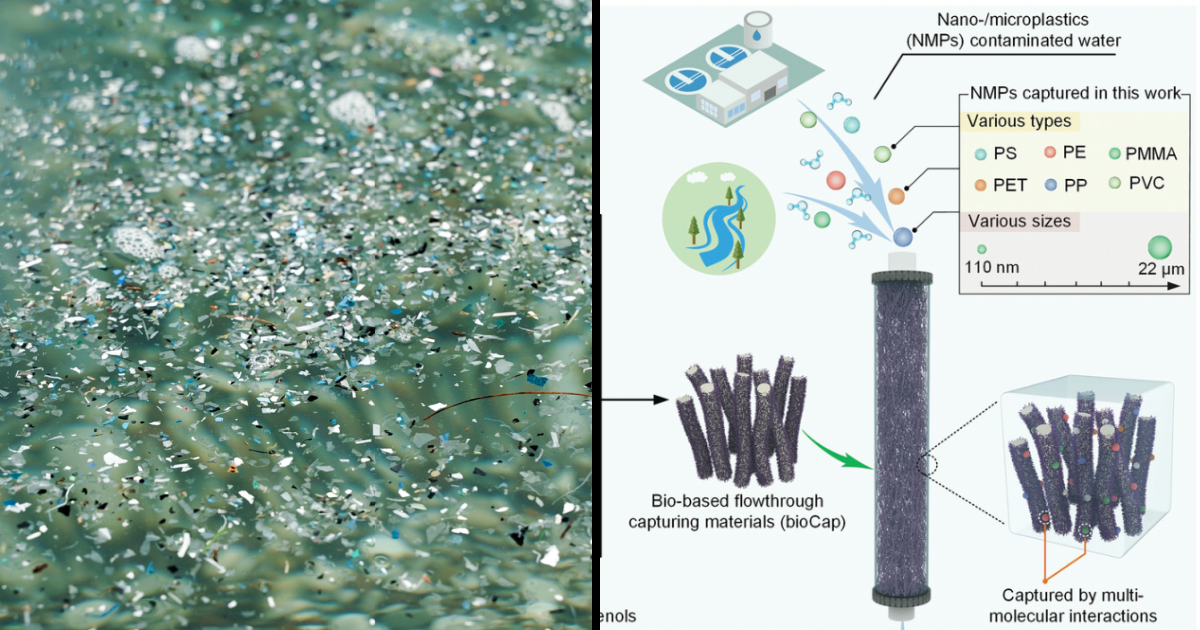 Scientists Say New Plant-Based “bioCap” Device Can Filter Almost All
But There’s a Twist (Because Life Loves Plot Twists)
Here’s the thing: filters can’t catch what’s already inside your body. Microplastics have been found in human blood, lungs, and even placentas. Wait, don’t panic! The science is still young, and we don’t fully know the health risks yet. But filtering your water gives you peace of mind—and that’s worth its weight in gold (or, you know, plastic-free water).
Also, remember where most microplastics come from: plastic bottles, takeout containers, and synthetic clothing fibers. So while you’re filtering your tap water, also consider ditching bottled water (which often has more plastic than tap) and using a reusable metal or glass bottle. Boom—double win.
The DIY Hack That Actually Works (Sort Of)
Desperate times call for desperate measures. If you’re camping or don’t have a fancy filter, try the “sand and gravel” trick. Layer sand, gravel, activated charcoal, and a coffee filter in a funnel. Pour water through—it’s like a science project for adults. Will it catch all microplastics? No. But it will catch visible ones and make you feel like a survivalist wizard.
Another low-tech option: let water sit overnight. Some microplastics sink to the bottom. Sip from the top, leave the sludge behind. It’s not perfect, but it’s a free upgrade.
The Uplifting Conclusion (Yes, You Can Smile)
Here’s the real secret: you’re already doing the hardest part—caring enough to ask the question. Most people never think about microplastics until they see a viral video of a whale with a stomach full of bags. But you? You’re now armed with a plan.
Reverse osmosis is the MVP, distillation is the slow-and-steady champ, and any good carbon filter will help you dodge the plastic bullet. Even a simple $30 pitcher can cut down your plastic intake dramatically. So go ahead: pour yourself a glass of filtered water, toast to your new knowledge, and remember that while you can’t fix the whole ocean overnight, you can keep a little microplastic out of your gut.
And that’s a win. Plus, you now have a great party fact. Because nothing says “fun at parties” like casually mentioning that your tap water is cleaner than a lab rat’s drinking fountain. Cheers to you, future hydration hero! 🌊✨
