What Do Refrigerator Water Filters Remove

Ever taken a long gulp of water from your fridge and thought, “Wow, that’s crisp”? That perfect taste isn’t magic. It’s science—and your little filter is the unsung hero. Let’...

Ever taken a long gulp of water from your fridge and thought, “Wow, that’s crisp”? That perfect taste isn’t magic. It’s science—and your little filter is the unsung hero. Let’s be real: we usually ignore that plastic cartridge until a red light starts blinking. But what exactly is it doing in there? It’s surprisingly cool once you peel back the curtain.
Your Fridge’s Secret Bodyguard
Think of your water filter as a bouncer for a very exclusive club. Its job is to kick out the party crashers before they mess with your drink. The main targets? Chlorine and sediment like dirt, rust, and sand. Ever tasted that pool-water flavor from the tap? That’s chlorine. Your filter yanks it out, making water clean and neutral. It’s like the difference between biting into a fresh apple versus one that’s been sitting on a dusty shelf.
But wait—it goes deeper. These filters use activated carbon, a fancy material that acts like a super-sponge. Carbon is porous, with millions of tiny nooks and crannies. When water flows through, contaminants get physically trapped or stick to the carbon surface. Pretty neat, right? Like a microscopic spiderweb for icky stuff.
Must Read
Heavy Metals: The Sneaky Guests
Here’s where it gets interesting. Your filter can also wrangle lead, copper, and mercury. These heavy metals often sneak in from old pipes or natural deposits. They don’t make water look bad, but they’re not great for your brain or kidneys over time. Most fridge filters reduce lead by 90% or more. That’s a big win for your morning hydration ritual. Think of it like putting on sunscreen—you don’t see the UV rays, but you’re glad they’re blocked.
Not all filters are equal, though. Some are certified by NSF International (a third-party tester). If your filter says “NSF 53” on the box, it’s officially good at removing lead. Check that sticker—it’s like a gold star for your water.
The Uninvited Guests: Pesticides and Pharmaceuticals
Okay, this part is wild. Tiny traces of pesticides from farm runoff, and even leftover medicines people flush down toilets, can appear in tap water. Your filter’s carbon catches many of these organic chemicals. It’s not perfect—it won’t remove every single molecule. But it dramatically lowers the levels. Imagine your filter as a really picky librarian, sorting out dirty magazines from the good books. You still get the story; you just lose the trash.
What about bacteria and viruses? This is a common question. Regular fridge filters aren’t designed for that. They’re not a sterilization system. If you’re worried about microbes, you need a UV purifier or a filter rated for “cyst removal.” Your fridge is more about taste and chemical zapping. It’s the difference between a car’s air filter (stops dust) and a hospital mask (stops germs). Different jobs, both useful.
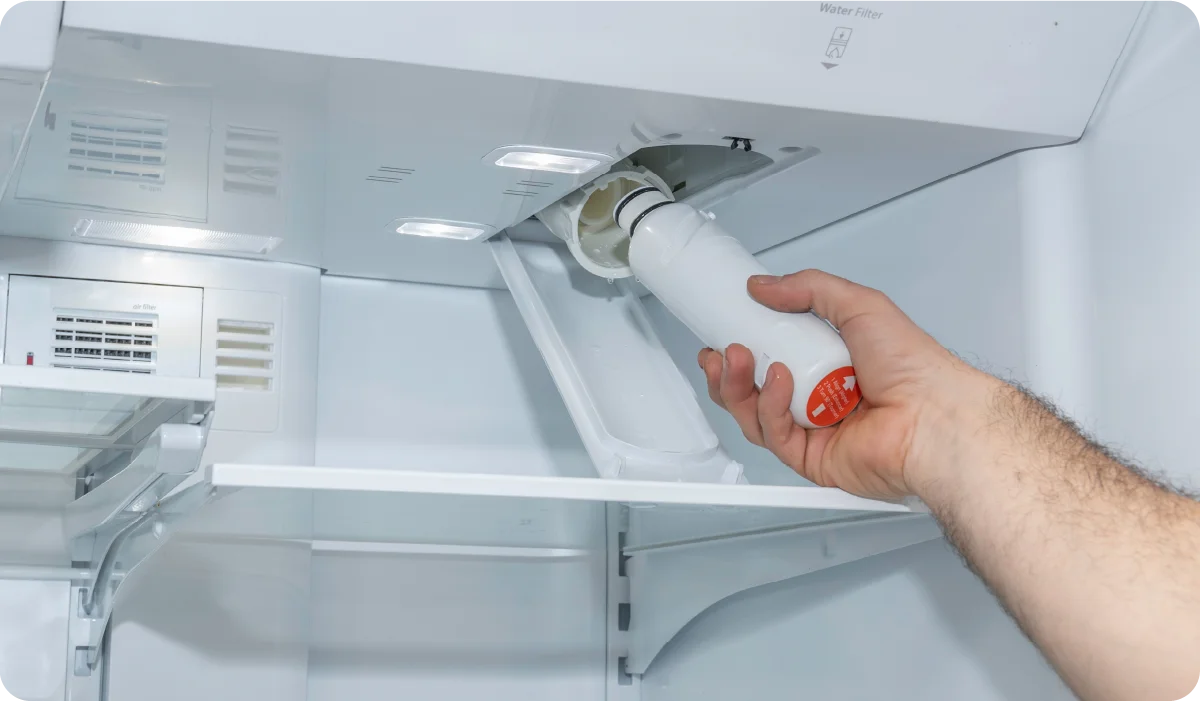 Step-by-Step Guide to Safely Remove Your Refrigerator Water Filter
Fluoride: The Controversial One
You might wonder about fluoride. That mineral added to many municipal water supplies to prevent cavities? Most standard fridge filters do not remove it. You’d need a special reverse-osmosis system to kick out fluoride. So if you like that extra cavity protection, your cheap fridge filter is actually leaving it in. See? Sometimes a filter’s “weakness” is actually a perk.
And let’s talk about taste again. Have you ever noticed that ice cubes from a filtered fridge don’t have that weird smell? That’s because filters remove compounds like hydrogen sulfide, which makes water smell like rotten eggs. It also takes out muddy, earthy flavors from algae in reservoirs. So your iced tea actually tastes like tea, not like a pond.
What About the Stuff That Sticks Around?
Your filter isn’t a miracle worker. It won’t remove dissolved minerals like calcium and magnesium—the stuff that makes water “hard.” That’s fine! Those minerals are good for you. It also won’t remove salt or nitrates from fertilizers. But for 99% of daily drinking, it handles the heavy lifting. Think of it as a personal assistant: it takes care of the annoying tasks so you can just enjoy your drink.
So, why does this matter? Because you’re paying for water, and your body is mostly water. It’s cool to know your fridge is quietly scrubbing out the bad and leaving the good. Next time you press that dispenser, give a little nod to the carbon sponge inside. It’s doing more than you think—and that’s worth a toast.
