Total Dissolved Solids In Distilled Water

You’ve probably seen the label “distilled water” at the grocery store and thought, Isn’t all water pretty much the same? Not quite. Distilled water is the minimalist of the hy...
You’ve probably seen the label “distilled water” at the grocery store and thought, Isn’t all water pretty much the same? Not quite. Distilled water is the minimalist of the hydration world—stripped down, pure, and almost aggressively simple. The secret to its personality lies in something called Total Dissolved Solids, or TDS for short.
What Even Are Total Dissolved Solids?
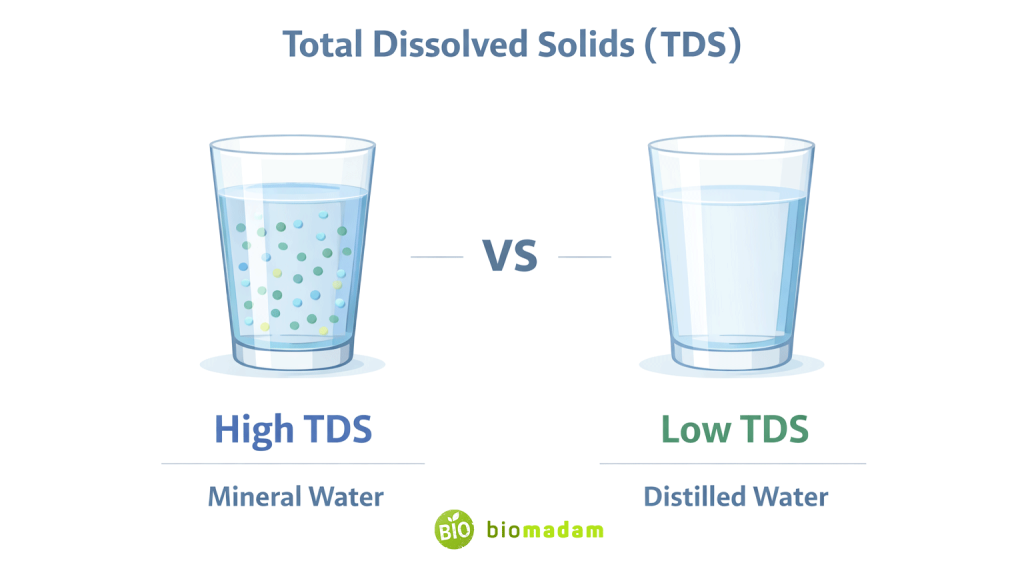
Imagine you’re at a cocktail party, and the water is the host. TDS is the guest list—all the tiny minerals, salts, and organic bits that decide to show up and mingle. In tap water, that guest list can be packed with calcium, magnesium, sodium, and even trace metals.
Distilled water, on the other hand, is the party where the bouncer is ruthless. The distillation process boils water into steam, then condenses it back into liquid, leaving nearly all those dissolved solids behind. The result? A TDS level of zero to just a few parts per million, versus tap water’s typical 50–500 ppm.
Must Read
The Taste Test: Why Distilled Water Feels “Flat”
If you’ve ever sipped distilled water and thought it tasted empty, you’re not imagining things. Those dissolved solids in regular water—especially calcium and magnesium—give it that subtle, crisp mouthfeel we subconsciously expect. Without them, water tastes like a blank canvas.
It’s the same reason a fancy mineral water from a glass bottle feels luxurious: the TDS is high, and your tongue knows it. Distilled water is the culinary equivalent of unsalted butter—useful, but not something you’d want to sip on its own all day.
Why Would Anyone Drink This Stuff?
Good question. While distilled water isn’t the go-to for casual hydration, it’s a hero in specific situations. Think of it as the cleanest tool in your kitchen shed. It’s perfect for steam irons, humidifiers, and car batteries because zero TDS means no mineral buildup—no crusty white scale ruining your gadgets.
In the health world, some folks use distilled water for short-term detox routines or to avoid trace contaminants like pesticides or heavy metals. But here’s a fun fact: our bodies actually need some of those minerals from water. Relying solely on distilled water could, over time, leach electrolytes from your system. Balance is everything, darling.
Pop Culture & You: The “Beverly Hills, 90210” Water Moment
Remember that scene in Beverly Hills, 90210 where Brenda stocks her fridge with expensive bottled water? That’s the cultural opposite of distilled water—fancy, mineral-rich, and status-driven. Distilled water is the anti-status symbol: utilitarian, no-nonsense, and obsessively pure.
It’s also the water of choice for mad scientists in old movies—always bubbling in a lab beaker. In reality, you’re more likely to find it in a pharmacist’s cupboard, used for mixing baby formula or diluting concentrated medications. Practical, not glamorous.
Practical Tips: How to Use Distilled Water Like a Pro
Tip one: Use it for your coffee maker, espresso machine, or any appliance that hates limescale. You’ll save money on descaling treatments and extend your gadget’s life. Your morning brew will taste cleaner too—no mineral interference.
 Understanding Total Dissolved Solids (TDS) in Drinking Water
Tip two: If you’re a plant parent, avoid watering your succulents with distilled water. Most houseplants love a little mineral boost—they’re not minimalist like us. But carnivorous plants (like Venus flytraps) thrive on distilled water because they’re sensitive to tap water minerals.
Tip three: Traveling and staying in a hotel with questionable tap water? Pack a small bottle of distilled water for your CPAP machine or travel humidifier. It’s a tiny luxury that keeps your gear running smoothly—no gunk, no fuss.
Fun Fact: The Ocean Is the Ultimate Distiller
Nature’s distillation system is called the hydrological cycle. The sun heats the ocean, water evaporates (leaving salt and solids behind), forms clouds, and falls as rain—technically, rainwater is naturally distilled. But by the time it reaches your faucet, it’s picked up enough TDS from rocks and pipes to become “fresh” water.
So technically, you’re paying for something rain does for free. But hey, convenience is a valid luxury.
The Bottom Line: Should You Drink It?
For everyday hydration, stick with filtered tap water or spring water—the TDS provides trace minerals that keep your body humming. But keep a bottle of distilled water on standby for specific tasks: mixing baby formula, cleaning glasses without streaks, or even making clear ice cubes for your next cocktail party.
And remember: Your water’s TDS is like a fingerprint—unique to your location and source. Want a quick reality check? Get a TDS meter for ten bucks online. Dip it in your tap, your filtered pitcher, and a bottle of distilled water. The numbers will tell you a story about where your water has been—and who it’s met along the way.
A Final Reflection
In a world that often feels overloaded—with information, with stuff, with noise—there’s something quietly satisfying about distilled water. It’s the liquid equivalent of a blank page, a deep breath, a fresh start. No minerals, no drama, no agenda.
But life needs a little TDS—a hint of calcium from that cheese you love, a touch of magnesium from a lazy Sunday morning. So drink your water with intention. Whether it’s distilled or straight from the spring, let it remind you that purity and flavor are both gifts. You get to choose the balance.
