My Dishwasher Leaves White Chalky Residue

So there I was, last Tuesday, pulling a wine glass out of the dishwasher. I held it up to the light, ready to admire that squeaky-clean sparkle. Instead, it looked like I’d di...
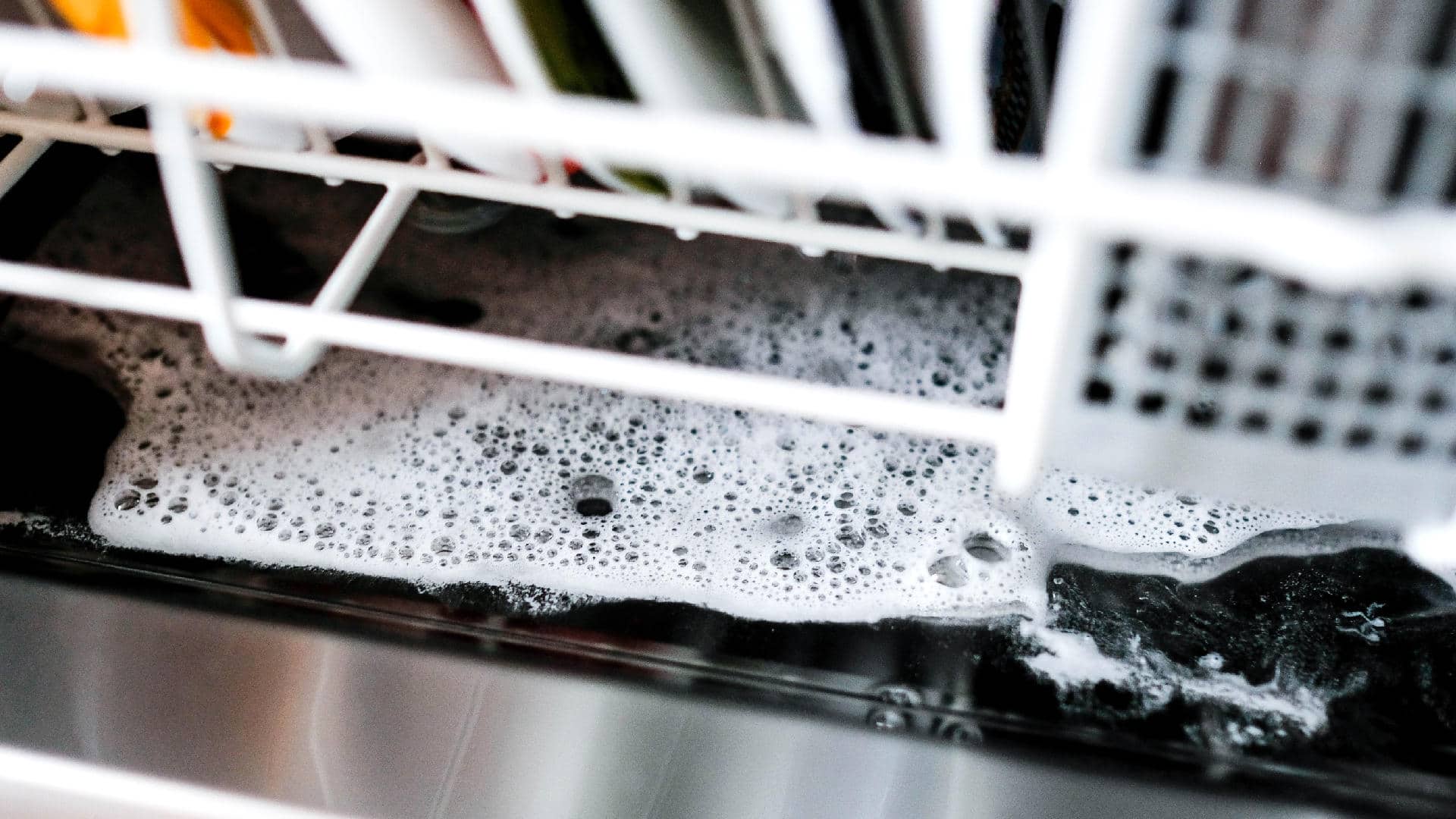
So there I was, last Tuesday, pulling a wine glass out of the dishwasher. I held it up to the light, ready to admire that squeaky-clean sparkle. Instead, it looked like I’d dipped it in a bag of flour.
I’m not talking about a few harmless spots. I’m talking about a full-on, pale white crust that felt like sandpaper. My “clean” glass looked like it had been frosted for a bakery window. And I just stood there, holding this sad, chalky trophy, wondering where I went wrong in life.
If this scene feels painfully familiar, you’re not alone. It’s the universal dishwasher owner’s lament: the dreaded white chalky residue. It makes you question whether your machine is actually cleaning or just patiently coating your dishes in a thin layer of mineral dust.
Must Read
The Usual Suspect (And It’s Not Your Dishwasher)
Here’s the part where I reveal the big secret I wish I’d known years ago. That ghostly film is almost always hard water, not a machine malfunction. Your water is basically a mineral smoothie, and when it dries, the calcium and magnesium get left behind as chalk.
Think about it: your dishwasher is just a fancy sprinkler system. If the water coming in is loaded with minerals, it’s like washing your dishes with liquid rock. The machine can’t filter them out—it needs a little help from its friends.
Of course, the first time you see this, you panic (I did). You check the filter, you scrub the spray arms, you even Google if your appliance is haunted. But the machine is innocent. It’s your tap water that’s the real diva here.
The “Dishwasher Detective” Test
Before you call a repair person (and pay them to laugh at you), do a quick test. Fill a glass with tap water and let it dry on the counter. If you see a white ring, congratulations—you have hard water.
Another sign? Your coffee maker might be struggling, or your showerheads get that crusty buildup. But the dishwasher is where hard water really shows off, because high heat and steam make the minerals crystallize faster. It’s a science experiment, but not a fun one.
So the solution isn’t a new machine. It’s a cheat code you can buy at any grocery store.
Your New Best Friend: Rinse Aid (and a Little Chemistry)
Yes, I’m talking about that little compartment you’ve been ignoring. Rinse aid isn’t a gimmick; it’s a surfactant that breaks the water’s surface tension. This makes water sheet off your glasses instead of forming droplets that dry into chalky spots.
If you use pods that already have rinse aid, you might still need extra. Many all-in-one tabs work okay, but hard water fights back. Fill your dedicated rinse aid reservoir to the brim, and watch the magic happen.
For truly stubborn water, like the kind that leaves a permanent fog on your glasses, you need a water softener. But don’t panic—I’m not talking about a whole-house system. You can buy dishwasher-specific water softener salt pods or tablets. They go in the bottom of your machine and work silently.
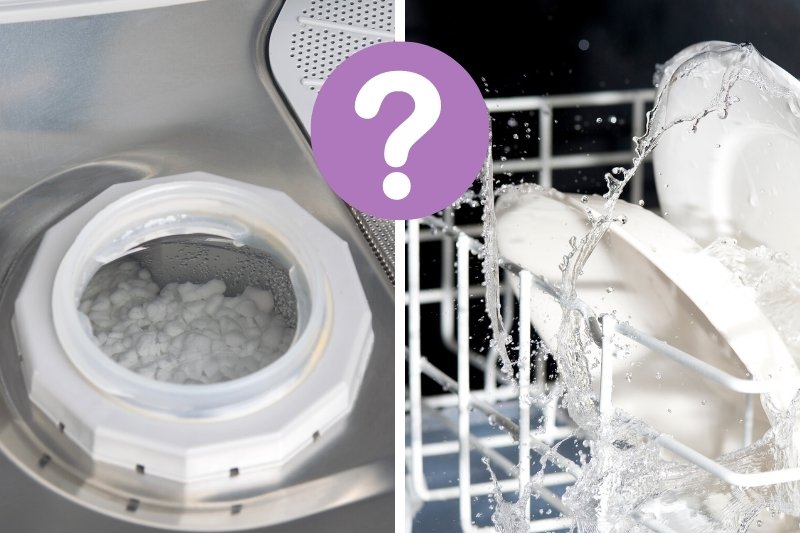 Why Is My Dishwasher Leaving a White Chalky Residue on Everything?
The Vinegar Hack (That Everyone Tries)
I know, I know: the internet swears by white vinegar. You’ve probably run a cycle with a bowl of vinegar on the top rack. Let me be honest with you—it helps, but it’s a band-aid.
Vinegar can clear buildup from the machine’s interior, but it’s not a perfect fix for your dishes. Plus, if you mix vinegar with bleach-based detergents, you’re making toxic gas. So please: if you try it, do it on an empty cycle with no detergent.
Instead, I’d suggest using a dedicated dishwasher cleaner every month. Those little gel packs or powder sachets are designed to remove mineral scale from the heating element and pump. Your machine will thank you with better results.
What About the Detergent?
You might be tempted to add more powder or use a “heavy duty” cycle. Don’t do it. Using too much detergent in hard water can actually make the residue worse. The detergents can’t dissolve properly, leaving a white film that mixes with minerals.
The trick is to use a good quality detergent (I like the gel packs with built-in rinse aid) and make sure your water is hot enough. Check your water heater—dishes need water at least 120°F (49°C) to break down food and activate the rinse aid.
Also, are you pre-rinsing your dishes? Stop it. (Sorry for shouting). Modern detergents need a little food soil to work. A perfectly clean plate is too slick for the detergent to grab onto. That can lead to etching, which is permanent damage that looks like residue.
A Final, Slightly Embarrassing Confession
I spent three months convinced my dishwasher was broken. I replaced the filter, I cursed the brand, I even considered hand-washing everything again (a dark thought). Then I realized the rinse aid reservoir was empty. That’s it.
So here’s my hard-earned wisdom: Fill the rinse aid. Use a water softener booster if needed. Run a cleaning cycle once a month. And never, ever blame the machine before you check the water. Your dishwasher is probably fine—it’s just fighting a losing battle against the minerals in your tap.
Now go check your glassware. If it’s still chalky, grab some rinse aid and try again. And if anyone asks why you’re sniffing your dishwasher? Just tell them you’re a kitchen detective. I won’t tell.
