Difference Between Distilled And Purified

You know that moment when you're standing in the grocery store aisle, staring at two nearly identical bottles of water, and you just freeze? One says "Distilled," the other sa...
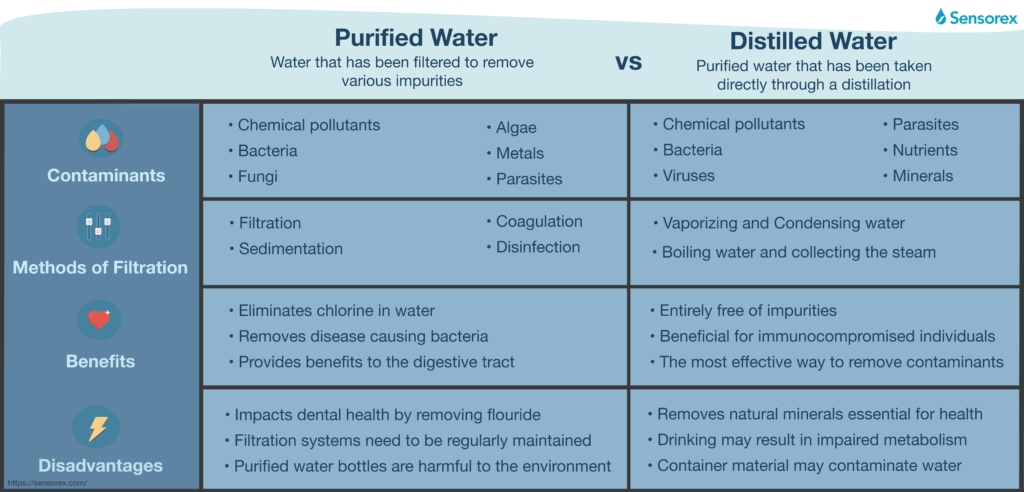
You know that moment when you're standing in the grocery store aisle, staring at two nearly identical bottles of water, and you just freeze? One says "Distilled," the other says "Purified," and you're left wondering if your choice actually matters—or if you're just paying extra for fancy labels. Trust me, I've been there, holding a bottle in each hand like I'm about to solve a riddle.
The short answer is: yes, there's a difference, and it's more interesting than you'd think. But don't worry—we're not diving into a chemistry textbook. Let's talk about this like two friends comparing notes over a cup of coffee (made with tap water, obviously).
What Even Is Distilled Water?
Imagine you're making a pot of tea, but instead of steeping leaves, you're boiling water and catching the steam. That's basically distilled water. Distillation is the process of boiling water until it turns into vapor, then cooling that vapor back into liquid.
Must Read
Here's the kicker: when water boils, most of the impurities—like minerals, salts, and even bacteria—get left behind in the pot. So what you catch in your collection jar is almost pure H₂O. Some folks call it "the cleanest water you can get," and they're not wrong.
I once tried making distilled water in my kitchen just for fun. I ended up with a sad, tiny puddle of water and a burned pot. I left the experiment to the professionals after that.
And Purified Water? What's Different?
Purified water is the overachiever of the water world. It's not just one method—it's a category that includes distillation, reverse osmosis, deionization, and other fancy processes. Basically, if water has been treated to remove at least 99.5% of contaminants, it gets the "purified" label.
Think of it like this: distilled water is a specific type of purified water, but not all purified water is distilled. If distilled water is a single perfect apple, purified water is the whole fruit basket—still great, just with more variety in how it got clean.
Most bottled water you see labeled as "purified" has gone through a process like reverse osmosis. That's where water gets pushed through a super-fine membrane that catches almost everything except the water molecules themselves.
Do You Actually Taste the Difference?
Here's where it gets real for your daily life. Distilled water tastes flat—like someone sucked all the personality out of it. That's because it's missing the natural minerals (like calcium and magnesium) that give normal water its subtle flavor.
Purified water, on the other hand, often has a small amount of minerals added back in for taste. So if you're sipping plain water, purified might be more pleasant. But if you're using it for something else, the story changes completely.
I gave my cat a bowl of distilled water once. She sniffed it, gave me a look that said "what is this nonsense," and walked away. She's a purified-water cat, apparently.
Why Should You Care? (Real Life Examples)
Let's get down to business. The biggest reason to know the difference is what you're actually using the water for. Distilled water is a superstar in your kitchen, workshop, and even your bathroom.
 Water Showdown: Purified vs. Distilled - Mr Water Distiller
If you own a steam iron or a humidifier, distilled water is your best friend. Tap water (and even some purified waters) contain minerals that can leave white scale buildup inside your appliances. Over time, that gunk can break them. Using distilled water keeps them running like a dream.
Same goes for your car's battery or a fish tank. Distilled water won't mess with delicate chemistry. I once killed a goldfish because I used tap water without thinking. Don't be like me. Fish deserve better.
But for drinking and cooking, purified water is often the better pick. It's cleaner than tap water (most of the time), but it still has a natural taste that makes your morning coffee or pasta taste like it should. Distilled water can make your coffee taste a bit hollow—like the flavor notes are missing a dance partner.
What About Health and Safety?
Let's be real: both are extremely safe to drink. You won't get sick from either one. Some people worry that drinking distilled water for years might strip your body of minerals, but studies show that's mostly a myth—you get your minerals from food, not water.
Purified water might have a slight edge if you're concerned about specific contaminants like lead or pesticides, because many purification methods target those directly. But for most of us, the choice comes down to taste and purpose.
When I'm feeling fancy, I buy a bottle of purified water and pretend I'm on a spa retreat. When I'm refilling my coffee maker, I grab distilled water and feel like a genius. It's all about knowing your water's job.
The Bottom Line (Made Simple)
Think of it like this: distilled water is the minimalist—pure, simple, and best for tools and appliances that hate minerals. Purified water is the friendly neighbor—clean but with a little flavor, perfect for drinking and cooking.
You don't need to overthink it. For everyday hydration, grab purified. For steam irons, humidifiers, or making that perfect batch of homemade kombucha, go distilled. And if you're ever confused, just remember: your goldfish will forgive you for buying the wrong one—but your steam iron won't.
Now go forth and hydrate with confidence. You've got this.
