Aeration Systems For Wastewater Treatment

So, picture this: I’m at a friend’s backyard BBQ, right? We’re all stuffing our faces with burgers, and someone mentions their “aquaponics” setup—basically a fancy fish tank t...
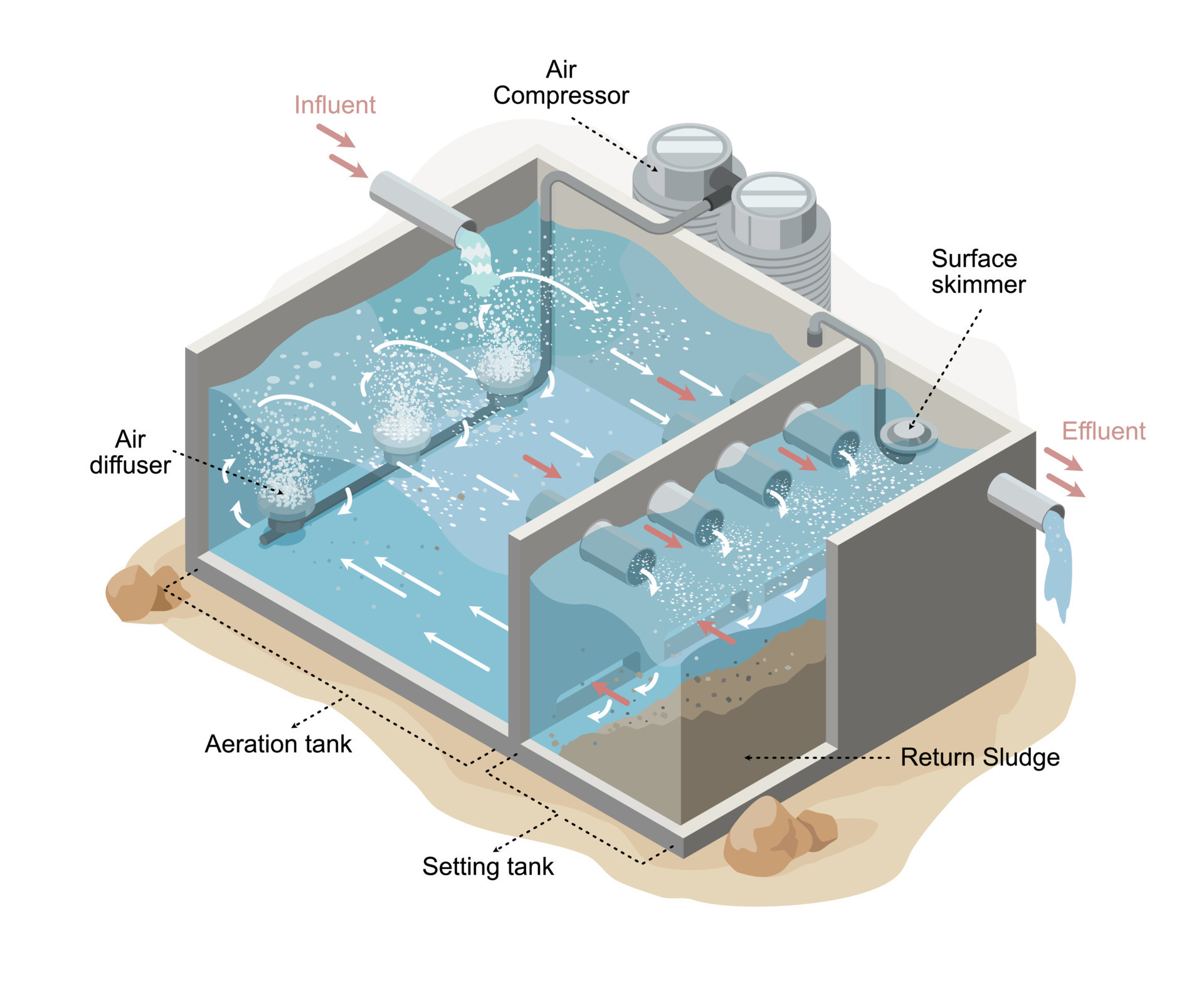
So, picture this: I’m at a friend’s backyard BBQ, right? We’re all stuffing our faces with burgers, and someone mentions their “aquaponics” setup—basically a fancy fish tank that grows lettuce. The host, a well-meaning engineer, starts ranting about the oxygen levels in his fish pond. I nodded along, thinking, boring. Then it hit me: his little fish tank problem is the exact same drama happening under our cities, just on a massive, stinkier scale.
Welcome to the weird, wonderful world of aeration systems for wastewater treatment. Yes, we’re talking about poo water, but stay with me—it’s way cooler than it sounds. Basically, the microbes that eat our waste are lazy couch potatoes; they need a lot of oxygen to do their job. Without it, things get slow, smelly, and frankly, disgusting.
Why Bother with Bubbles?
Think of the water leaving your toilet as a liquid salad bar for tiny bacteria. They chow down on the organic gunk, but they breathe air just like we do. If you starve them of oxygen, they start burping out hydrogen sulfide—that lovely rotten egg smell you get near a swamp.
Must Read
That’s where aeration comes to the rescue. It’s the process of forcing air (or pure oxygen) into the wastewater so the “good” bacteria can party hard and break down the pollution. You want these little guys hyped up on oxygen, because a sleepy microbe is a messy microbe.
The Big Two: Diffused vs. Mechanical
Alright, enough biology. Let’s talk hardware. There are two main ways to get air into the water, and they’re as different as a yoga class and a rave. First up: diffused aeration. You’ve got these rubber discs (or tubes) at the bottom of the tank that blow out thousands of tiny bubbles, like a hot tub on steroids.
This method is super efficient because the small bubbles have more surface area. But here’s the kicker—those fine bubbles can clog up with gunk over time. Ever tried cleaning the filter on a fish tank? Yeah, scale that up by a thousand. The second option is mechanical aeration, which is basically a giant mixer or paddle wheel that splashes water into the air like a mad scientist’s fountain. It’s simpler, but it eats up a ton of electricity.
The Sneaky Secret: Energy Bills
Here’s the part nobody tells you at the plant tour: aeration uses up to 60% of a treatment plant’s total energy. That’s insane when you think about it. We’re literally pumping air into dirty water, and it costs more than the lights or the pumps. It’s like your electric bill is crying every time a bubble pops.
So engineers are getting clever. They’re installing variable frequency drives that slow down the blowers at night when less waste flows in. Some plants are even using smart sensors that measure the oxygen level in real time and adjust the air supply automatically. Because why blow bubbles 24/7 if nobody’s pooping at 3 AM?
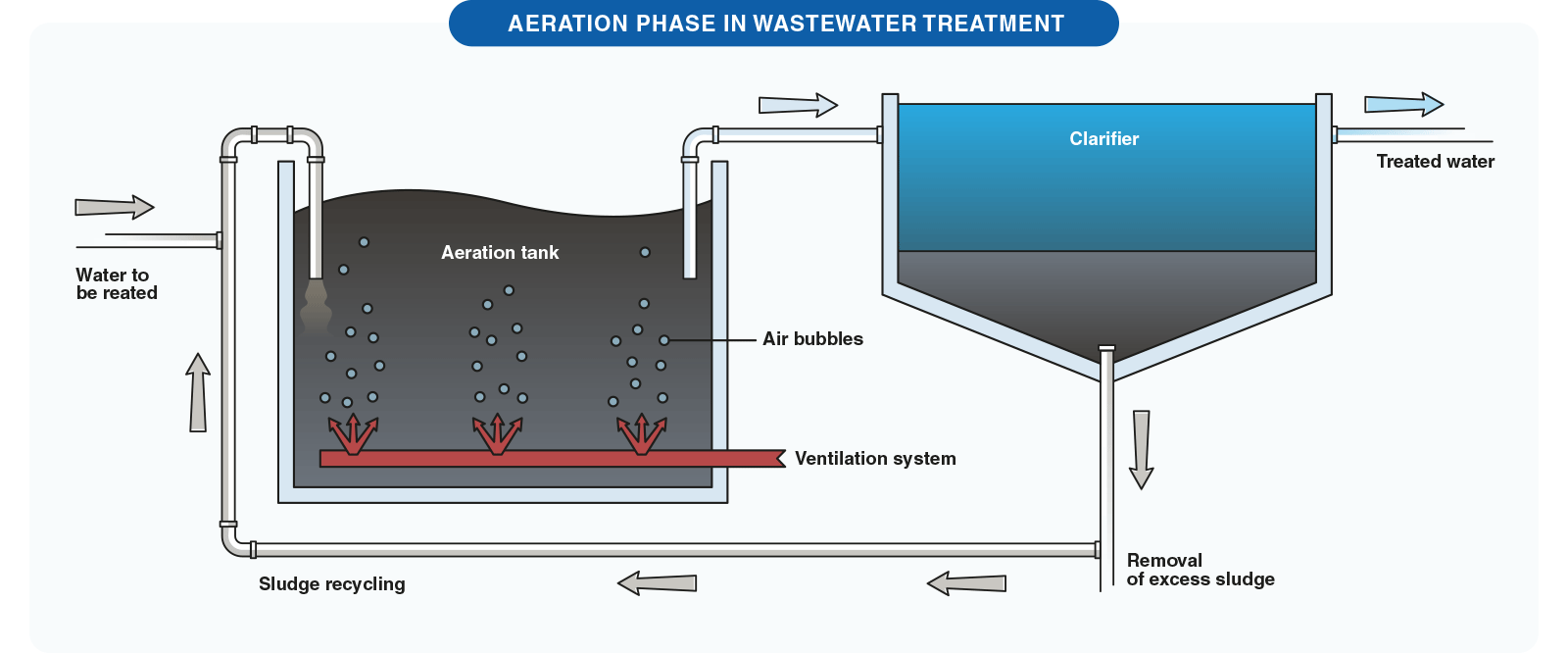 How air flow meters help enhancing wastewater aeration system? | Fuji
A Quick Reality Check
But hold up—this isn’t just about saving a few bucks. If your aeration system fails, the microbial party turns into a funeral. The water gets toxic, the filters clog, and eventually, you get raw sewage flowing into a river. That’s not a headline you want to read over breakfast.
So you want a system that’s both robust and flexible. Some plants use fine bubble diffusers for high efficiency, but keep a set of mechanical aerators on standby for emergencies. It’s like having a backup generator—you hope you never need it, but you’ll cry if you don’t.
The Future is (Kinda) Gross
Now, the really cool stuff is happening with membrane aerated biofilm reactors. Say that three times fast. Instead of blowing bubbles into the water, you pass air through hollow fibers that the bacteria cling to. The bad stuff diffuses through the membrane, and the bacteria eat it directly. It’s like a drive-thru for microbes.
This approach uses way less energy and produces less sludge. But it’s expensive and finicky to maintain. Still, it gives me hope that one day, the water you flush will be cleaned with a whisper instead of a roar.
So next time you flush, give a little nod to the bubbles doing the heavy lifting. Or better yet, don’t think about it too much—just be glad someone else is worried about the aerators. And maybe skip the fish pond talk at the next BBQ.
