Reverse Osmosis And Water Softener System

So, you’ve moved into a new place, or maybe you’ve just taken a sip of your tap water and thought, “Is this a glass of water or a salt lick from a dead dinosaur?” Welcome to t...

So, you’ve moved into a new place, or maybe you’ve just taken a sip of your tap water and thought, “Is this a glass of water or a salt lick from a dead dinosaur?” Welcome to the wild, wet world of water treatment. Specifically, I want to talk about two absolute rockstars of plumbing: Reverse Osmosis and the Water Softener System. They sound like science lab equipment from a Bond villain’s lair, but I promise, they’re here to save your sanity—and your faucets.
Let’s start with the big, burly bouncer of your pipes: the Water Softener. Imagine your normal water is a party full of tiny rock stars. Calcium and magnesium are the mosh pit, leaving white, crusty stains on everything they touch. Hard water isn’t just annoying—it’s a lifestyle threat. It’ll turn your shower glass into a foggy mystery and make your soap feel as effective as a chocolate teapot.
Water softeners, my friends, are basically Magicians of Minerals. They swap out those tough-guy calcium and magnesium ions for friendly, gentle sodium ions. It’s like putting actual bouncers in the club who say, “You, calcium, you’re out. You, sodium, you’re in.” The result? Your dishes sparkle, your hair stops feeling like straw, and your water heater lives a longer, less crusty life. Fun fact: a 100-year-old pipe from hard water looks like a geology exhibit. Soft water keeps it clean as a whistle.
Must Read
But here’s the kicker: a water softener doesn’t actually purify water. It just swaps out the annoying bits for less-annoying bits. It’s like decluttering your closet but keeping the same dusty shoes. That’s where Reverse Osmosis comes roaring in like a hyper-efficient, slightly dramatic superhero.
The Fancy Overachiever: Reverse Osmosis
Reverse Osmosis (or as I call it, the “Hulk of Hydration”) doesn’t just swap minerals; it annihilates them. Think of it as a microscopic bouncer at an airport security checkpoint. It uses a semipermeable membrane that’s so picky, it won’t let anything through except pure H₂O molecules. Chlorine, lead, pesticides, fluoride, even that weird metallic taste from old pipes? Gone. It’s like sending your water to a Swiss finishing school.
Here’s the hilarious part: Reverse Osmosis actually uses pressure to shove water through this membrane. It’s forcing water to do the opposite of what it wants—nature prefers osmosis, which is like water lazily drifting from dilute to concentrated. But RO is like, “No, you’re going the other way, buddy, and you’re going to be pristine.” That’s why they call it “reverse.” It’s water that got told to take a hike.
Surprising fact: RO systems are so good at stripping things out that they remove 99% of total dissolved solids. That means if you ran ocean water through a commercial RO unit, you’d get drinkable water. But don’t try that at home unless you want to bankrupt yourself on plumbing bills. For house use, RO is perfect for your drinking tap, coffee maker, or that fancy aquarium your neighbor obsesses over.
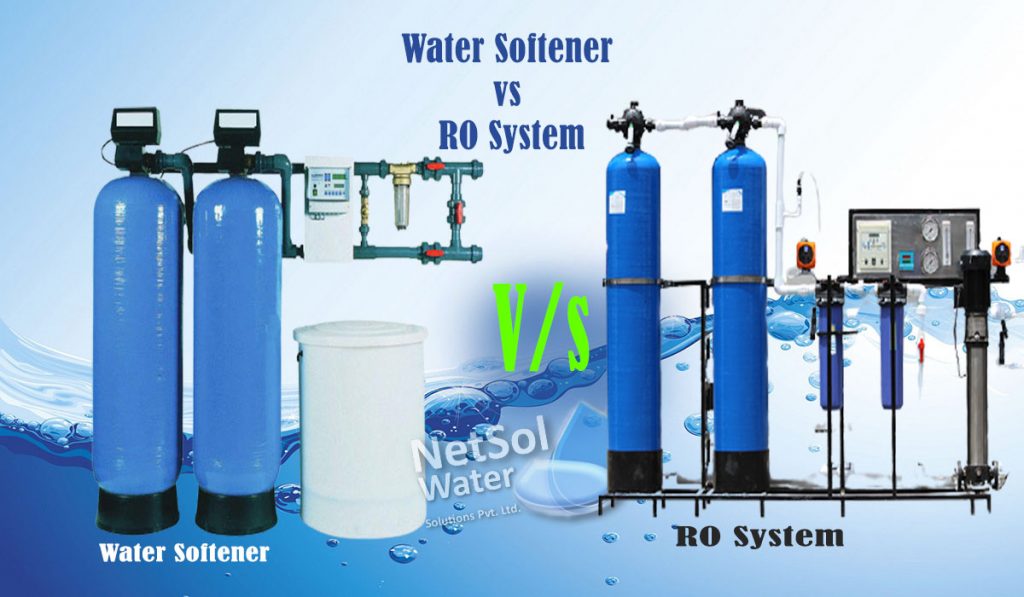 Difference between water softener and Reverse Osmosis | Softener vs RO
The Awkward Dance of Coexistence
Now, the million-dollar question: do you need both a softener and an RO? Usually, yes, and here’s why. Soft water is great for your pipes and skin, but it’s a bit salty. And RO membranes hate salt. If you feed an RO system hard water, the calcium and magnesium crust over the membrane like a pizza stone, ruining it. So, in a smart setup, the water softener goes first, making the water “soft,” then the RO polishes it into something so pure it’s almost religious.
Think of it as a two-step spa treatment. First, the softener gives your water a gentle scrub and a loose robe. Then the RO shoves it into a high-pressure hyperbaric chamber and emerges with a PhD in Purity. You’ll taste the difference. I swear, tap water from an RO system tastes like the tears of a happy cloud. The softener makes the water feel silky; the RO makes it taste like nothing—which is the highest compliment you can give water.
Wait, I almost forgot the weirdest part: Reverse Osmosis wastes water. Yep, for every gallon of pure water it makes, it dumps about three to four gallons of concentrated “reject” water down the drain. It sounds terrible, but modern systems are getting better. Some recapture that reject water for watering plants or washing your car. Just don’t drink it, unless you enjoy a sudden saltiness that makes you feel like you’re licking a pretzel.
Should You Get One? Or Both?
If your tap water leaves white scale on your kettle and you have to scrub your shower every Tuesday, you need a softener. If you care about the taste of your coffee or want to drink something that doesn’t taste like a swimming pool, you need the RO. If you want your home to be a fortress of hydration and your plants to look like they’re on steroids, get both. Yes, you’ll sound fancy at parties. “Oh, I’m just running my RO system this morning.” People will nod politely and think you’re a wizard.
One last joke to take with you: Why did the water molecule break up with the calcium ion? Because it was too hard to get along! (I’ll show myself out.) So go forth, my thirsty friend. Install a softener, add an RO, and finally drink water that tastes like money—without the saltiness. Your pipes, your skin, and your coffee will send you a thank-you card.
