Home Water Softener And Filtration System

Picture this: You step out of a steamy shower, feeling like a glistening swamp creature, and your skin immediately feels tight enough to squeak. Your hair? It’s less luscious...
Picture this: You step out of a steamy shower, feeling like a glistening swamp creature, and your skin immediately feels tight enough to squeak. Your hair? It’s less luscious locks and more like straw that survived a drought. Welcome to the world of hard water—public enemy number one for your pipes and your self-esteem.
Hard water is just regular water that’s been on a mineral-collecting road trip, picking up calcium and magnesium hitchhikers from the ground. It’s not dangerous—you won’t grow a third ear—but it’s the reason your coffee tastes like chalk and your soap refuses to lather properly.
The Water Softener: Your Plumbing’s Personal Therapist
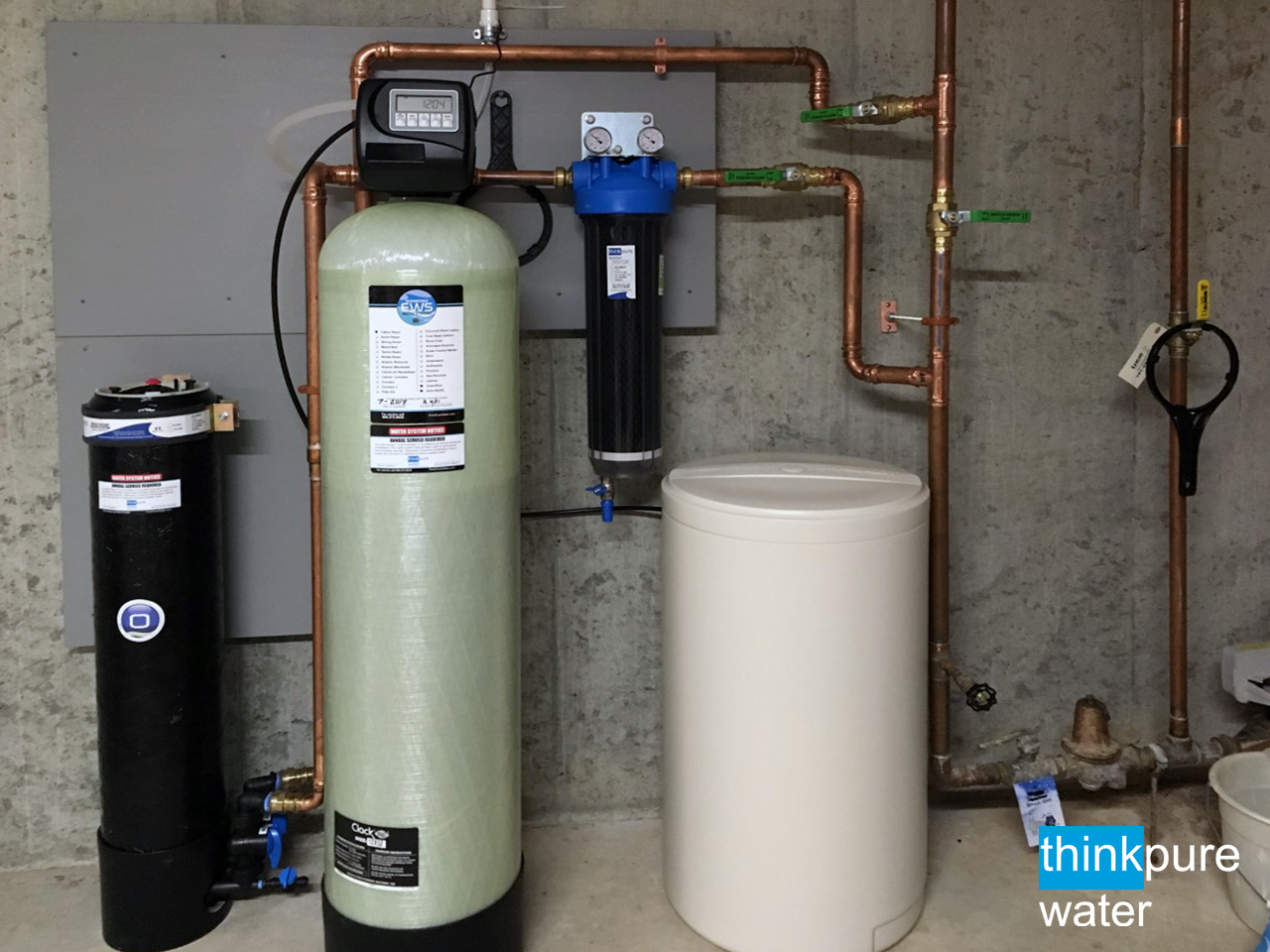
Enter the water softener, a glorified divorce attorney for minerals. It works by swapping those hard-water thugs (calcium and magnesium) for much friendlier sodium ions in a process called ion exchange. Think of it as a hostage negotiation, but for your dishwasher.
Must Read
Here’s the wild part: a typical household uses about 100 gallons of water per day, and softeners can reduce scaly buildup by up to 99%. That means your water heater will live longer than your last three houseplants combined. Your laundry will come out so soft you’ll want to wear it to bed—and not just because you’re lazy.
But Wait—Should You Drink Softened Water?
Here’s the kicker: softened water adds salt to your tap. Not enough to taste like a pretzel, but if you’re on a low-sodium diet, you might want to skip it. The average softener adds about 7.5 milligrams of sodium per 8-ounce glass—that’s less than a slice of bread, but still.
For drinking, many people bypass the softener and install a separate filtration system. It’s like having a VIP lounge for your water—only the fancy stuff gets through.
Filtration Systems: The Bouncers at the Water Club
Filtration systems are the bouncers of your kitchen. They kick out chlorine, lead, pesticides, and microscopic freeloaders that give water that “swimming pool aftertaste.” Some use activated carbon—charcoal, basically—which is the same stuff that soaks up toxins in a hospital emergency room.
Surprising fact: over 60% of Americans have detectable levels of chlorine in their tap water. That’s the same stuff they use to bleach your socks. A good filter removes it so your water tastes like a mountain spring instead of a laundry aisle.
The Combo System: When Softeners and Filters Fall in Love
You don’t have to choose. Many homes install a two-stage system: first a softener for your whole house, then a reverse osmosis filter under the kitchen sink for drinking. Reverse osmosis is like squeezing water through a microscopic strainer that’s so tight it even removes fluoride—for better or worse.
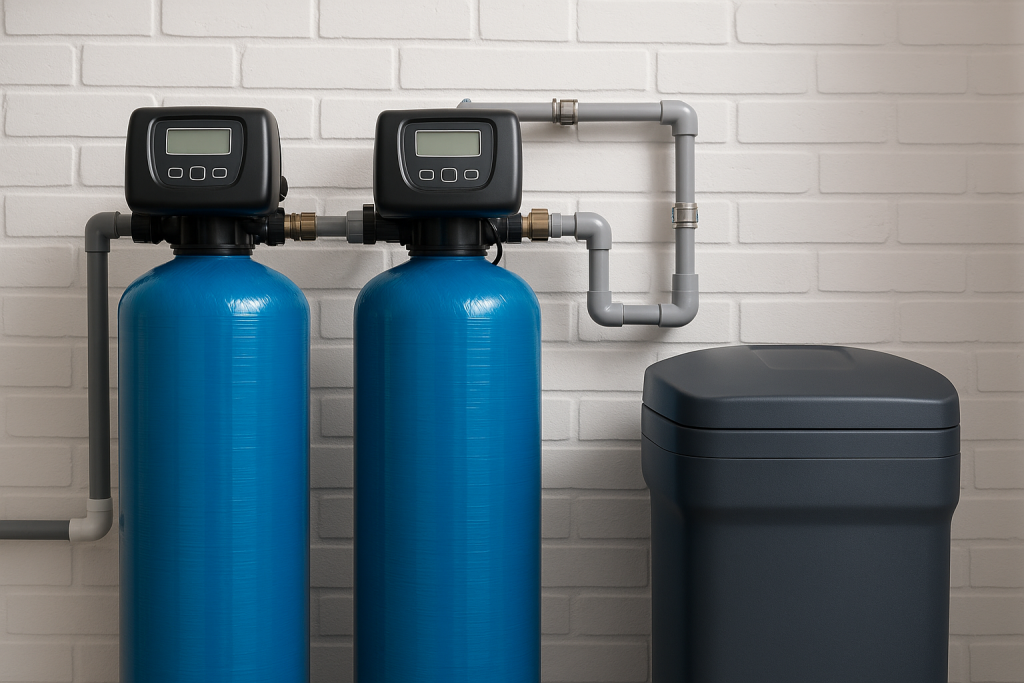 Whole Home Water Filtration Systems with Softener: A Complete Guide
Here’s a mind-bender: reverse osmosis was invented for astronauts to recycle their urine into drinking water. That’s right—your kitchen filter is pricier than a NASA toilet, but it’s way less gross. And it can remove up to 99% of contaminants, including lead, arsenic, and your doubts about tap water.
The Hidden Enemy: Maintenance and Regret
Let’s get real: all this magic comes with maintenance. Softeners need bags of salt refilled like a lazy hamster’s water bottle. Filters need replacing every six to twelve months—ignore that, and your water will taste like a dead mouse lived in the tube.
I once forgot to change my filter for a year. The water came out with a distinct note of “basement” and a slight brown tint. It was like drinking a forgotten puddle from a 1998 camping trip. Don’t be that person.
Should You Invest? The Honest Verdict
If you live in an area with hard water—check for white flakes on your faucets or that “squeaky” feeling on your skin—a softener is a no-brainer. It’ll save your appliances from an early grave and your hair from looking like a tumbleweed.
For taste and health, a filtration system is like buying happiness in a plastic cartridge. The cost? A decent under-sink system runs about $150 to $500—less than replacing a coffee maker that died from limescale every two years.
Here’s the bottom line, served with a wink: your water doesn’t have to taste like a swimming pool or feel like sandpaper. A combo system is basically the Beyoncé of plumbing—powerful, expensive, and totally worth the hype. Just remember to change the filter. Your taste buds—and your bathtub—will thank you.
