Average Water Bill For 4 Person Household

Let’s be real: nobody stares at their monthly water bill with the same excitement they’d reserve for finding a forgotten $20 in a winter coat. It’s more like the awkward silen...

Let’s be real: nobody stares at their monthly water bill with the same excitement they’d reserve for finding a forgotten $20 in a winter coat. It’s more like the awkward silence after someone asks, “So, what’s the plan for retirement?” You know it’s coming, you know it’s important, but you’d rather talk about literally anything else. For a family of four, that bill is a little like a moody teenager—unpredictable, slightly demanding, and you’re never quite sure what you did to deserve it.
The Great Plumbing Mystery
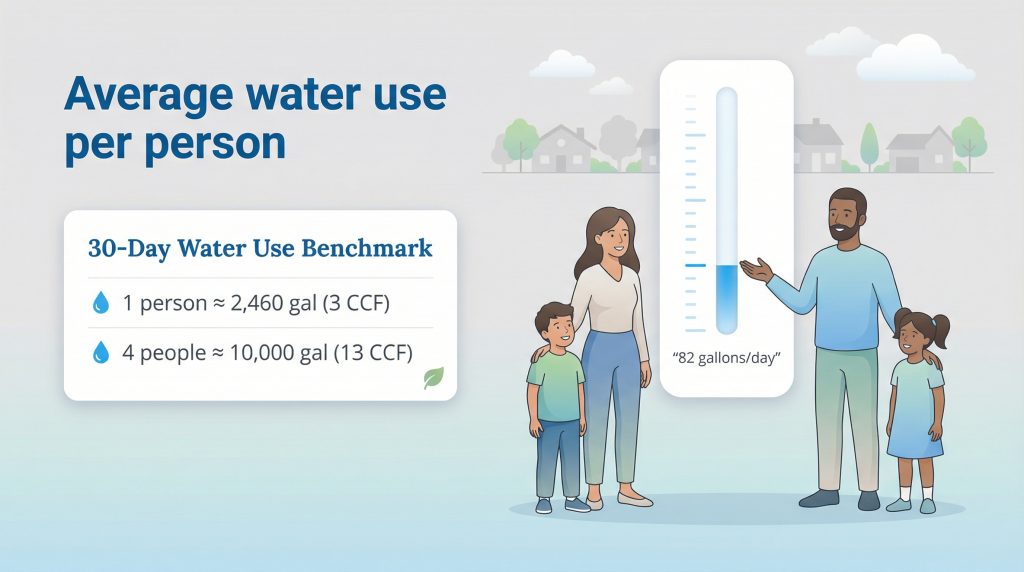
So, what’s the average tab for a four-person household? According to the Environmental Protection Agency (yes, someone actually tracks this), a typical family of four uses about 400 gallons of water every single day. That’s not a typo—400 gallons. To put that in perspective, that’s enough water to fill a small swimming pool every week, or roughly the same volume your car would cry out if it suddenly developed a thirst for the ocean.
Nationally, that translates into a monthly water bill somewhere between $70 and $120. But here’s the kicker: it depends entirely on where you live. If you’re in Seattle, you might pay $80 and feel like a water-saving saint. If you’re in Atlanta, that number can balloon to $150, and you’ll start muttering about “city fees” under your breath while the kids splash in the bathtub like they’re training for the Olympics.
Must Read
The Secret Life of the Fourth Person
You might think four people means a neat division of water usage: one person for showers, one for dishes, one for laundry, one for the mysterious leak behind the toilet you keep meaning to fix. But reality is messier. The fourth person is often the one who runs the dishwasher twice because “I just don’t trust the first rinse cycle.” Or the teenager who takes a 45-minute shower that doubles as a therapy session, complete with steam and a playlist that rattles the walls.
I once calculated my own family’s usage and realized our dog—a golden retriever who demands a hose spray after every walk—accounts for a solid 10% of the bill. That’s not a pet; that’s a tiny, furry swimmer with a mortgage. Suddenly, the $90 average doesn’t feel so abstract. It feels like the price of trying to keep everyone clean, fed, and occasionally entertained by the sprinkler on a hot July afternoon.
The Sneaky Culprits Hiding in Your House
Let’s talk about the real water bandits. You probably think showers are the biggest offender, but no—the humble toilet is the undisputed champion. Each flush uses about 1.6 gallons (if you’ve got a modern, responsible toilet) or up to 3.5 gallons if you’re living in a home that still remembers the 1980s. Do the math: four people, five flushes a day each, and you’re suddenly funding a leaky aqueduct.
Then there’s the washing machine. I swear, it has a personal vendetta against my wallet. Every load of laundry feels like sending a check to the water company. And don’t even get me started on the kitchen sink—how does rinsing a single plate use enough water to fill a kiddie pool? It’s a conspiracy, I tell you. The faucet knows when you’re not looking.
Why Your Bill Spikes Without Warning
One month it’s $85, the next month it’s $130, and you start checking for a hidden sprinkler system activated by neighborhood kids playing pranks. Spoiler alert: it’s probably not the kids. The most common culprit is a running toilet, which can waste 200 gallons a day without making a sound louder than a whisper. It’s the ninja of water waste. Or maybe you’ve got an irrigation system that decided to water the driveway instead of the petunias—a classic move that turns your bill into a horror story.
 Understanding Your Water Bill: How to Read Charges and Spot Leaks
I once had a leaky faucet that dripped for three months before I noticed. The sound was so soft I thought it was my own sanity slowly leaking away. When I finally fixed it, my bill dropped by $20. That’s $20 I could have spent on a decent taco dinner—a tragedy in hindsight. So, if your bill seems high, walk around your house and listen. Your plumbing might be talking.
How to Survive (and Maybe Even Save)
You don’t need to turn into a desert hermit. Small changes add up. Try shortening showers by two minutes—yes, two minutes is enough to save 10 gallons per shower. That’s like saying “no” to one extra load of laundry a week. Also, run the dishwasher only when it’s full. I know, I know, the temptation to wash just three forks is strong, but resist. Your wallet will send you a thank-you note written in undrinkable ink.
And here’s a funny one: check your outdoor water usage. A hose running for an hour uses same amount of water as a typical four-person household uses indoors in a whole day. That’s not a typo either. So when you’re washing the car and thinking, “I’ll just let it run for a bit,” picture your water bill doing a little dance of joy. It’s a sobering thought, but a useful one.
The Bottom Line (No Pun Intended)
At the end of the day, the average water bill for a family of four is just a number—usually between $70 and $120 a month. But it’s also a reflection of daily life: the morning chaos, the dishes after dinner, the laughter during a bath time that somehow turns into a miniature tsunami. It’s the price we pay for not smelling like campfire and dust.
So next time that bill arrives, don’t groan. Grin a little. You’re not just paying for water—you’re paying for the ability to flush loud, shower long, and water the garden that you swore you’d tend to once spring finally arrived. And if you’re really worried, just remember: at least it’s not your electric bill. That’s a whole other kind of beast.
