Hair Feels Greasy After Washing Hard Water

You step out of the shower, hair squeaky clean, feeling like a fresh spring morning. Ten minutes later, it’s a greasy, flat disaster clinging to your scalp. If this sounds fam...
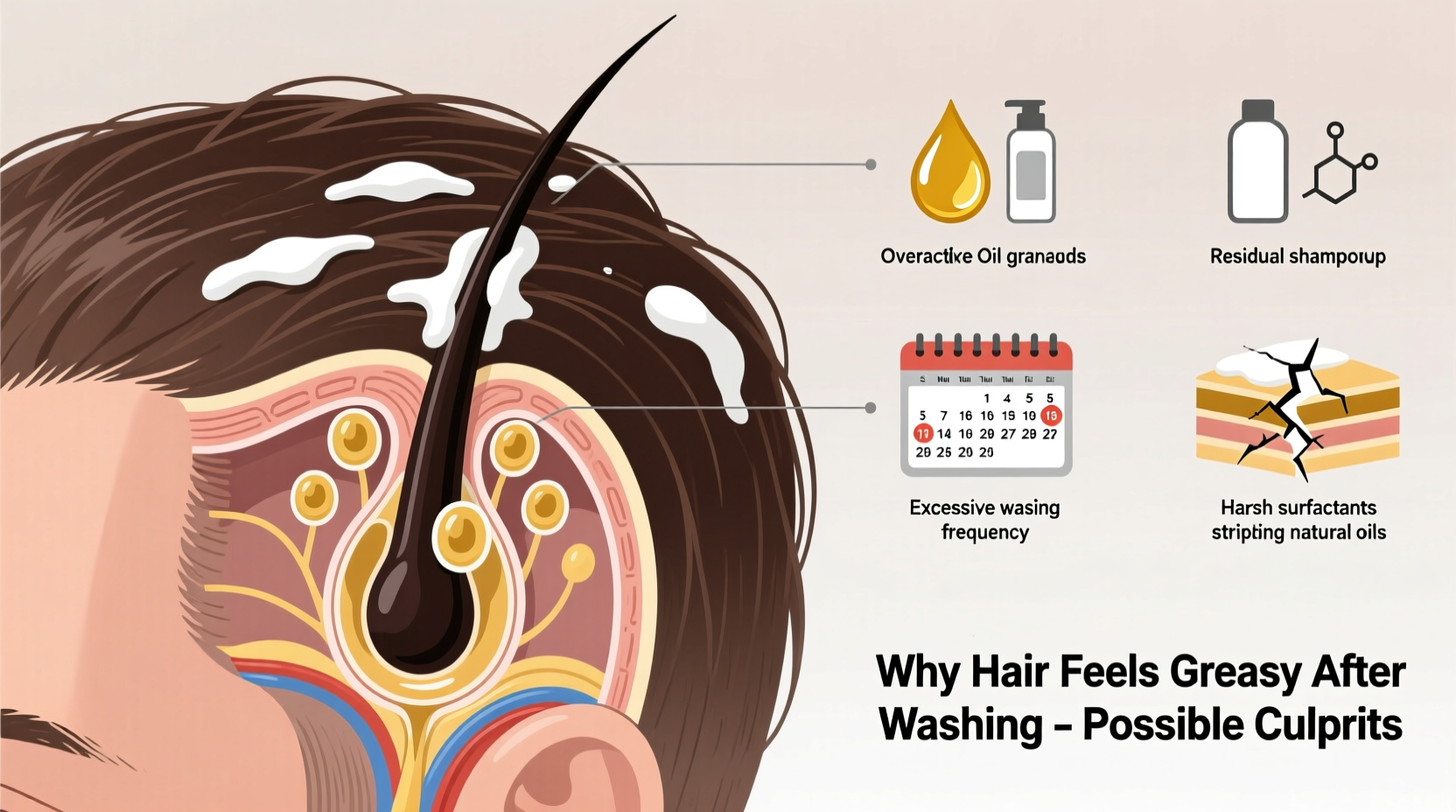
You step out of the shower, hair squeaky clean, feeling like a fresh spring morning. Ten minutes later, it’s a greasy, flat disaster clinging to your scalp. If this sounds familiar, your tap water might be the culprit, not your shampoo.
Welcome to the frustrating world of hard water. It’s a sneaky saboteur that turns a good hair day into an oil slick, leaving you wondering if you forgot to rinse.
The Silent Saboteur: What Hard Water Actually Does
Hard water is simply rainwater that has picked up minerals like calcium and magnesium as it travels through the ground. Think of it as nature’s accidental hair stylist, but a bad one.
Must Read
Here’s the science: these minerals don’t dissolve well in soap or shampoo. Instead, they form a stubborn, chalky film, often called soap scum, that clings to your hair strands.
This film coats the hair cuticle, blocking moisture and leaving a dull, sticky residue. Your scalp then overproduces oil to compensate, creating that frustrating “greasy five minutes after washing” feeling.
Culture Shock: The Hard Water Hair Struggle is Global
This isn’t just your problem. In many parts of the UK, southern Europe, and the American Southwest, hard water is a daily reality. Travelers from soft-water regions often experience this shock, blaming hotel shampoo until they find the real cause.
It’s a bit like the infamous London flat iron problem—tourists rave about their frizz-free curls, while locals joke that their hair is held together by limescale. Literally.
In some cultures, people have long adopted workarounds. From ancient Roman baths using rainwater collection to modern Japanese water softeners, humans have been battling mineral buildup for centuries.
Practical Tips: How to Outsmart the Minerals
You don’t need to move to a soft-water paradise. A few smart tweaks to your routine can completely change the game. Begin with a clarifying shampoo once a week to strip away that mineral film.
Look for a formula specifically marked “chelating.” These contain ingredients like EDTA or citric acid that bind to minerals and wash them away, giving your hair a real reset.
Next, try a final rinse with diluted apple cider vinegar. Mix one tablespoon with two cups of water, pour it over your hair, and let it sit for a minute. The mild acid dissolves mineral buildup and restores shine.
Filter It: Your Secret Weapon
Investing in a shower head filter is the single most effective fix. These aren’t expensive—often under forty dollars—and they replace the cartridge every few months.
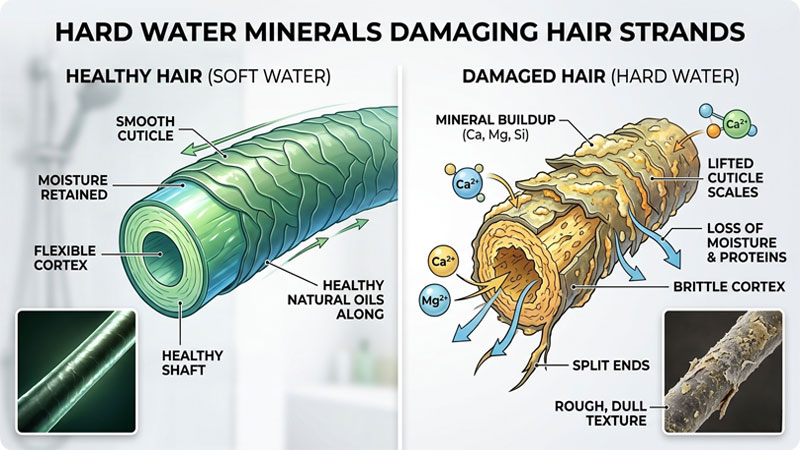 Does Hard Water Cause Hair Fall? Chlorine, Iron & Bath Water Explained
They work by physically trapping calcium and magnesium before the water hits your hair. The difference is immediate, like switching from gritty coffee to a smooth pour-over.
For a low-tech hack, try rainwater rinsing. Collect clean rainwater in a jug, use it as your final rinse, and watch the grease disappear. It’s pure, soft, and completely free.
Fun Facts: The Weird Side of Hard Water
Did you know that hard water isn’t bad for you to drink? In fact, the extra calcium and magnesium can be beneficial for your bones and heart. It’s just terrible for your hair and skin.
Your shampoo actually works less effectively in hard water. Studies show that foaming action is reduced, meaning you might use double the product for half the cleaning power. Talk about a waste of luxury shampoo.
And here’s a quirky one: hard water affects plastic bottles too. If you use a reusable water bottle in a hard water area, you’ll notice white, crusty deposits building up inside. That’s the same mineral film coating your hair.
The Connection: How This Fits Into Your Daily Life
Think of your hair care routine as a conversation with your environment. Hard water isn’t attacking you; it’s just being itself. The trick is to respond with a bit of practical wisdom.
This struggle makes you more aware of what you’re putting on your body. It’s a small act of daily rebellion against friction, a reminder that even simple routines can be optimized.
And honestly, there’s something oddly satisfying about fixing this problem. A good filter and a vinegar rinse feel like a secret handshake among those in the know.
So, the next time your hair feels greasy ten minutes post-wash, don’t blame your shampoo. Blame the water, give it a little vinegar attitude, and move on with your day. You’ve got this.
