How Long Is Water Good In A Plastic Bottle

Have you ever cracked open a plastic water bottle that’s been sitting in your car for a few days, only to wonder, “Is this still okay to drink?” It’s a surprisingly common que...
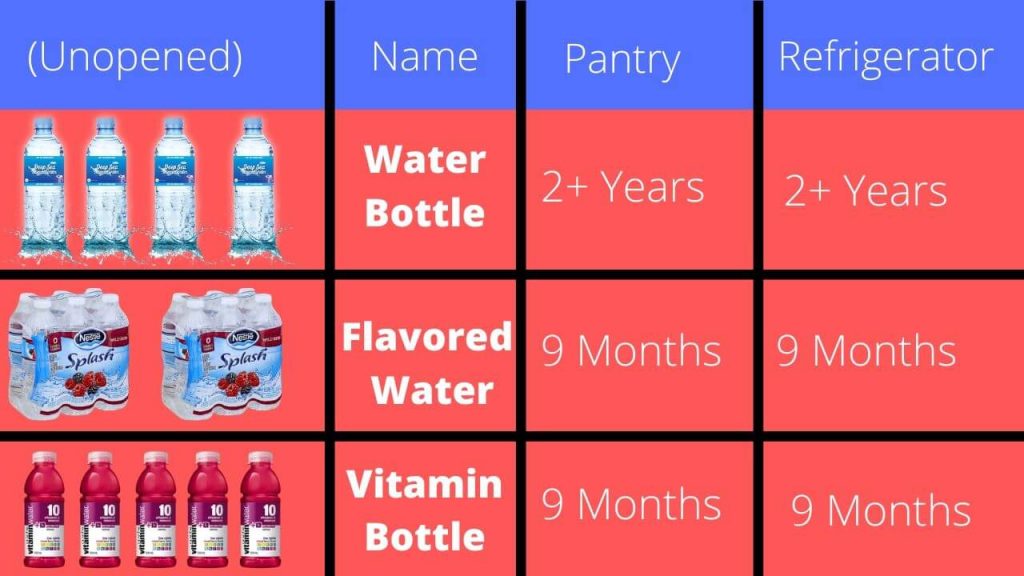
Have you ever cracked open a plastic water bottle that’s been sitting in your car for a few days, only to wonder, “Is this still okay to drink?” It’s a surprisingly common question, and the answer isn’t as simple as you might think. Let’s dive into the curious life of bottled water, from shelf to sip.
The quick answer: It depends on where it’s been hiding.
Officially, the U.S. Food and Drug Administration (FDA) doesn’t require a strict expiration date for bottled water—it’s considered non-perishable. However, most manufacturers slap a one-to-two-year date on there, and that’s more about the plastic bottle than the water itself.
Think of the bottle as a tiny, sealed time capsule. As long as it’s unopened and stored cool and dark, the water inside is technically good for years. But the moment you pop that cap, the clock starts ticking in a whole new way.
Must Read
Once opened, you’ve got about three days.
That’s right—once you break the seal, your water is best enjoyed within three to five days. Why? Because you’ve invited the outside world in. Bacteria from your mouth, dust from the air, and even tiny microbes from your fingers can sneak in when you drink straight from the bottle.
It’s a bit like leaving a slice of pizza on the counter: you wouldn’t eat it after a week, right? Why should your water be any different? The good news is, if the bottle has been refrigerated and you haven’t shared it with anyone, you can stretch that window a bit longer—maybe a week—but after that, the taste might start to get stale.
The cool, weird science part: plastic chemistry.
Here’s where it gets interesting. Plastic bottles, especially the thin, crinkly ones, aren’t just passive containers. Over time, they can leach tiny amounts of chemicals into the water, especially if they get hot. Leave a bottle in a sunny car on a summer day, and you’re essentially brewing a low-grade plastic tea.
Ever notice that “plastic taste” in an old bottle? That’s likely antimony or BPA (bisphenol A) seeping in. While experts say the levels are usually too low to harm you, it’s a fun reminder that your water isn’t just H2O—it’s a molecular cocktail with a hint of its packaging. Compare it to a forgotten sandwich: the bread gets stale, the lettuce wilts. Your water just… gets chemically chatty.
Does freezing change the game?
You might think freezing a plastic bottle is a smart move for longevity, but it’s actually a bit of a trick. When water freezes, it expands, and that expansion can create microscopic cracks in the plastic. These cracks become highways for chemicals to migrate into your water as it thaws.
Plus, if you’ve ever left a frozen bottle in the fridge and then taken a sip, you’ll notice it tastes flat. That’s because freezing can cause the dissolved oxygen to escape. Essentially, you’re drinking still, metallic-tasting memories of what was once crisp water. Kind of like a forgotten ice cube tray.
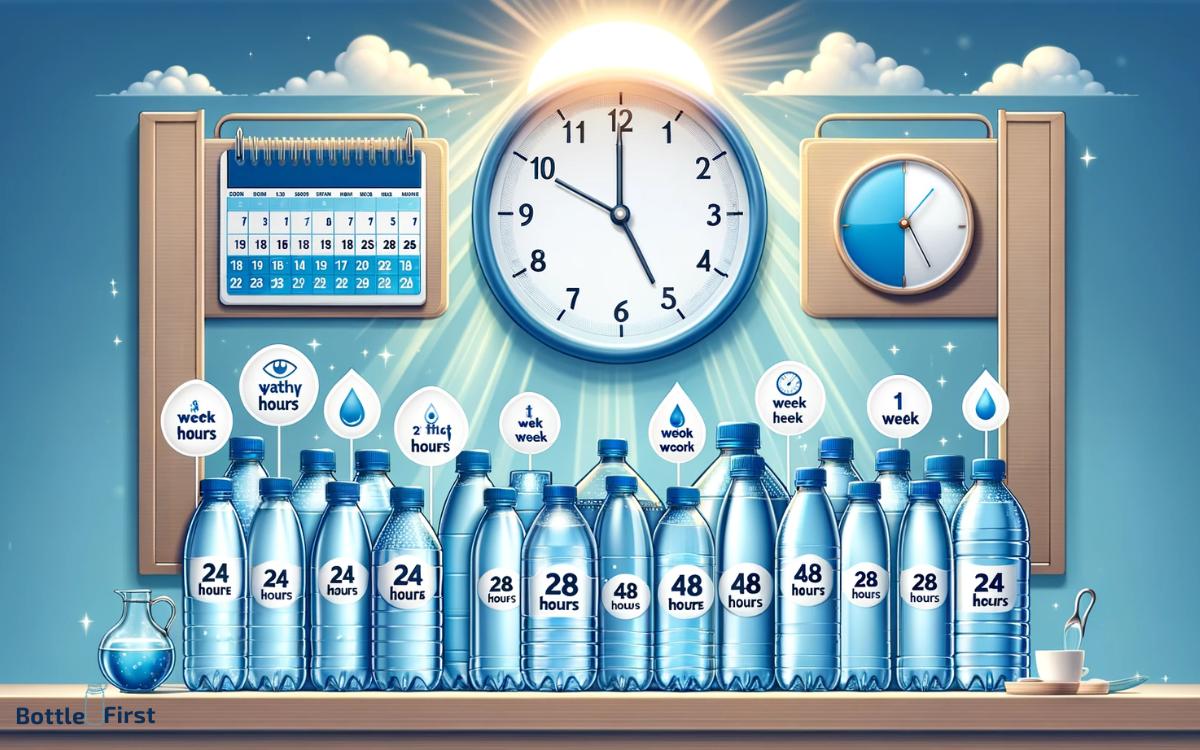 How Long Can You Keep Water In Plastic Bottles at Albert Hoopes blog
The real rule of thumb for the curious drinker.
Here’s a simple, chill way to think about it: your nose knows. If the water smells off, looks cloudy, or tastes like the inside of a gym bag, trust your gut. Your body is an excellent quality-control device.
For unopened bottles, the biggest enemy is heat. Keep them away from radiators, direct sunlight, and your car’s dashboard in July. A cool pantry or a basement is their happy place. And if you’re feeling adventurous, the coolest trick is this: most tap water is just as good, if not better, because it’s usually tested more often than bottled water.
Why we even ask this question (it’s not stupid).
We don’t worry about a glass of water that’s been sitting on the nightstand for twelve hours, yet we scrutinize a plastic bottle like it’s a science experiment. Why? Because the plastic makes it feel mysterious. It’s the container, not the contents, that raises the eyebrow.
Think of it like this: a fresh bottle is a vibrant, anonymous artist. An old, warm bottle is that same artist after a long, sweaty concert—a little altered, but still basically the same person. You can still enjoy it, but you might want to check the vibe first.
The final, friendly verdict.
Unopened and stored in a cool place? Years—seriously. Opened and drunk from directly? Three to five days, tops. Left in a hot car? Toss it—not because it’s poisonous, but because it’s probably developed a personality you don’t want in your mouth.
So next time you grab that lonely bottle from under the seat, ask yourself: “Has this been living the high life, or has it been through the wringer?” If it’s been chilling in the shade, you’re golden. If it’s been through a heat wave, give it a sniff and maybe pour it down the drain. Your taste buds—and your curiosity—will thank you.
