Cost To Drill A Water Well In Lufkin Texas

So, you’re thinking about drilling a water well in Lufkin, Texas. Maybe your current water bill feels like a second mortgage, or you’re just tired of that faint sulfur smell t...

So, you’re thinking about drilling a water well in Lufkin, Texas. Maybe your current water bill feels like a second mortgage, or you’re just tired of that faint sulfur smell that makes your morning coffee taste like an old gym sock. Let’s be real: owning a well is like having a pet alligator—it sounds cool, but you have to feed it cash and hope it doesn't bite you in the wallet.
The big question, of course, is how much? In Lufkin, the cost to drill a water well typically runs between $5,000 and $15,000 for a standard residential setup. That’s roughly the price of a used Honda Civic, except this one doesn’t come with a CD player—it comes with the promise of never again fighting the kids over shower time.
What’s Eating Your Budget?
First, you’re paying for the hole itself. Drilling costs in the Piney Woods average about $30 to $50 per foot, depending on the rock and the luck of the draw. Think of it as buying a really long straw for your land—the deeper you go, the more the straw costs, and you really hope you don’t hit a boulder the size of a mini-fridge at 200 feet.
Must Read
In Lufkin, the water table can be generous but fickle. One neighbor might hit a gusher at 150 feet, while you’re still pumping sand at 300. It’s like dating: some people find their perfect match quickly, and others have to keep digging (literally) until they find something that won’t run out after a dry July.
The Equipment: Your Well’s Heart and Lungs
Then comes the pump, the casing, and the pressure tank. A decent submersible pump can run you $1,200 to $2,500. If you think that’s expensive, try hauling water in a pickup truck every time the city flushes a hydrant. The real kicker is the permit: Lufkin and Angelina County require one, and it’s usually a few hundred bucks. Think of it as the government’s way of saying, “We’re glad you’re independent, but we want your credit card number, just in case.”
Don’t forget the well cap and wiring. It’s like buying a Ferrari and then realizing you forgot the tires. A good driller will include some of this, but read the fine print—some folks end up spending an extra grand on copper wire alone, which feels like paying for the privilege of having your lawn dug up by a grumpy, muddy monster.
The Hidden Cost of Patience
Here’s the part nobody talks about: waiting. Drilling in Lufkin’s clay and sand means the rig might get stuck, or a part might break on a Friday afternoon. You’ll sit there, staring at a hole in the ground, wondering if you should have just paid the water bill and bought a Brita filter. Patience, grasshopper—the well will gurgle to life eventually, and you’ll feel like a pioneer who just discovered fire.
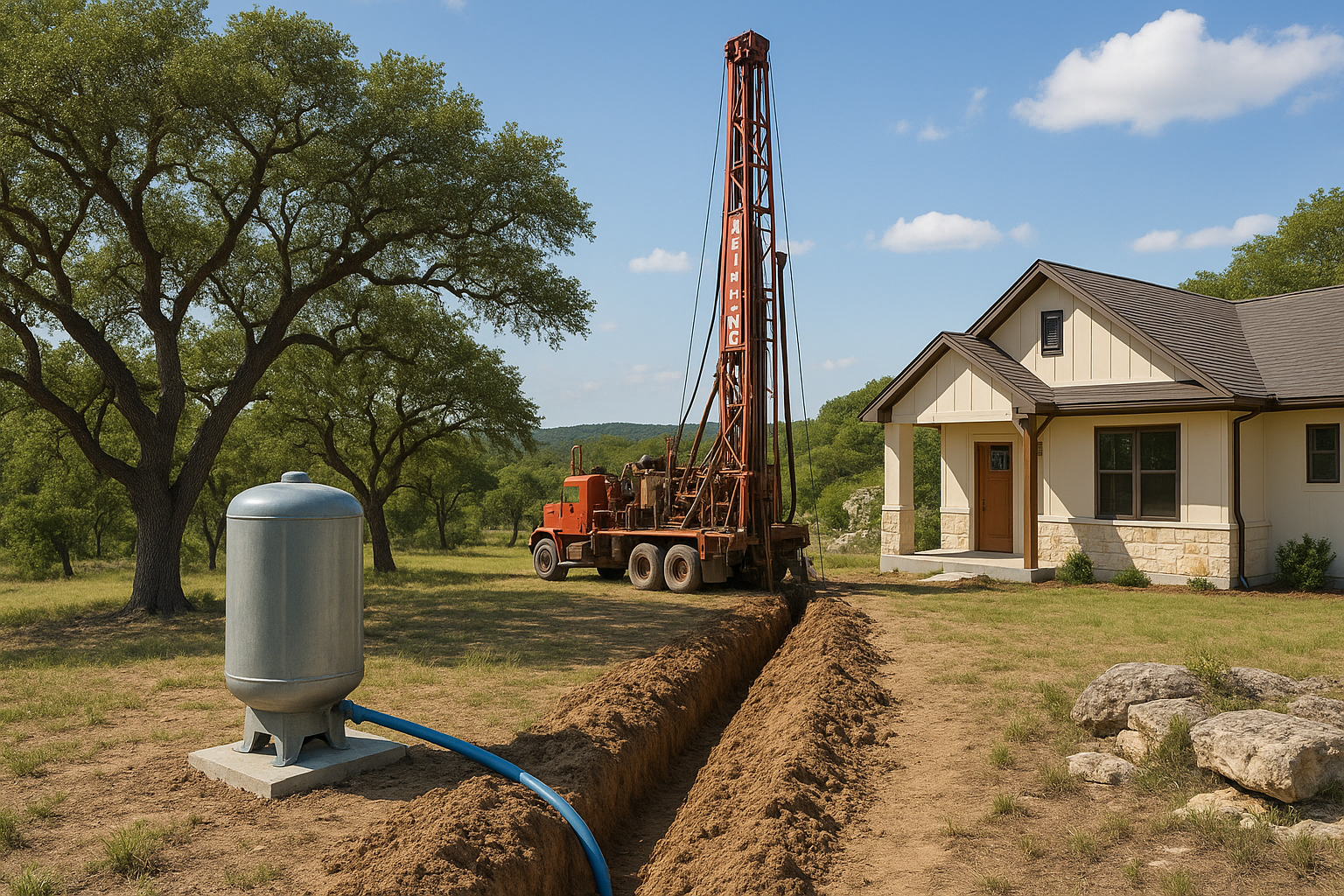 Well Water 101 for Texas Hill Country Homes: Drilling, Quality, Care
And then there’s water testing. After the well is drilled, you’ll pay $100 to $300 for a lab to tell you if your water is safe. In East Texas, you might find iron, manganese, or even bacteria. If that happens, you’re looking at a water treatment system—another $1,500 to $5,000. It’s like buying a new car, then realizing it needs a paint job and floor mats.
Is It Worth It? Let’s Be Honest
For most folks in Lufkin, the answer is yes—if you’re on a larger lot or just hate paying the city. A well can save you $50 to $150 a month on water bills, and after a few years, you break even. Plus, you’ll never have to hear your mother-in-law complain about “weak pressure” again. The downside? You become the neighborhood expert on mud, pumps, and why your kid’s bathwater looks like iced tea after a rainstorm.
One final piece of advice: get three quotes from local drillers, not the guys who show up in a lifted truck with a dog named “Bubba” and a handwritten contract. Ask for references, and check if their rig looks like it was built during the Carter administration. A good driller is worth their weight in gold—and a bad one is worth a hole you can’t fill with anything but regret.
So, go ahead and drill that well. You’ll get water that tastes like freedom, a small fortune in repair costs, and a story to tell at every barbecue. Just remember: in Lufkin, the water might be sweet, but the journey to get it is dirt cheap in name only. Now, go fetch your checkbook—and maybe a hose, just in case the city water turns off while you’re pondering your choices.
