Feeling Nauseous After Eating And Drinking

Last Tuesday, I inhaled a slice of pepperoni pizza like I hadn’t eaten in a week. Two bites in, my stomach did a dramatic U-turn. I spent the next hour staring at the ceiling...
Last Tuesday, I inhaled a slice of pepperoni pizza like I hadn’t eaten in a week. Two bites in, my stomach did a dramatic U-turn. I spent the next hour staring at the ceiling tiles, wondering if my body was secretly a drama queen. Spoiler: it totally is, and yours probably is too.
That queasy, “please-don’t-move” feeling after a meal is a universal nightmare. You’re not alone, and you’re definitely not broken. Let’s dig into why this happens, because nausea after eating is more common than you think.
Your Stomach is a Drama Queen (And That’s Okay)
First, understand this: nausea is your gut’s way of saying, “NOPE, too much, too fast, or too weird.” It’s a defense mechanism, not a personal attack. Think of it as your internal bouncer—sometimes it’s just overzealous.
Must Read
One minute you’re enjoying a burger, the next your brain is yelling “evacuate!” It can be triggered by speed (wolfing down food), volume (a giant portion), or annoying ingredients (hello, raw garlic). Personally, I blame the pizza’s grease—it’s like my stomach throws a tiny tantrum every time.
The Usual Suspects: What’s Really Going On?
Let’s break it down, because “I ate too fast” is just the tip of the iceberg. Sometimes it’s about acid. If your stomach produces too much acid, or if the valve at the top is lazy, stomach acid creeps into your esophagus. That burning sensation often comes with waves of nausea—lovely, right?
Another common culprit is delayed gastric emptying, aka gastroparesis. Fancy name, simple problem: your stomach doesn’t empty its contents into the small intestine quickly enough. Food just sits there, marinating, and your body goes, “Ugh, get this out.” It’s like waiting for a traffic jam to clear—inside your belly.
And yes, stress is a huge player. Your brain and gut are best friends who gossip constantly. When you’re anxious, your gut clenches up and slows digestion. So that “nervous stomach” before a meeting? It can absolutely turn into full-blown nausea after lunch.
What About What You’re Drinking? (Spoiler: It Matters)
Drinking is not always innocent. Gulping down a cold soda with a greasy meal? That carbonation expands your stomach, making it press against everything. Your body interprets that as “help, I’m too full,” and nausea kicks in.
Alcohol is a notorious villain. It irritates the stomach lining (gastritis) and messes with your brain’s nausea-control center. Ever wake up after a night out, take one sip of water, and instantly regret being alive? That’s your stomach throwing a hangover protest.
Even caffeine can be tricky. On an empty stomach, coffee stimulates acid production like crazy. Suddenly, your morning latte becomes a one-way ticket to Quease Town. Side note: I literally had to switch to half-caff. My dignity survived; my jitters did not.
The “Hidden” Triggers You’re Ignoring
Here’s where it gets sneaky. Sometimes it’s not what you eat, but when you eat. Late-night meals, right before lying down, are a recipe for reflux and nausea. Gravity works for you when you’re upright; against you when you’re horizontal.
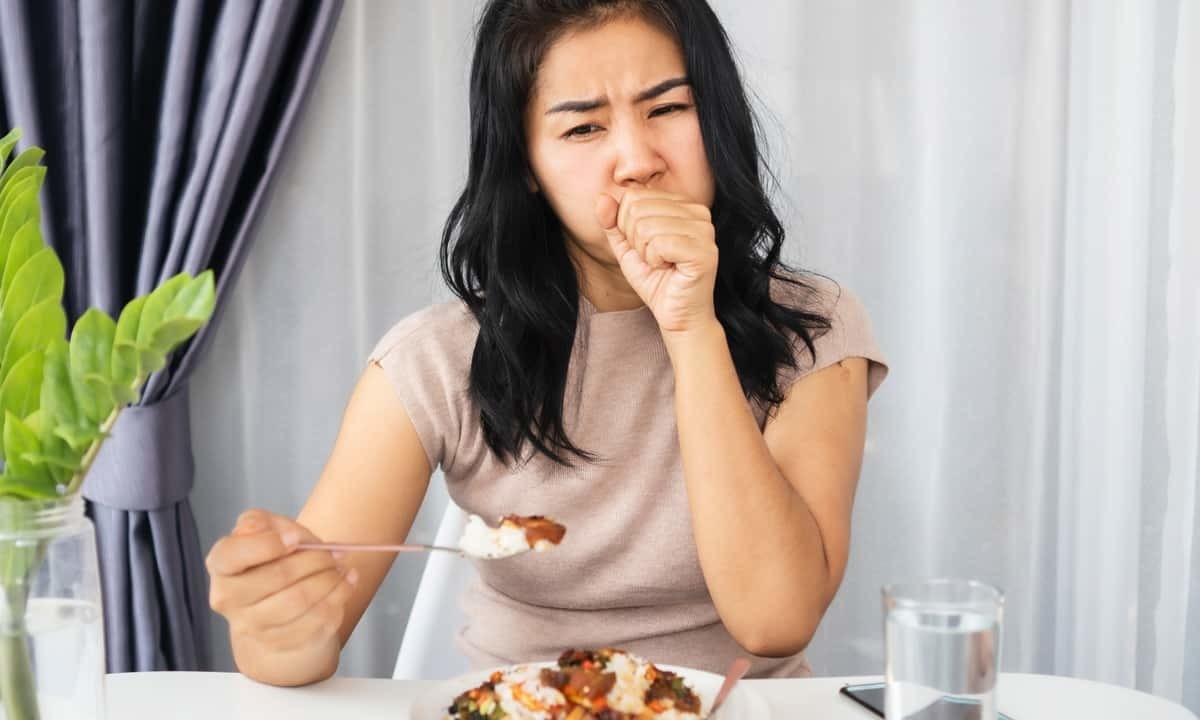 Nausea After Eating Too Much – Stomach Pain and Nausea: Causes
Another hidden trigger: food intolerances. Lactose, gluten, or even certain vegetables (onions, broccoli) can ferment in your gut, producing gas that distends your stomach. That distension is a huge nausea signal. You might not have a full-blown allergy—just a quiet intolerance that bubbles up as queasiness.
And don’t forget medications. Antibiotics, painkillers, and even supplements like iron can wreak havoc on an empty stomach. Check the label—if it says “take with food,” and you didn’t, your nausea is basically your body saying “told you so.”
What Can You Actually Do? (Besides Curse the Pizza)
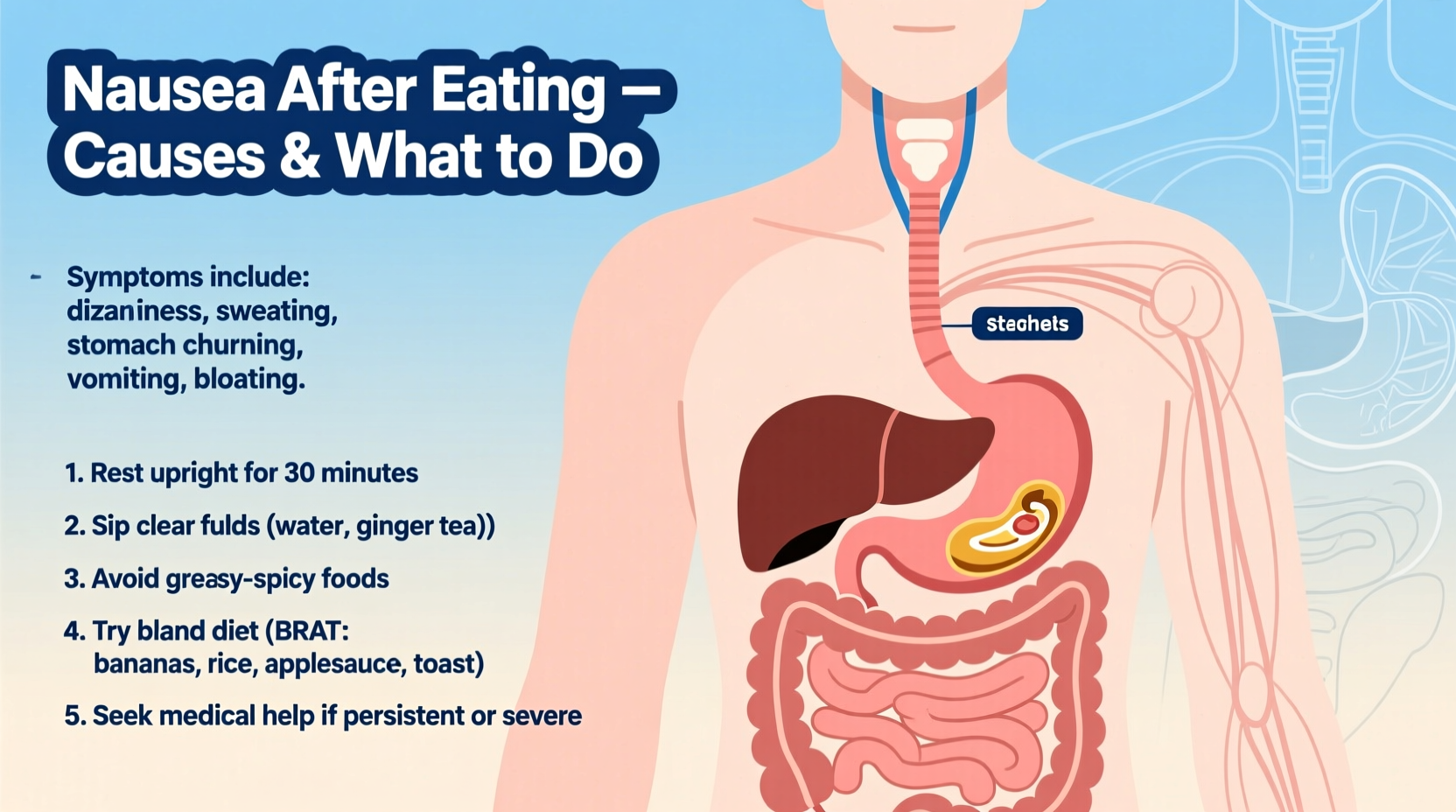
First, slow down. I’m serious. Put your fork down between bites. Chew each mouthful until it’s soup. Your stomach sends “I’m full” signals to your brain with a 20-minute delay. Wolfing down food is like sending a text and then showing up at the person’s house before they read it—chaos.
Second, try ginger or peppermint. These aren’t old wives’ tales—they actually calm the gut. Sip some ginger tea or chew a piece of crystallized ginger. If that’s too hippie for you, a plain cracker or dry toast can settle things too. Starch soaks up acid.
Third, watch your drinking window. Don’t chug liquids with meals. Drink between meals instead. Too much liquid dilutes stomach acid, making digestion slower and nausea more likely. Yes, I am telling you to be a better hydrator, not a firehose.
When to Actually Worry (And Call a Doctor)
Most of the time, occasional nausea is just life being rude. But if it happens every single time you eat, or if you’re also losing weight, vomiting, or feeling pain, go see a professional. You might have something like GERD, gastritis, or a gallbladder issue.
Also, if you’re pregnant, obviously that changes everything. Morning sickness can hit after any meal, even lunch. That’s normal-ish, but still worth mentioning to your OB.
One last thing: don’t ignore the gut-brain connection. If you’re constantly nauseous, ask yourself if you’re stressed, anxious, or burnt out. Your gut is an emotional sponge. Sometimes a deep breath helps more than a Tums. Weird, but true.
So, back to my pizza incident. I’m not proud of it, but I learned my lesson. Now I eat like a normal human: slowly, with no side of regret. Your stomach isn’t out to get you—it’s just trying to protect you from yourself. Listen to it, maybe apologize for that third slice, and drink some ginger tea. You’ll be fine.
