Di Resin Quality Conductivity Target St108

So, there I was, staring at a small, unassuming jar of beads that looked suspiciously like fish tank gravel. My buddy, a water treatment wizard, just grinned and said, “This,...
So, there I was, staring at a small, unassuming jar of beads that looked suspiciously like fish tank gravel. My buddy, a water treatment wizard, just grinned and said, “This, my friend, is the difference between a happy turbine and a very expensive, very loud explosion.” He wasn't kidding. That jar was filled with DI resin, and we were about to dive deep into its obsession with a number: St108.
You see, pure water sounds boring, right? Wrong. It’s a chemical monster, desperate to dissolve anything it touches. That’s why power plants and labs don’t trust tap water; they need it dead clean. And that’s where our hero, the Deionization (DI) resin, comes in—those little beads that act like microscopic magnets for dissolved salts.
But here’s the kicker: not all DI resin is created equally. Some of it is lazy. Some of it wears out fast. And if you’re trying to hit a conductivity target of St108, you can’t mess around with second-rate beads. St108 isn’t just a random code; it’s the holy grail of purity standards, usually meaning 18.2 megaohm-cm resistivity, which is basically the water equivalent of a perfect diamond.
Must Read
What the Heck is St108 Anyway?
Stop me if you’ve heard this one: “St108” sounds like a Star Wars droid, but it’s actually a material specification—often tied to a specific resin brand or customer requirement. It’s the target where the water’s conductivity drops to 0.055 microsiemens per centimeter. Yes, that’s ridiculously low.
Think of it this way: normal tap water has a conductivity of maybe 300. Your sweat? Way higher. But St108 water? It’s so pure it’s practically a vacuum. This isn’t for your morning coffee—this is for semiconductor manufacturing where a single speck of salt can short-circuit a million-dollar chip. No pressure, right?
The irony? You can’t even taste this water. It’s bland. But that “blandness” is the result of a highly engineered process where the resin beads swap out positive and negative ions until nothing is left but H₂O. It’s like a chemical swap meet, but everyone goes home empty-handed.
Why the Resin Quality Matters (A Lot)
Okay, so you’re chasing St108. You buy cheap resin. What happens? Silica leakage. Organic shedding. Or worse—the resin crumbles into a powder that clogs your entire system. I’ve seen it happen, and trust me, the words your boss uses are not printable here.
Quality resin, on the other hand, has uniform bead size and a high total exchange capacity. That means every single bead is pulling its weight, grabbing stray calcium and magnesium ions like a bouncer at a club. A single weak bead can ruin the whole party—and your conductivity meter will snitch on you instantly.
You also need to watch for regeneration efficiency. Some resins can be “recharged” with acid and caustic, but if the material is cheap, it loses its mojo fast. A good St108-grade resin can last years; a bad one starts failing in months. And nobody wants to explain that budget line item to the CFO.
The Secret Life of a Conductivity Meter
Here’s where it gets weirdly personal. Your conductivity meter isn’t just a tool—it’s a judgmental little gadget. It sits there, blinking numbers, silently mocking your efforts. If it reads 0.055 µS/cm, you’re golden. If it reads 0.07, you’re in “uh-oh” territory.
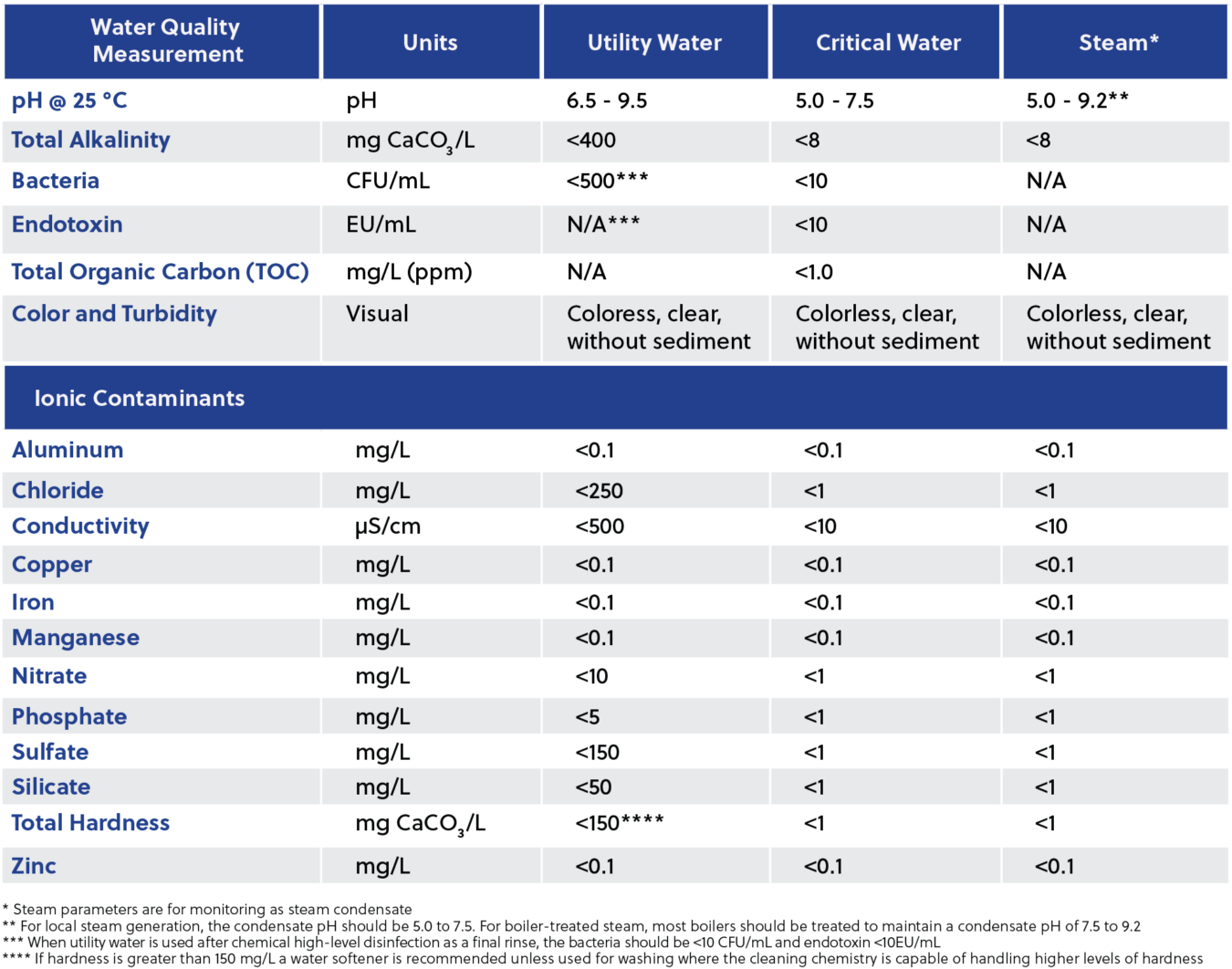
 ANSI/AAMI ST108 Testing - Environmental Safety Technologies, Inc
I once watched a technician spend four hours chasing a conductivity drift of 0.01. Turns out, a grease stain from his sandwich wrapper had contaminated the sample. No joke. So when we talk about St108 resin quality, we’re talking about a system so sensitive that a fingerprint can ruin your batch.
The lesson? Trust the resin, but verify the process. Even the best beads won’t fix a leaky valve or a dirty sample port. And if you ever get a reading that jumps around like a caffeinated squirrel, blame the operator first—then check the resin.
How to Spot a St108-Grade Resin
First, look at the bead color. Good resin is often a deep amber or translucent white. If it looks like someone dropped it in mud, walk away. The bead size should be uniform—typically between 0.3 and 1.2 mm. Too small, and it clogs; too large, and it leaves gaps where ions sneak through.
Second, ask about the cross-linkage percentage. This is a fancy way of asking, “Will this resin fall apart under pressure?” For St108 applications, you want 8-10% cross-linkage. Anything less, and it’s like using a paper umbrella in a hurricane.
Finally, check the TOC (Total Organic Carbon) rating. St108 water hates organic gunk. If your resin leeches carbon compounds into the water, you’ll never, ever hit that target. It’s like trying to keep a swimming pool clean while someone drops a bag of sugar in it every hour.
The Final, Slightly Ironic Takeaway
So, why am I, a random blogger, telling you all this? Because the pursuit of St108 conductivity is a beautiful, maddening obsession. You’re basically trying to create the most boring, inert substance on Earth—and it’s harder than you think.
The resin is the unsung hero. It works silently, swapping ions in the dark, while we obsess over a meter reading that’s effectively “zero.” But without quality resin, that zero is just a fantasy. So next time you see a DI system, give it a nod. And if you’re ever staring at a conductivity meter that reads 18.18 megaohm-cm… pop a tiny champagne cork. You’ve earned it.
Just don’t drink the water. It’s too pure to taste good anyway.
