How Often To Change Reverse Osmosis Filter

So there I was, staring at a glass of water like it was a magic potion. My friend Karen had just installed a reverse osmosis system, and she was practically glowing as she han...
So there I was, staring at a glass of water like it was a magic potion. My friend Karen had just installed a reverse osmosis system, and she was practically glowing as she handed me a cup. “Taste the difference,” she said, beaming.
I took a sip, and honestly? It tasted like… water. Crisp, clean, and utterly unremarkable. But Karen looked so proud, I nodded along and asked the obvious question: “So, how often do you change the filters?” She froze, then laughed nervously. “Uh, I think you just do it when the water tastes weird?”
And that, my friend, is how I ended up down a rabbit hole of cartridge life, sediment pre-filters, and the silent, gritty truth about RO systems. Turns out, guessing is the enemy of great water. Let’s talk about the real schedule—no Karen vibes allowed.
Must Read
The short answer is: it depends. Annoying, right? But stick with me, because the long answer is actually super simple once you know what each filter’s job is.
The Three Musketeers of Your RO System
Your reverse osmosis system isn’t one magical filter. It’s usually a team of three, sometimes four, working together. You’ve got the sediment pre-filter, the carbon pre-filter, and the RO membrane. Plus, there’s often a final polishing carbon filter.
Each one wears out at a different pace. Imagine sending a marathon runner, a sprinter, and a weightlifter on the same race—they’d all collapse at different times. Same logic applies here.
Let’s break it down, layer by layer, so you never have to second-guess yourself again. I’ll even give you the exact months, because I know you hate vague advice as much as I do.
The Sediment Pre-Filter: The Dirt Catcher
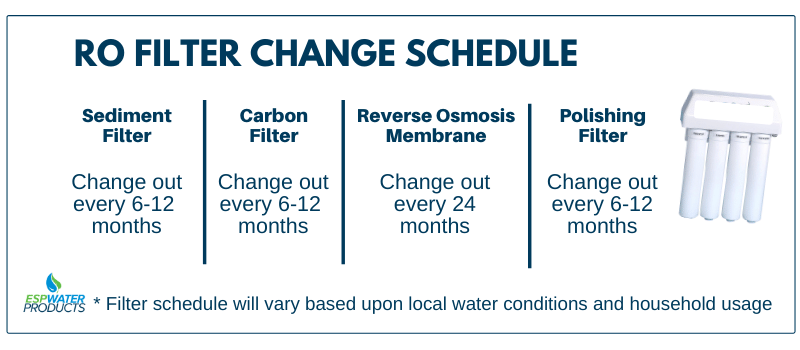
This guy catches sand, rust, and silt. Think of it as the bouncer at a club who stops the muddy boots before they ruin the dance floor. It needs changing every 6 to 12 months.
If you have well water or old pipes? Check it every 4 months. Seriously, just pop it out and look—if it’s brown or slimy, it’s done. Your membrane will thank you.
Ignoring this filter is like letting a toddler eat sand. It clogs everything downstream. Don’t be that person.
The Carbon Pre-Filter: The Chemical Whisperer
This one removes chlorine and bad tastes. Chlorine is kryptonite to an RO membrane—it destroys it slowly. So this filter’s job is to protect the expensive part.
Swap it every 6 to 12 months, ideally at the same time as the sediment filter. Pro tip: If your water starts smelling like a swimming pool, you waited too long. Oops.
I once met a guy who hadn’t changed his carbon filter in two years. His water tasted fine, but his membrane was toast. He spent triple on a new membrane. Don’t be that guy either.
The RO Membrane: The Star of the Show
This is the expensive, high-tech spiral that actually strips out heavy metals and fluoride. It’s the heart of the system, and it lasts way longer than the pre-filters.
Expect to replace the membrane every 2 to 3 years. But here’s the kicker: its lifespan depends entirely on how well you changed those pre-filters. If you slacked off, the membrane dies early.
How do you know it’s failing? Your water might taste flat, or the TDS (total dissolved solids) reading skyrockets. A simple TDS meter costs $15 and saves you from guessing. Best investment ever.
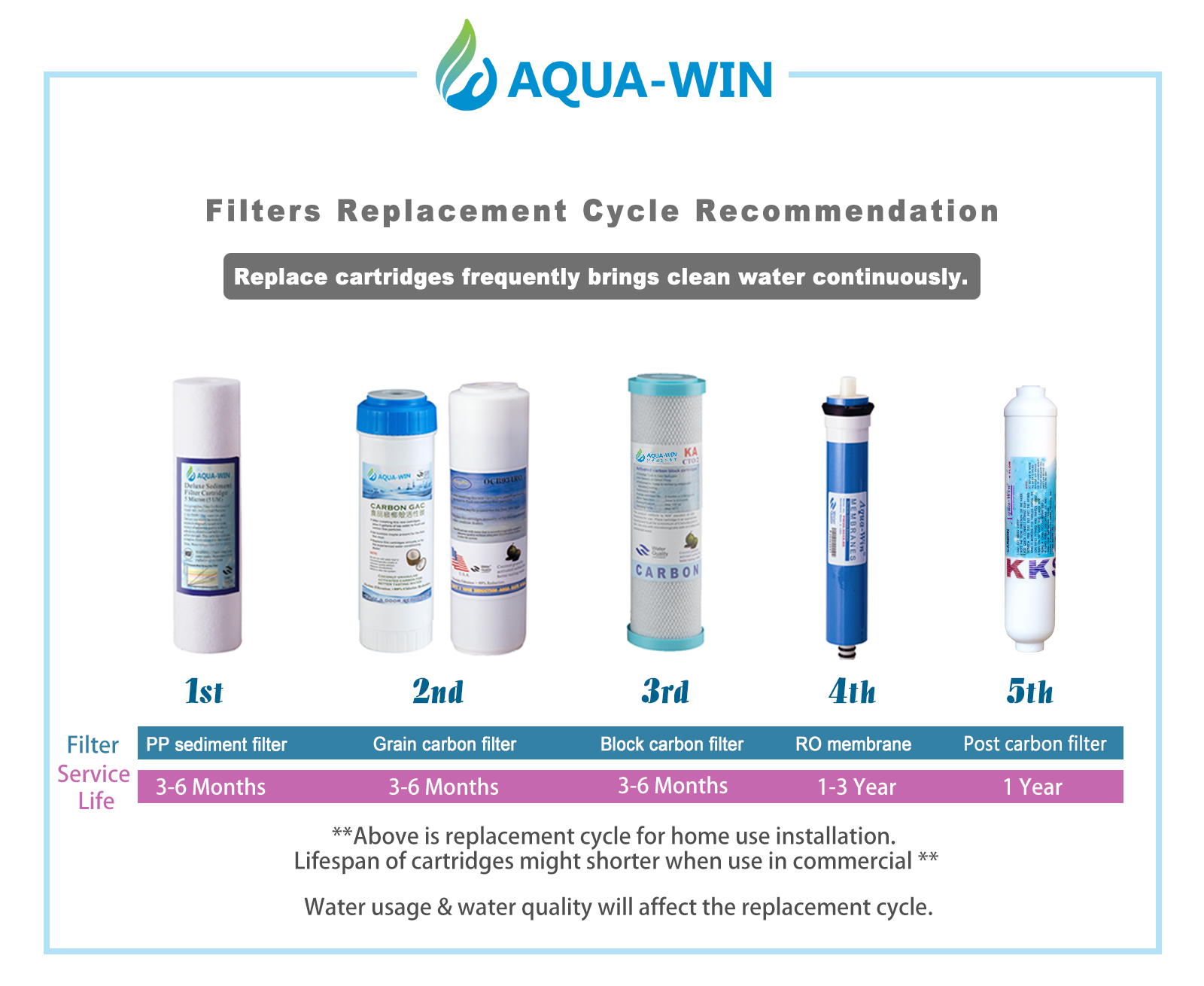 How Often Should You Change Your Reverse Osmosis Water Filters
The Polishing Filter: The Afterparty
Some systems have a final carbon filter right before the faucet. This one polishes the water for that last, crisp sip. It usually needs changing every 12 months.
If your water starts tasting “off” but your membrane is fine, blame this little guy. It’s the unsung hero of that morning glass.
Think of it as the mint on your pillow at a hotel—small, but you notice when it’s missing. Trust me.
The Golden Schedule (Print This, Seriously)
For most households with city water, here’s the cheat code: Replace sediment and carbon pre-filters every 6 months. Replace the polishing filter every 12 months. Replace the RO membrane every 2 years. Boom.
But if you have hard water, well water, or a family of six, cut those numbers in half. Your system works harder, so treat it like a marathon runner who needs more water breaks.
Set a reminder on your phone right now. I’m not kidding. Do it. Future you will drink cleaner water and curse past you less.
The Signs You’ve Waited Too Long
Your water starts tasting like tap water again. You know, that faint hint of “municipal pool” or “basement pipe.” That’s your system screaming for help.
Or, your water pressure drops dramatically. If a trickle used to fill a glass in 30 seconds and now takes two minutes, your pre-filters are likely clogged. Change them yesterday.
Also, weird smells. If your glass smells like rotten eggs (sulfur) or fish, you’ve got bacteria growing in a neglected filter. Time for a full system sanitization and filter swap. That’s the “I messed up” moment.
When in Doubt, Trust the Manufacturer (and Common Sense)
Every system comes with a manual. Yes, that dusty booklet you threw in a drawer. Dig it out. The manufacturer’s recommendations are based on actual testing, not guesses.
But if you lost the manual (we’ve all been there), stick to the 6/12/24 rule I gave you. And buy replacement filters in bundles—they’re cheaper and you’ll never forget again.
So next time Karen offers you a glass from her RO system, you can smile, sip, and casually ask, “So, when did you last swap the carbon pre-filter?” You’ll seem like a water wizard. And you’ll never have to guess again.
Happy hydrating, filter friend. Your taste buds deserve better than rusty sediment.
