Is Distilled Water Same As Reverse Osmosis

So, you’re standing in the water aisle at the grocery store, squinting at bottles. Distilled water. Reverse osmosis. They look like fancy cousins, right? I’ve been there, and...
So, you’re standing in the water aisle at the grocery store, squinting at bottles. Distilled water. Reverse osmosis. They look like fancy cousins, right? I’ve been there, and let me tell you, it’s a total head-scratcher.
Are they the same thing? Spoiler alert: nope. Not even close. But hey, don’t feel bad—it’s one of those “I should know this, but I totally don’t” kind of topics.
Grab your coffee (or tea, I won’t judge), and let’s untangle this mess together. Think of me as your water-whispering friend.
Must Read
The Big Idea: Two Different Paths to Clean Water
Both distilled and reverse osmosis (RO) water are purified. That’s the part that tricks us. But the process is like comparing making soup vs. baking a cake—different tools, different results.
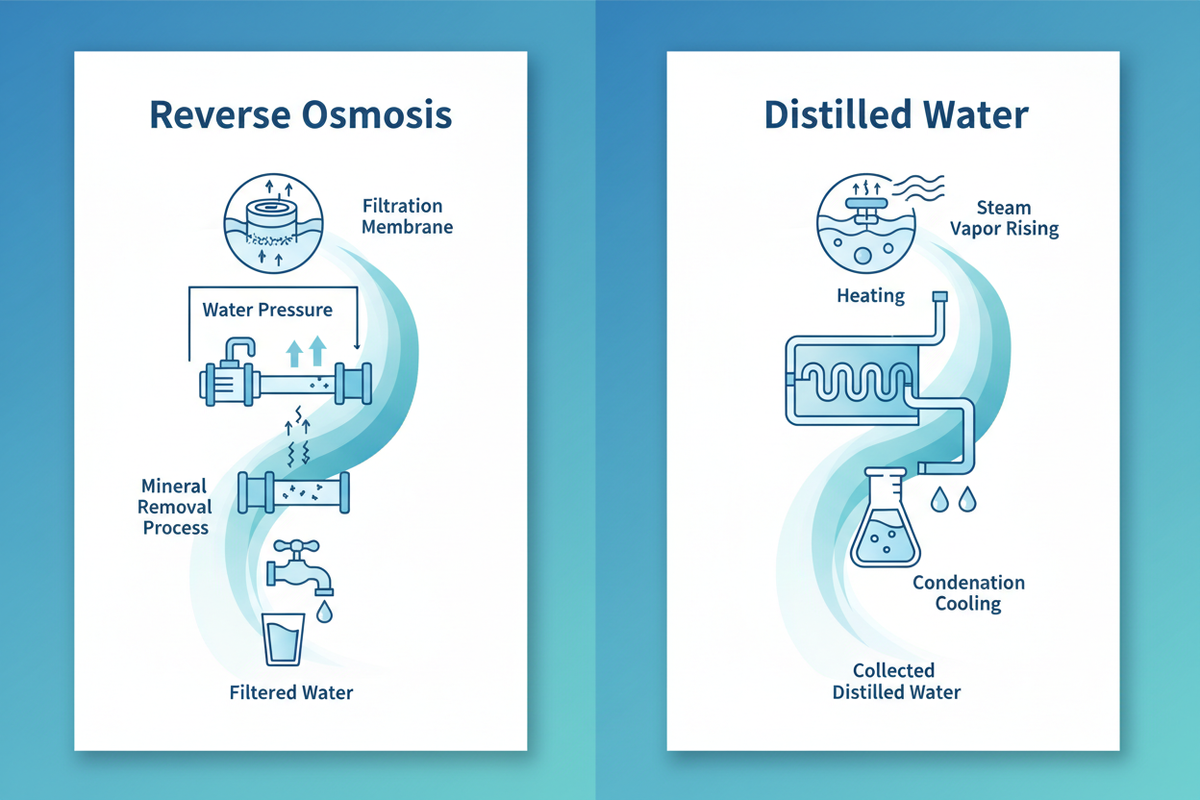
Distillation is old-school. You boil water until it turns to steam, then catch the steam and let it cool back into liquid. It’s like nature’s water cycle in a tiny sci-fi machine.
Reverse osmosis is more like a bouncer at a club. It forces water through a super-fine membrane that kicks out almost everything else: minerals, chemicals, even some bacteria. It’s high-tech, but honestly? It’s just clever plumbing.
What Gets Left Behind?
Here’s where it gets juicy. Distillation removes minerals, but it also kills bacteria because, well, boiling kills everything. You get pure H2O—almost too pure, if you ask some people.
Reverse osmosis is picky. It removes a ton of stuff, but it doesn’t boil anything. So while it takes out heavy metals and chlorine, some tiny things (like certain viruses) might sneak through. Don’t panic—most home RO systems have extra filters that catch those little buggers.
Think of it like this: distillation is a hot bath that leaves everything behind. RO is a VIP lounge with a strict dress code. Both get you clean water, but they start from completely different places.
But Do They Taste Different? (Oh, You Bet)
Distilled water tastes… flat. Like, aggressively nothing. It’s missing the minerals that give water that “ahhh” feeling. Some people say it tastes like loneliness in a glass. I’m being dramatic. Sort of.
RO water has a bit more personality. It still tastes clean, but it keeps a tiny trace of minerals. It’s like the friend who says they’re not wearing makeup, but they totally have a little lip gloss on. Subtle, but present.
So if you’re a water snob (no shame), RO wins on taste. If you’re trying to mimic the purest lab-grade water, go distilled. But let’s be real—most of us just want a glass that doesn’t taste like a swimming pool.
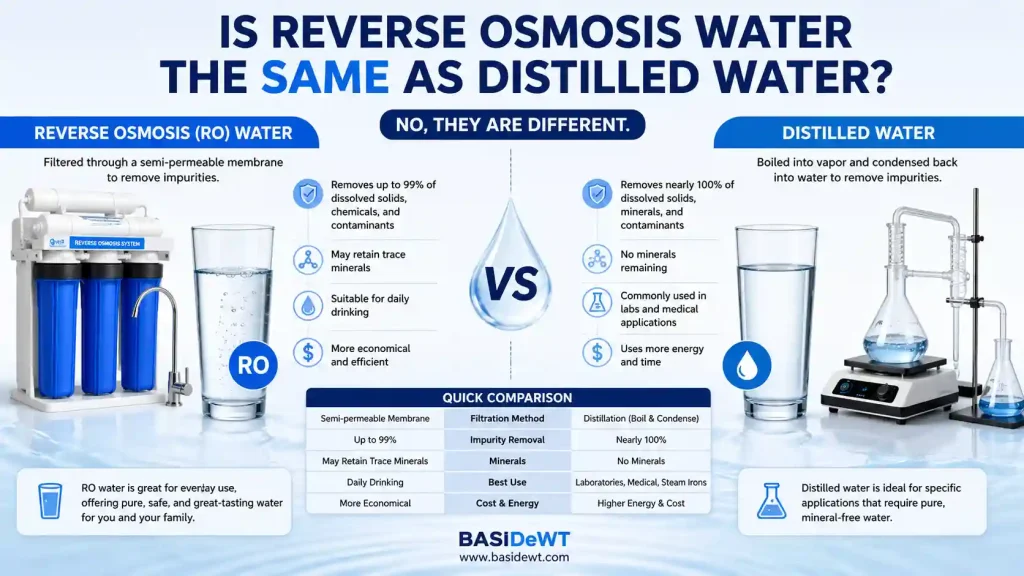 Is Reverse Osmosis Water the Same as Distilled Water? - Basidewt-Best
Which One Should You Actually Buy?
It depends on what you’re doing with it. For your coffee maker or humidifier, distilled is king. Why? No mineral buildup. You’ll save your appliances from an early grave—trust me, I’ve killed a kettle before.
For drinking every day, most people prefer reverse osmosis. It’s balanced. It doesn’t strip everything out, so your body isn’t like, “Hey, where’d the electrolytes go?” Plus, RO systems are cheap if you install one under your sink. Distillers are noisy and slow, like a grumpy turtle.
But here’s the kicker: neither is “better” for your health unless you have specific needs. Distilled water is great for detox protocols (yay, science!), but drinking it exclusively might make you mineral-deficient. RO is safer for long-term sipping. See? No simple answers.
The Great Myth-Busting Moment
People love to say, “Oh, they’re basically the same.” No. It’s like saying a bicycle and a motorcycle are the same because both have two wheels. C’mon.
Distillation is energy-hungry (you’re boiling water for hours). RO is more efficient, though it wastes some water in the process (about 3 gallons for every gallon you drink). Ouch. But hey, no process is perfect, right?
Also, fresh distilled water can get contaminated from the air if you leave it sitting. RO water stays safe longer because the membrane keeps things out. Fun fact: hospitals often use distilled for certain things, but your kitchen might prefer RO for convenience.
So, What’s the Verdict?
Bottom line: distilled and reverse osmosis are cousins, not twins. One uses heat and steam; the other uses pressure and a filter. Both are great for specific jobs. Know your goal before you choose.
If you want water for your iron or a CPAP machine, buy distilled. If you want clean, everyday drinking water without the hassle, get a reverse osmosis system. Don’t overthink it—just pick the one that matches your weird routine.
And if you’re still confused? Pour yourself a glass of tap water, take a deep breath, and pat yourself on the back for learning something new today. You’re welcome.
Now go forth and hydrate—with the right water, please. Your appliances and taste buds will thank you. ☕💧
