In Line Water Softener For Washing Machine

Ever wonder why your favorite dark t-shirt looks washed out after just a few months? Or why that brand-new white towel feels stiff, like cardboard, instead of fluffy? You migh...
Ever wonder why your favorite dark t-shirt looks washed out after just a few months? Or why that brand-new white towel feels stiff, like cardboard, instead of fluffy? You might be blaming your detergent, but the real culprit is probably hiding in your pipes.
I’m talking about hard water. It’s the mineral-packed stuff that leaves a chalky ring in your bathtub and makes your soap feel slimy. But for your washing machine, it’s a silent enemy that slowly ruins everything it touches.
Why Your Washing Machine is Basically a Rock Tumbler
Think about it: every time you run a load, your machine is sloshing water over your clothes. If that water is hard, it’s filled with calcium and magnesium ions. Those little guys are sticky.
Must Read
They latch onto fabric fibers and lock in dirt. They also attack your machine’s heating element, building up crusty scale that makes it work harder and use more energy. It’s like forcing your machine to run a marathon with a mouthful of sand.
A Small Gadget with a Big Attitude
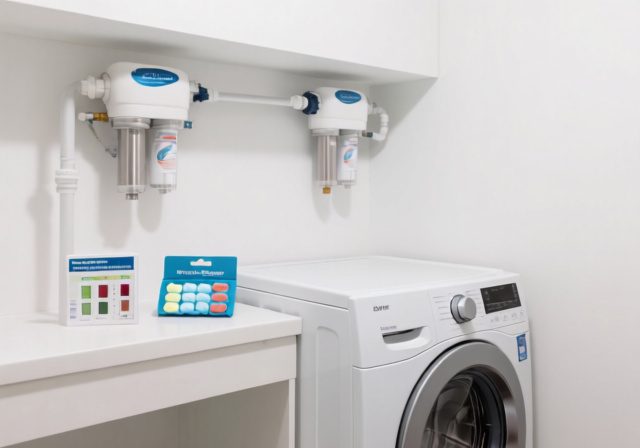
So, what’s the easy fix? You could install a whole-house water softener, but that’s a big, expensive project. Or, you can get a line water softener—a tiny, clever gadget that connects directly to your washing machine’s hose.
It’s basically a little cartridge that sits right there, treating only the water going into your laundry. No plumbing changes. No tanks of salt. Just a simple twist-on device that does one thing very well: it strips the minerals out before they touch your clothes.
Think of it as a bouncer at a club for your socks. It stops the hard water at the door.
The Coolest Part: What Actually Happens Inside
Imagine your laundry water suddenly becomes soft, like rainwater from a storm. Soap now lathers like crazy. You can use half the detergent you normally do and still get cleaner clothes. Isn’t that wild?
But here’s where it gets interesting: less soap means less residue sticking to your clothes. Your colors stay vibrant. Your towels turn into fluffy clouds. And that strange sour smell that sometimes builds up in your machine? Goodbye.
it also means your machine’s internal parts stop corroding. You’re basically giving your washing machine a longer, happier life just by changing the water chemistry in one tiny spot.
It’s Cheaper Than You Think
I know what you’re thinking: “This sounds like a $500 machine.” But most in-line softeners cost between $30 and $80. They’re basically a water filter for your laundry, and you replace the cartridge every six to twelve months.
Compare that to the cost of replacing a faded wardrobe or a broken washing machine. Or even the cost of all the extra detergent you’re using now. It pays for itself pretty fast, right?
 How To Use Water Softener In Washing Machine at John Duquette blog
It’s like buying a cheap traffic cone for your driveway instead of fixing a dented car door every month. Simple prevention is always the cooler move.
Who Actually Needs This?
If you live in an area with hard water (check your city’s water report or look for white crust on your faucets), your laundry is suffering. Maybe you’ve just accepted that whites turn gray and towels stay scratchy.
You don’t have to accept it. You can fix it with a $50 doodle from the internet. It’s that chill.
Even if your water isn’t super hard, these softeners still help. They protect the machine from future mineral buildup. It’s like giving your washing machine a daily multivitamin—except instead of a vitamin, it’s a mineral-blocking shield.
The Fun Comparison: It’s Like a Fast Pass for Your Laundry
You know how at an amusement park, a fast pass lets you skip the long line and go straight to the ride? That’s what an in-line water softener does for your detergent.
Your detergent is supposed to grab dirt and lift it away, but hard water holds it back. The softener lets your detergent work without fighting the water. Your machine uses less energy, your clothes come out cleaner, and you don’t have to scrub a single thing.
It’s the ultimate lazy-person hack: you do nothing, and everything gets better. Seriously, what’s not to love?
Should you get one?
If you’re tired of faded jeans, stiff towels, and guessing how much detergent to use, the answer is probably yes. It’s a small experiment that costs less than a nice dinner out.
And if it doesn’t work for your water? You just unscrew it and return it. No harm, no foul. But if it does work—and it will for most people—you’ll wonder why you didn’t try it sooner.
Your washing machine is already working hard. Why not help it out with a friend that literally fits in the palm of your hand? Go ahead, be the person who outsmarts the minerals. Your favorite sweater will thank you.
