Is Distilled Water Same As Deionized Water

Okay, let’s settle this once and for all. You’re standing in the grocery store, staring at two bottles of water that look exactly the same. One says “distilled,” the other say...

Okay, let’s settle this once and for all. You’re standing in the grocery store, staring at two bottles of water that look exactly the same. One says “distilled,” the other says “deionized,” and you’re wondering if it’s all just fancy marketing fluff. Spoiler alert: they are not the same, but the difference is way more interesting than you think.
The Short Answer (For the Impatient)
Distilled and deionized water are both super pure, but they get clean in totally different ways. Think of them as two chefs making the same dish using completely different recipes. Distilled water is boiled into steam and then condensed back into liquid, leaving the bad stuff behind like a soap opera villain at a party.
Deionized water, on the other hand, is run through special resins that act like bouncers, kicking out charged minerals. They both end up squeaky clean, but the journey? Oh, it’s a whole vibe.
Must Read
Let’s Get Technical (But Not Too Technical)
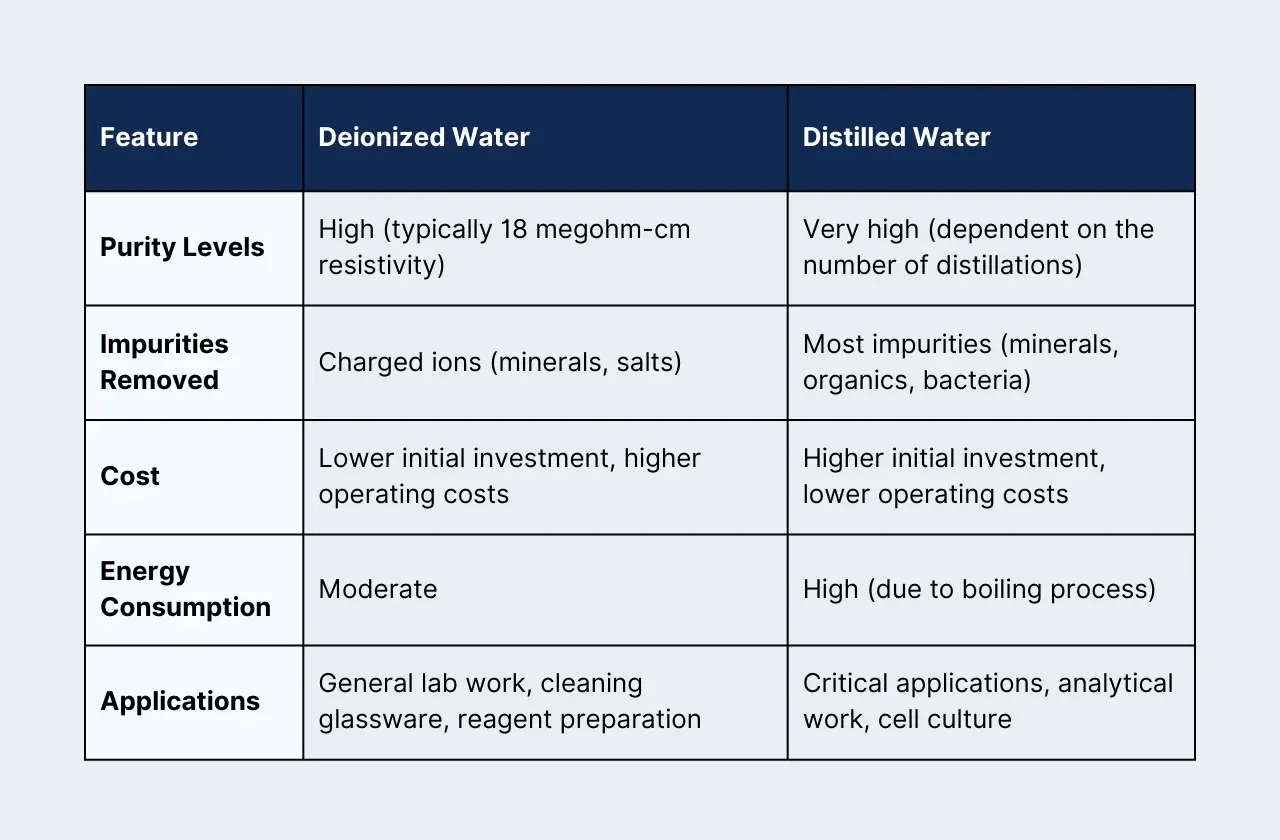
Distillation is basically nature’s water cycle in a machine. You boil water, catch the steam, and let it cool. The impurities—like salts, metals, and even bacteria—stay behind because they’re too heavy to float away in the vapor. It’s like throwing a pool party where only the coolest water molecules get to jump into the steam cloud.
Deionization is more like a high-tech filter spa. Water flows through special beads that trade hydrogen and hydroxide ions for all the charged minerals. The result? Water that’s so pure it’s basically “lonely water,” desperate for some ions to hang out with. (Poor thing.)
But Wait, Which One Is Cleaner?
Here’s the juicy part: deionized water is usually purer than distilled water when it comes to removing charged particles. Distillation can leave behind some volatile organic compounds that boil at a lower temperature than water. So if you’re a super-purity nerd, deionized is your go-to.
But distillation kills bacteria and viruses like a boss because, hello, boiling. If you’re worried about microscopic freeloaders, distilled water wins the “germ-busting” award. The two methods are like peanut butter and jelly—good alone, but together they’re unstoppable. (Some labs use both—fancy, right?)
Real Talk: When Do You Actually Need This Stuff?
You don’t need either for drinking. In fact, drinking them long-term can actually leach minerals from your body because they’re so thirsty for ions. Stick to tap or spring water for your hydration needs unless you’re a mad scientist or a cactus enthusiast.
Distilled water is amazing for your car’s battery, steam irons, and CPAP machines. Deionized water is the rockstar of laboratories, car detailing, and even some aquariums. So unless you’re building a home chemistry set or detailing your convertible, save your money.
 Is Deionized Water The Same As Distilled Water?
The Battle of the Taste Test
Let’s be honest: both taste weird. Distilled water can taste flat or slightly “cooked” because the boiling process removes dissolved oxygen. Deionized water can taste a bit metallic if you catch it right after the deionization process, thanks to its aggressive ion-hungry nature. Neither will win a taste test against a crisp mountain spring.
Here’s a joke: What does distilled water say to deionized water? “You’re so pure, you’re shocking!” (Get it? Because deionized water is basically a spark-free electrical insulator? I’ll see myself out.)
Common Mix-Ups (And How to Avoid Looking Foolish)
People often think “distilled” means “filtered,” but that’s like saying a rocket ship is the same as a bicycle. Filtering just strains big particles; distillation and deionization are hardcore purification. Don’t use distilled water for your aquarium unless you want your fish to have a mineral-deficiency meltdown.
And for the love of science, don’t use deionized water in your steam iron—it can actually corrode the metal because it’s so aggressive. Stick to distilled for irons, and save deionized for cleaning windows without streaks. Trust me, your windows will thank you with a mirror-like shine.
So, Are They the Same? (Drumroll, Please)
No. Not the same. But they’re like fraternal twins who went to different colleges and majored in the same subject. One uses heat, the other uses chemistry. Both end up with a degree in purity, but they party in different ways.
If you’re ever confused, just remember: distillation is a spa day with steam, and deionization is a nightclub with door bouncers. Both keep the riff-raff out, just with different vibes.
The Uplifting Conclusion (You Knew It Was Coming)
So the next time you’re staring at those two bottles in the store, give yourself a little wink. You now know the difference, and knowledge is the ultimate superpower. Whether you need water for your lab, your fish tank, or your fancy coffee machine, you’ve got this. And remember: pure water is like a blank canvas—it’s waiting for you to add the good stuff, whether that’s coffee beans, fish food, or a little bit of wonder. Stay hydrated, stay curious, and never let anyone tell you that distilled and deionized are the same thing. You’re too smart for that now. Go be the purest version of yourself today. 😄
