Average Water Bill For 1 Bedroom Apartment

Let’s be real: the most shocking part of adulting isn’t the rent—it’s the line items that come after it. You’ve signed the lease, furnished the place with a thrifted mid-centu...

Let’s be real: the most shocking part of adulting isn’t the rent—it’s the line items that come after it. You’ve signed the lease, furnished the place with a thrifted mid-century lamp, and suddenly, a piece of paper called the water bill lands in your inbox. It’s the quietest expense, yet it has the power to make you rethink your ten-minute showers.
So, what does the average water bill for a one-bedroom apartment actually look like? Nationwide, you are likely spending between $30 and $70 per month. That’s roughly the cost of a nice dinner out, or the price of convincing yourself you’ll “definitely” start meal-prepping next week.
Your exact number depends on a few very specific, very boring variables: your city’s utility rates, the building’s plumbing efficiency, and your personal hydration habits. If you live in a drought-prone area like Los Angeles or Phoenix, expect that number to lean higher, because water is basically liquid gold out there.
Must Read
One of the biggest secrets landlords don’t tell you? Whether the water is sub-metered or not. In many buildings, the cost is split evenly among all units. This means your bill might include the neighbor who waters a secret jungle on their balcony, or the one who runs the tap for ten minutes waiting for the perfect temperature.
Fun fact: The average American uses about 82 gallons of water per day. To put that in perspective, that’s enough to fill a large bathtub, or to ruin your whole vibe when you realize you’ve paid for the bathroom pre-rinse of a dozen strangers.
The Shower Economy
Let’s talk about the biggest culprit in your water bill: the shower. A typical ten-minute shower uses roughly twenty gallons of water. If you take one a day, that’s about 600 gallons a month, just for you.
But here’s where culture meets consumption. In many parts of Europe, a five-minute shower is the norm, while in the U.S., we treat the shower like a personal concert venue. If you can cut just two minutes off your flow, you save about 1,460 gallons a year. That’s a lot of laundry money left over.
Think of it like this: every minute you linger under the hot stream is a tiny vacation you pay for with your water bill. Is that vacation worth an extra $3.50 a month? Sometimes, yes. But on a rainy Tuesday, maybe not.
Dishwashers vs. Hand Washing
There’s an old myth that washing dishes by hand is cheaper. It’s not. Modern dishwashers use significantly less water than hand washing, especially if you run them full. A full cycle uses about 4-6 gallons, while hand washing can easily guzzle 20 gallons.
So, let your machine do the work. It’s better for the planet, better for your sanity, and better for that line item on your bill. Plus, you get to feel like a bougie adult who owns a machine that cleans your plates.
Pro tip: skip the pre-rinse. Scrape your plates into the trash, load them up, and let the detergent handle the rest. Your water bill—and your time—will thank you.
The Laundry Game
Ah, laundry. The chore that never ends. High-efficiency washing machines use about 13-17 gallons per load, while older models can inhale a breathtaking 40 gallons. If you own the machine, check the label. If you use a shared laundry room, you’re at the mercy of the building’s choices.
A simple hack: always wash with cold water. It saves energy, which is good for your electric bill, and it saves water because you aren’t waiting for the heater to kick in. Your clothes will last longer, too—no one wants sad, shrunken sweaters.
Consider combining loads. Instead of three small washes per week, try two full ones. Your water bill will drop, and you’ll reclaim two hours of your life. That’s enough time to watch Severance again and still be confused.
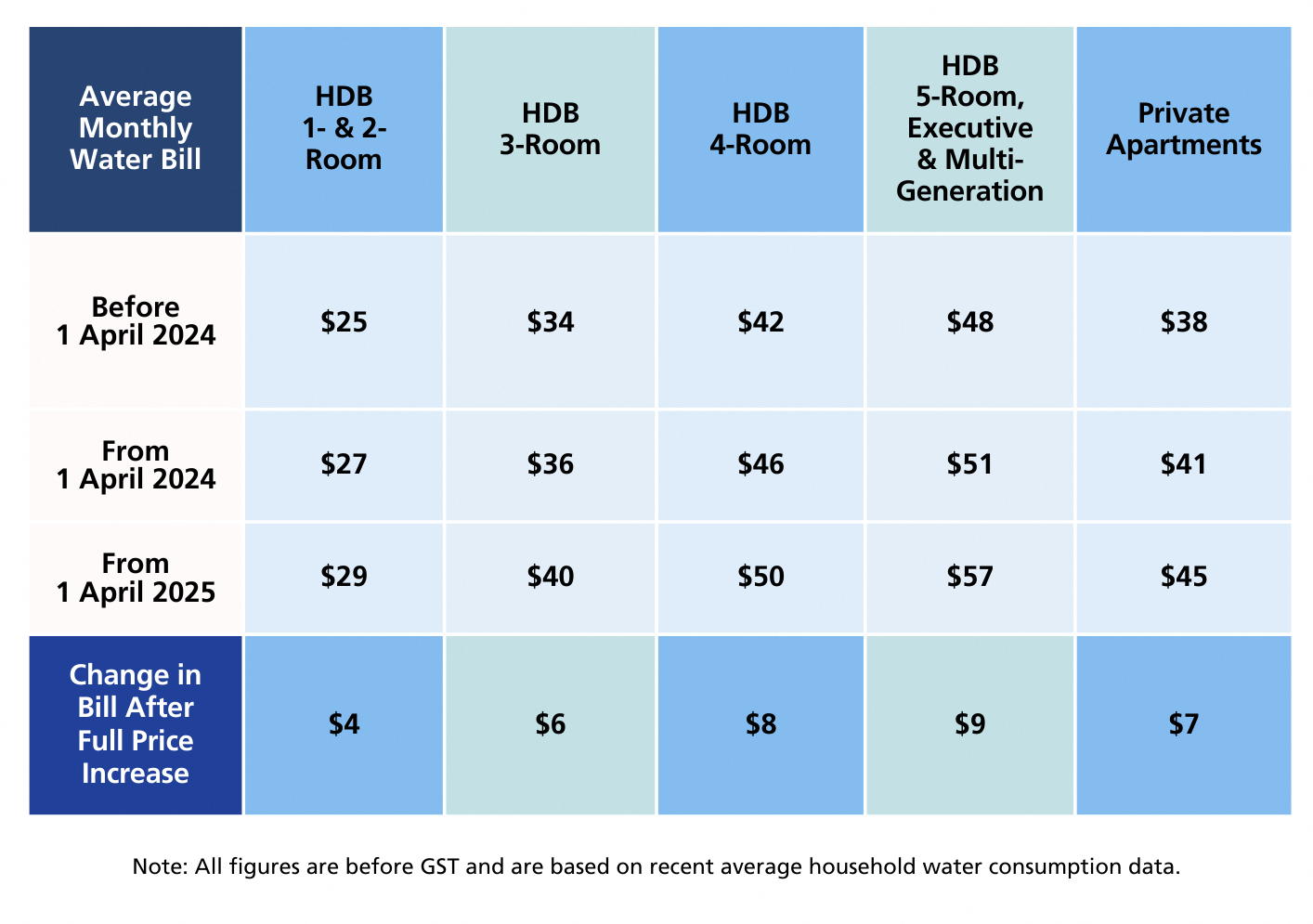 Water Price | PUB, Singapore’s National Water Agency
The Leak Factor
Here’s a terrifying stat: a single dripping faucet can waste 3,000 gallons per year. That’s like throwing a swimming pool’s worth of cash down the drain. A running toilet is even worse—up to 200 gallons a day.
If your bill suddenly spikes, don’t panic—check for leaks first. A simple food coloring test in your toilet tank can save you from a nasty surprise. Drop a few drops in, wait 15 minutes, and if the color appears in the bowl, you’ve got a leak.
Most landlords are required to fix leaks promptly. It’s your right as a tenant to not pay for water that’s just disappearing into the ether. Channel your inner consumer advocate and call maintenance. You live in a one-bedroom, not a reservoir.
Practical Tips for the Wise Renter
First: ask your landlord about the billing structure. Is water included in rent? If yes, congratulations—you just won the housing lottery. If not, ask if it’s sub-metered or divided equally. Knowing this protects you from paying for your neighbor’s four-hour humidifier habit.
Second: invest in a water-saving showerhead. They cost about $20 and can cut your shower water use by up to 40%. That’s a six-dollar return on investment every month. Plus, you’ll feel like an eco-warrior every time you lather up.
Third: run full loads only. Your dishwasher and washing machine are both water thugs—they don’t care about partial loads. Wait until you have a full army of dishes or a critical mass of socks. Your bill will thank you.
And finally, track your usage. Most utilities offer online portals or apps. Check it once a month. It’s not sexy, but neither is an inflated bill. Knowing your baseline helps you spot anomalies before they become crises.
Fun fact: the average American household spends about $500 per year on water. For a one-bedroom apartment, that number is usually closer to $360 to $600. That’s about the cost of a decent pair of sneakers, or one very expensive brunch.
Closing Reflection
Think about your water bill as a metered connection to your daily rituals. That morning coffee drip, the post-work shower where you stare at the tile, the late-night dishwashing to relieve stress—each action is a tiny watermark on your budget.
At the end of the day, the average water bill isn’t just a number. It’s a gentle reminder that you’re alive, hydrated, and lucky enough to have hot water on demand. So don’t stress over the $40. Just maybe finish that shower a minute sooner.
Your wallet, and the planet, will quietly nod in approval.
