Morton Water Softener Bypass Valve Position

So, you’ve got a Morton water softener. Good on you—that’s some top-tier water-taming hardware. But then you look at the back of it and see a little valve. And three little po...

So, you’ve got a Morton water softener. Good on you—that’s some top-tier water-taming hardware. But then you look at the back of it and see a little valve. And three little positions. Suddenly, you’re not a homeowner; you’re a pilot trying to land a 747. Don’t panic.
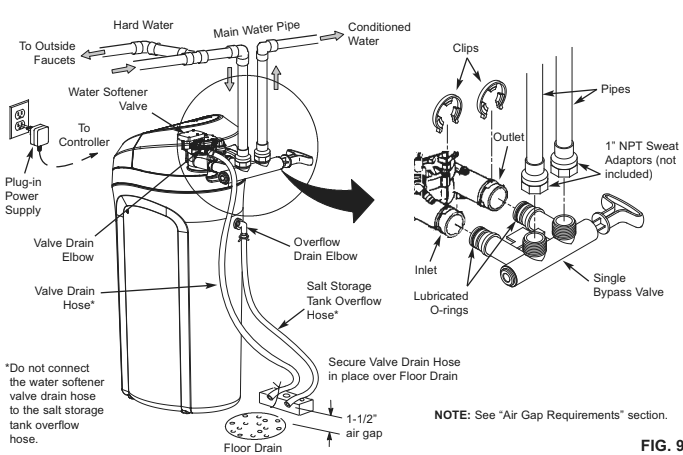
That little valve is called the bypass valve. It’s your best friend when it comes to fixing, moving, or simply not washing your hair in salty water. Let’s walk through the three positions together—no flight manual required.
Position #1: The Normal Position (a.k.a. “Let the Softening Begin”)
This is your everyday setting. The handle should be inline with the water pipes—parallel to them, like a little train track. In this position, water flows through the softener, gets all the calcium and magnesium kicked out, and you get that silky, sudsy goodness. You barely even notice it.
Must Read
Unless you’re petting your dog after a shower, and his fur feels like a cloud. That’s the magic. It’s the default. Don’t change it unless you have a good reason—like a sudden urge to water your plants with hard water. (Which is a real thing, by the way. More on that later.)
Position #2: The Bypass Position (a.k.a. “Hard Water Freedom Tour”)
Here’s where things get sneaky. When you turn the handle perpendicular to the pipes—like a cross—you’re telling the water, “Hey, skip the softener. Go straight to the faucet.” This is the bypass position. Why would you ever do this? Because sometimes hard water is the hero you didn’t know you needed.
Example number one: You’re watering your garden. Soft water (with all that lovely sodium) can actually kill your plants. Yep, it’s true. Hard water has minerals plants love. So, flip to bypass, and let your tomatoes thrive. Your tomato plants will thank you.
Example number two: You need to fix a leaky faucet or a sprinkler system. If you leave the softener in the normal position, you’ll be draining the whole system. That’s like trying to change a tire while the car is still rolling. Switch to bypass, and you stop the flow to the softener. The rest of the house still has water—just not softened water. No big deal.
Example number three (the most important one): You’re servicing the softener itself. Replacing resin? Cleaning the brine tank? Moving it to paint the wall behind it? Put the valve in bypass first. It’s like hitting the pause button on a movie, but for your plumbing. You can work on it without getting a face full of salt water.
Position #3: The Diagnostic Position (a.k.a. “The Middle Child”)
Now, many Morton softeners have a third, slightly mysterious position: the diagnostic or service position. This is when the handle is turned about halfway—not inline, not perpendicular, but at a 45-degree angle. What does it do? It lets water flow both into the softener and also directly to the house through the bypass.
Think of it as a compromise. The softener is still getting water (so you can test it or check flow), but the house is also getting raw hard water. It’s not a position you live in. It’s a temporary “let me check something” spot. If you ever see this position and think, “Hmm, that’s weird,” just know you accidentally created a plumbing Schrödinger’s cat. Both hard and soft water exist at the same time.
 Morton Water Softeners User’s Manual (Models M20, M27, M30, M34 & MC30
How to Tell Which Position You’re In (Without Calling a Plumber)
Relax. The handle is your guide. Look at the little arrows or the word “BYPASS” on the body of the valve. On most Morton models, when the handle points the same direction as the pipes, you’re in Normal (softening). When the handle points across the pipes, you’re in Bypass (hard water).
If you see a little triangle or dot on the handle that aligns with a “BYPASS” label—bingo. You’re bypassed. No guesswork. If you’re still confused, just turn the handle until you hear a satisfying click. That’s your softener saying, “Okay, I’m ready.”
The One Rule You Absolutely Cannot Break
Do not ever run the softener’s regeneration cycle while the bypass valve is in the Bypass position. Got that? If the valve is set to bypass, the softener is isolated. It won’t get any fresh water during regeneration. It will just churn its own brine and do nothing. It’s like baking a cake with no flour. Pointless.
Always, always put the valve back to the Normal position before you press that “Regen” button. Your softener will reward you with years of soft water. And it will not curse your name.
When You Forget and Wonder Why Your Water Feels Slimy
Hey, it happens. You flip the bypass to fix a sprinkler, you get distracted by a squirrel, and suddenly you’re showering in hard water two weeks later. The water feels “different,” right? Maybe a little slippery or slimy? That’s actually the opposite of slimy—it’s just that your hair and skin are used to the soft water. Hard water leaves a residue.
Don’t stress. Just walk over to the softener, check the handle, and if it’s still in bypass, smack your forehead gently, and turn it back to normal. Voilà. Your water is back to being a cloud. You are forgiven.
The Uplifting Conclusion (You’re a Valve-Wielding Hero)
Look at you. You now know three positions that once seemed like wizardry. You can protect your tomato plants, fix a leak without flooding your basement, and keep your softener from regenerating into oblivion. You are master of the bypass.
And here’s the best part: that little plastic handle holds the power to give you soft, silky showers today or hard, mineral-rich garden water tomorrow. It’s the ultimate choice. You are the decider. Go forth, turn that handle with confidence, and remember—water softener bypass valves are like steering wheels. They only steer you in the direction you want to go. Now, go enjoy that cloud-like towel fresh from the dryer. You earned it.
