My Dishwasher Leaves A White Chalky Residue

So, you open your dishwasher after a long cycle, ready for that *sparkling* clean feeling. And what do you find? A ghostly, white chalky residue all over your glasses and plat...
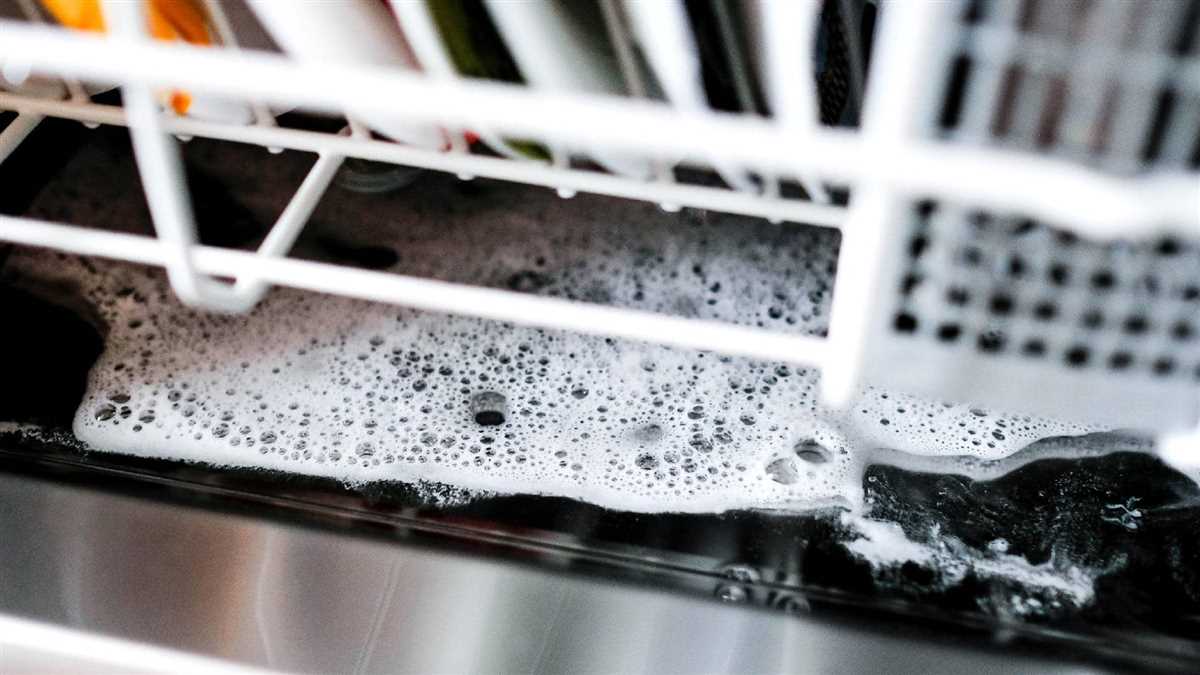
So, you open your dishwasher after a long cycle, ready for that sparkling clean feeling. And what do you find? A ghostly, white chalky residue all over your glasses and plates. Ugh. I feel your pain, friend. We’re going to fix this mess together.
What is That Stuff, Anyway?
First things first, it’s not leftover food. It’s not tiny ghosts having a party on your wine glasses. That white film is most likely hard water minerals—mostly calcium and magnesium.
Think of it as the mineral version of your morning coffee stain. Your water is “hard,” meaning it’s packed with these invisible particles. When the water gets hot and dries, the minerals get left behind as that chalky deposit.
Must Read
It’s not dangerous, but it sure looks awful. And it can make your glassware feel rough. No one wants a rough wine glass—it ruins the vibe.
The Usual Suspect #1: Your Rinse Aid
Let’s start with the easiest fix. Are you using rinse aid? No? Well, there’s your problem! Rinse aid isn’t just a fancy extra. It’s a game-changer.
It helps water sheet off dishes instead of beading up. Less beading means fewer mineral deposits. Grab a bottle. Fill the little chamber. Your dishes will thank you with a gleam.
Pro tip: You don’t have to use a fancy brand. The store brand works just fine. Just make sure it’s not empty—I’ve been guilty of that one too.
The Usual Suspect #2: Your Detergent
Maybe your detergent isn’t up to the task. Hard water needs a stronger detergent. Powders, gels, tablets—they’re not all created equal.
Look for a detergent that says “hard water” or “with built-in rinse aid” on the box. Sometimes it’s a tiny label change that makes a huge difference. It’s like upgrading from a spoon to a shovel for a snowstorm.
And don’t overfill the detergent cup. More isn’t always better. Too much can actually leave a worse residue. Follow the instructions—I know, boring, but true.
The Big Guns: Hard Water Solutions
If rinse aid and new detergent don’t cut it, welcome to the hard water club. Your water is just that stubborn. Time to bring in reinforcements.
You can buy a dishwasher cleaner—those little packets you run on an empty cycle. They’re like a detox for your machine. Do this once a month. Your dishwasher will breathe a sigh of relief.
Also, check your dishwasher’s filter. Yes, there’s a filter. It’s usually at the bottom. If it’s clogged with gunk, water can’t flow properly. That leads to deposits. Clean it out—just be prepared for a bit of ick.
The Vinegar Trick (I Know, I Know)
There’s a classic home remedy: white vinegar. Pour a cup of it in a dishwasher-safe bowl on the top rack. Run a hot cycle with no detergent. It’s like a spa day for your machine.
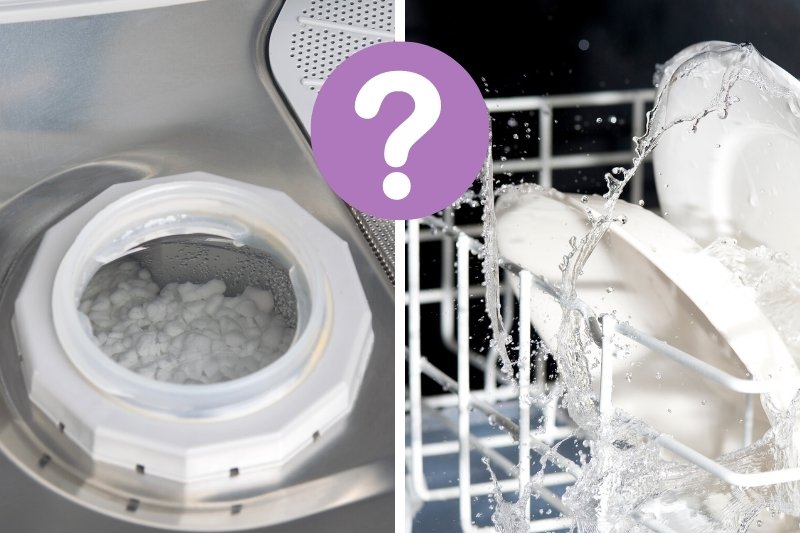 Why Is My Dishwasher Leaving a White Chalky Residue on Everything?
But be careful. Vinegar can damage rubber seals over time. Don’t do it every week. Once a month is plenty. And never mix vinegar with bleach—that’s a toxic gas situation we really don’t want.
Is it a miracle cure? Sometimes. But for really stubborn chalk, you might need a commercial product. Listen to your dishwasher—it’s talking to you through that white film.
A Little Science Lesson (Painless, I Promise)
Here’s the nerdy part. Hard water minerals are positively charged. Your detergent is designed to capture them. But if the water is too hard, the detergent gets overwhelmed. The leftover minerals just settle on your dishes.
Rinse aid changes the water’s surface tension. It’s like giving the water a little anti-gravity boost. The water slides off faster, leaving less time for minerals to stick around.
So, you’re basically fighting a chemistry battle. And you can win it. You just need the right weapons—rinse aid, good detergent, and occasional deep cleaning.
What If It’s Not Hard Water?
Okay, rare case. If the residue is white but grinds off easily, it might be etching. That’s when the glass itself gets damaged by super-hot water or harsh detergent. Etching is permanent—the glass gets frosted.
If it’s etching, lower your water temperature. Most dishwashers are set too hot—140°F is a good max. Also, skip the pre-rinsing; dishwashers need some food particles to work properly. Weird, right?
But nine times out of ten, it’s just calcium. Don’t panic. You’re not a bad person. Your dishwasher isn’t broken. It’s just a little thirsty for mineral-rich water.
Your Action Plan (Short & Sweet)
Step one: Fill the rinse aid dispenser. Step two: Try a different detergent. Step three: Run a cleaner cycle. That’s three steps. You can do this in an afternoon.
Still chalky? Look up your water hardness online. You might need a whole-house water softener. That’s a bigger investment, but it saves your pipes and your dishes. And your skin. And your sanity.
I once ignored the white residue for three months. My glasses looked like they’d been dusted with powdered sugar. Not cute. Don’t be like me. Be the hero your dishwasher needs.
Go on. Open that door. Conquer the chalk. And pour yourself a glass of wine—in a perfectly clear glass, this time. You’ve got this.
