Low Water Pressure Caused By Water Softener

Ever noticed your shower suddenly going from a satisfying waterfall to a sad, dribbling trickle? You check the faucets, the garden hose, even ask your neighbor if their water...
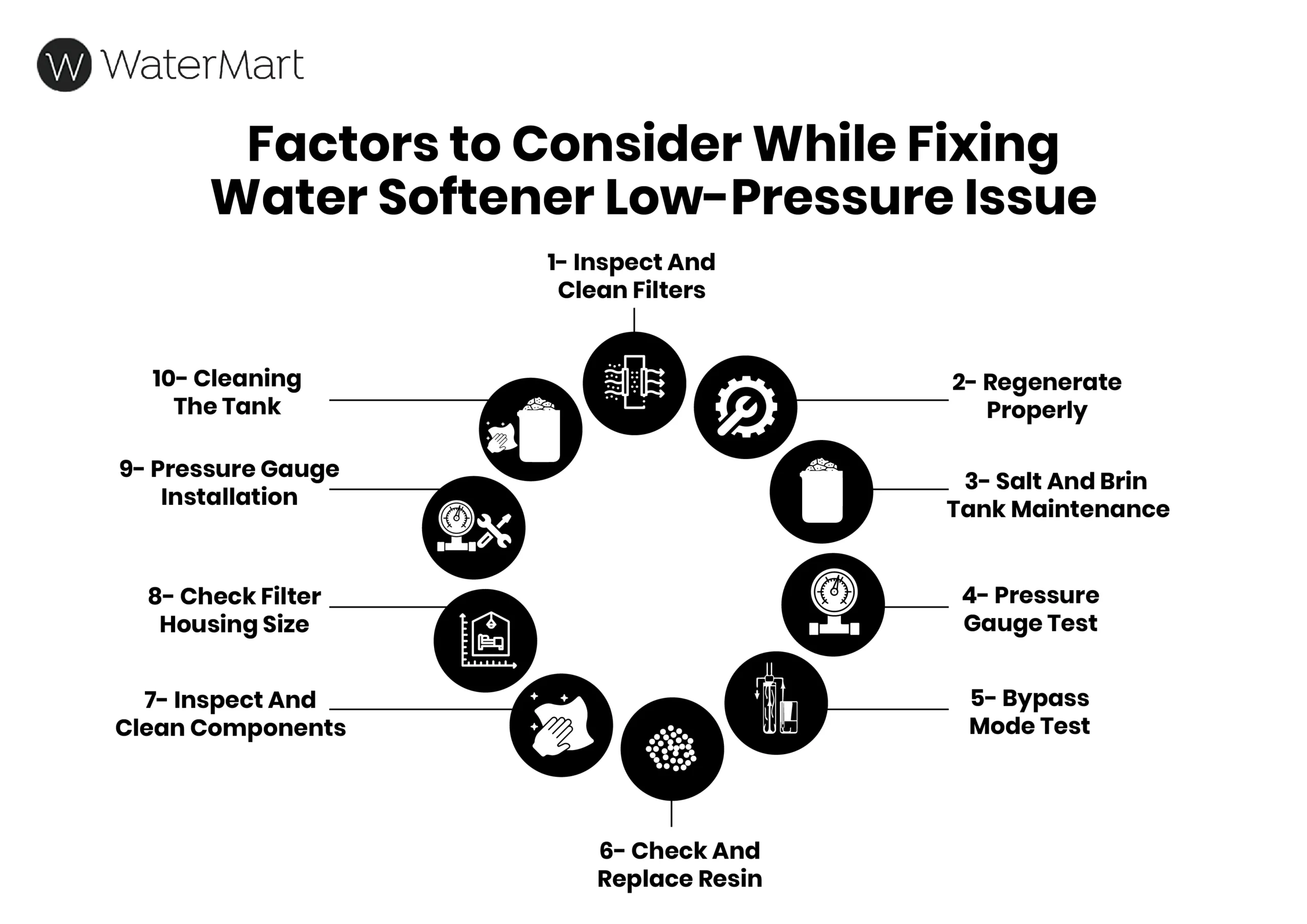
Ever noticed your shower suddenly going from a satisfying waterfall to a sad, dribbling trickle? You check the faucets, the garden hose, even ask your neighbor if their water is acting weird. Everything else seems fine, but your shower pressure is just gone. It’s frustrating, right? But here’s the twist: the culprit might actually be something that’s supposed to help your water.
Yes, I’m talking about your water softener. You know, that big tank in the basement or garage that makes your skin feel silky and your dishes spot-free. It’s a wizard at removing calcium and magnesium, but sometimes it can be a bit of a bully when it comes to pressure. So why does this helpful machine turn into a pressure-killer?
Let’s start with the heart of the issue: resin beads. Think of your water softener as a little hotel for tiny, greedy beads. These beads love latching onto hard minerals like calcium and magnesium. Over time though, these beads can get clogged or damaged—imagine a bunch of happy campers leaving trash everywhere.
Must Read
When those beads are coated in gunk, water has a harder time squeezing past them. It’s like trying to drink a thick milkshake through a tiny straw. The softener is still working, but the flow gets choked. Suddenly, your once-powerful shower turns into a gentle drizzle.
But wait, there’s more! Another sneaky reason is the bypass valve. This little lever is usually in the “service” position, letting water run through the softener. Sometimes, after a repair or maintenance, it gets accidentally left in the “bypass” or, worse, half-cracked. That misalignment messes with the flow, like a driver trying to merge onto a highway halfway over the line.
Have you ever checked your water softener’s inlet screen? That’s a fine mesh filter at the top of the tank where water first enters. If your water has sediment or rust flakes, that screen can get completely jammed. It’s like a swimming pool filter that hasn’t been cleaned in years—eventually, nothing gets through but a trickle.
Now, here’s the cool part: this low-pressure situation is actually a fascinating puzzle. Your home’s plumbing system is a closed network of pipes, and your softener is like a bouncer at a club. When the bouncer gets tired or distracted (clogged beads, stuck valve), everyone waiting outside—that’s your water—starts to bottleneck. You can almost visualise the angry molecules pushing against each other.
 Water Softener Low Pressure - How To Diagnose And Fix?
But is low pressure from a softener always a bad thing? Not necessarily. In fact, it’s a diagnostic goldmine. Think of it as your home giving you a subtle, watery hint. “Hey,” it says, “my resin beads need a spa day!” Or, “Please check my bypass valve—I’m confused.” It’s like your car’s check engine light, except way more pleasant to investigate.
So what’s the fix? Simple steps, really. First, peek at the bypass valve—just make sure it’s fully in the “service” position. Then, clean or replace that inlet screen (it’s usually easy to unscrew). If the problem persists, your resin beads might be exhausted or damaged, and a professional can regenerate or replace them. This isn’t brain surgery; it’s more like changing a coffee filter.
Here’s a fun comparison: your water softener is like a pet hamster running on a wheel. When the wheel spins smoothly, water flows wonderfully. But if the hamster gets lazy (clogged beads) or the wheel jams (faulty valve), everything slows down. Your low water pressure is just the hamster saying, “Help me out here, human.”
And honestly, isn’t it cool that a simple household appliance can communicate with you through pressure? It’s like your home has a secret language. Instead of getting mad at the trickle, get curious. Grabbing a wrench and checking your softener might make you feel like a water pressure detective. You’ll learn about resin beads, check valves, and flow rates—stuff that makes you sound super smart at dinner parties.
Finally, remember that low pressure from a water softener is usually temporary and fixable. It’s not a catastrophic pipe failure. It’s just your system asking for a little love. So next time your shower whispers rather than roars, don’t panic. Give your softener a gentle glance, maybe a friendly pat, and solve the mystery. You’ve got this.
