Distilled Water And Purified Water The Same

So, you’re standing in the water aisle at the grocery store, staring at two identical-looking jugs. One says “Distilled,” the other “Purified,” and you feel like you’re about...

So, you’re standing in the water aisle at the grocery store, staring at two identical-looking jugs. One says “Distilled,” the other “Purified,” and you feel like you’re about to pick a side in a feud that doesn’t exist. Let’s settle this once and for all: they’re cousins, not identical twins, but they share a very similar family tree. It’s like comparing a saltine cracker to a plain breadstick—they’re both boring, but you’ll use them the same way.
Distilled water is the shy, introverted one. It’s made by boiling water into steam and then cooling it back into liquid, leaving all the minerals and impurities behind like a party guest who forgets their jacket. Purified water, on the other hand, is the friendly overachiever. It uses a bunch of clever filters—like reverse osmosis or carbon filters—to scrub out nasties, but it might let a few harmless minerals tag along for the ride. Both are incredibly clean, just from different angles.
The Coffee Test (A Real-Life Drama)
I once used distilled water to make my morning coffee, thinking I was being a genius. The result? A cup that tasted like a ghost had brewed it—utterly flat and sad. That’s because distilled water is so pure, it has no minerals to help extract the coffee’s flavor. It’s like trying to paint with watercolors on a glass window; nothing sticks.
Must Read
Purified water, especially the kind from a filter pitcher, usually keeps a smidge of calcium and magnesium. Those little buggers actually make your coffee taste richer and your tea more vibrant. So, while distilled water is great for your car’s battery or your iron, it’s a real downer in your cup of joe. Think of it as the designated driver of waters—reliable, but not the life of the party.
The “Which-One-to-Use” Cheat Sheet for Your Life
Need to water your orchid? Use distilled. Most houseplants hate the chlorine and dissolved solids in tap water, so they’ll bloom like crazy with the pure stuff. But if you’re filling your dog’s bowl or making a pitcher of lemonade, purified water is perfect. Your golden retriever won’t notice the difference, but your taste buds will thank you.
Here’s a funny truth: I once tried to use distilled water to make soup. It was like eating soup from a dream—technically wet, but missing all the soul. The salt and spices couldn’t find a mineral friend to latch onto, so the broth ended up tasting watery and lost. Purified water handled the job like a champ, letting the chicken and herbs shine. Lesson learned: save the distilled water for your humidifier and your Rubik’s Cube (if you’re that kind of nerd).
But Wait—Are They the Same in the Bottle?
Legally speaking, both have to meet strict purity standards, usually with less than 10 parts per million of dissolved solids. That’s cleaner than a hospital floor. The U.S. FDA treats them as separate categories, but for 95% of your day—drinking, cooking, washing your face—they’re interchangeable. It’s like asking if a Honda Civic and a Toyota Corolla are the same car. They’ll both get you to work, but one might have fewer cupholders.
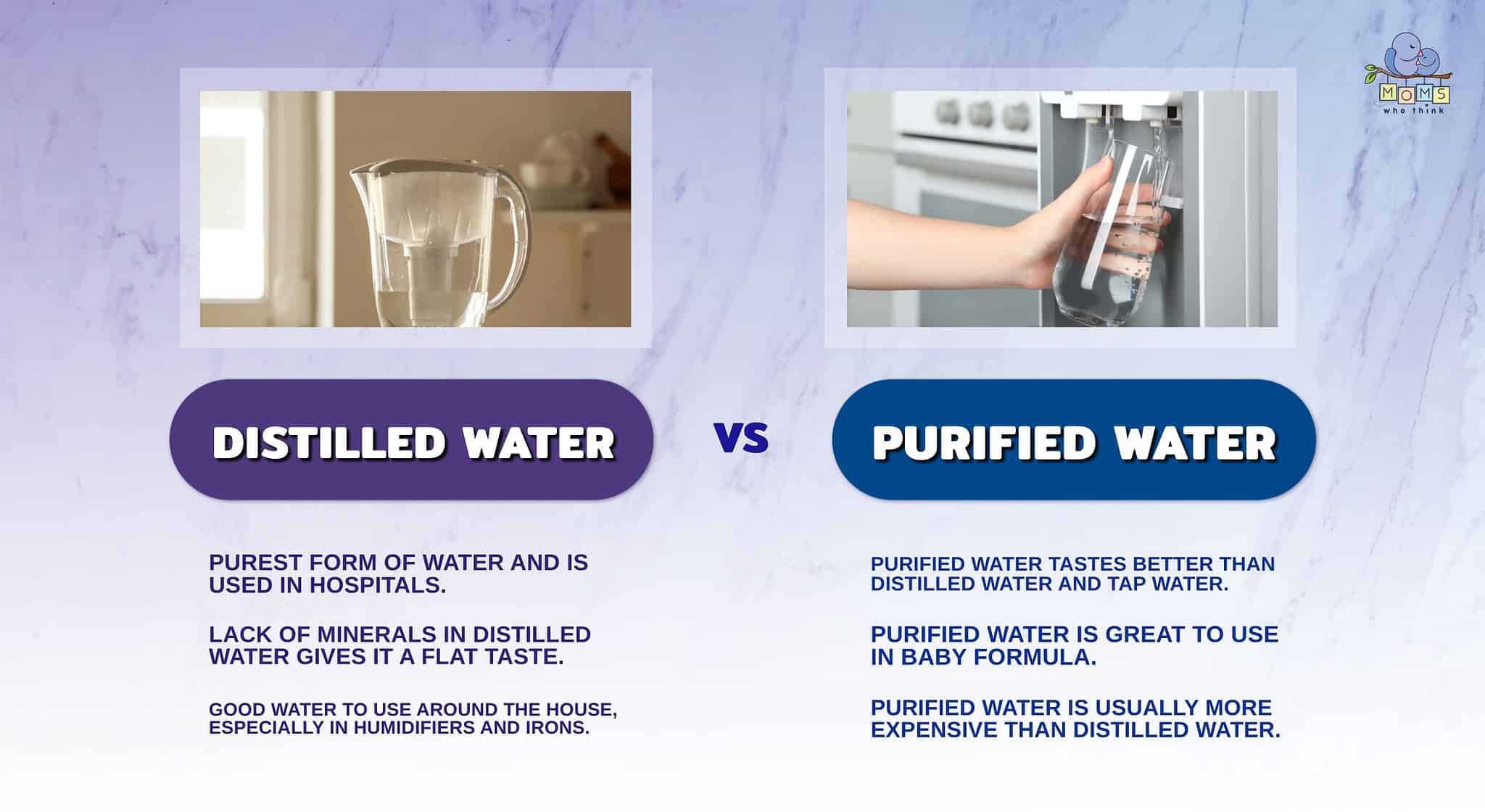 Distilled vs. Purified Water: 4 Differences & Health Benefits
I once bought a gallon of distilled water by mistake for a road trip. I chugged it for three hours before realizing my bottle said “distilled.” I didn’t die, I didn’t get a nutrient deficiency, and I didn’t turn into a ghost. I just felt a little… unfulfilled. Like listening to a band that only plays one note. It’s fine, but not great.
The Big Takeaway (No Nerdiness Required)
Here’s your golden rule: If you’re making something that relies on water’s personality—like coffee, soup, or bread—reach for purified. If you’re filling a medical device, a car battery, or a steam mop, distilled is your best friend. For everything else, just pick whichever is on sale. Seriously, your body will process them exactly the same way, because your kidneys are amazing at adjusting to mineral levels.
I’ve seen people agonize over this in the store, holding a bottle in each hand like they’re weighing a life-changing decision. Relax. You’re not choosing between tap water and poison. You’re choosing between two very clean, slightly different bottles of water. It’s like deciding whether to wear socks with sandals or just embrace the chaos. Either way, you’ll be fine.
So, next time your aunt insists “distilled water is better for you,” feel free to nod and smile. If she brings up electrolytes, tell her that’s what your lunch is for. The real secret? Both are great, neither is magic, and unless you’re a coffee snob with a very expensive espresso machine, you probably won’t tell the difference. Now go hydrate, you magnificent, overthinking creature.
