Reverse Osmosis Filter Replacement Schedule

Let’s talk about your reverse osmosis (RO) system. It’s the quiet hero under your sink, turning tap water into a crystal-clear superstar. But even heroes need a schedule—and a...
Let’s talk about your reverse osmosis (RO) system. It’s the quiet hero under your sink, turning tap water into a crystal-clear superstar. But even heroes need a schedule—and a little TLC.
Here’s the kicker: your RO filter doesn’t go bad on a fixed date. It’s more like a moody teenager—it depends on how much you use it and what you throw at it. But don’t worry, we’ll get you a timetable that’s as easy as a Netflix binge.
The Big Three: Pre-Filters, Membrane, and Post-Filter
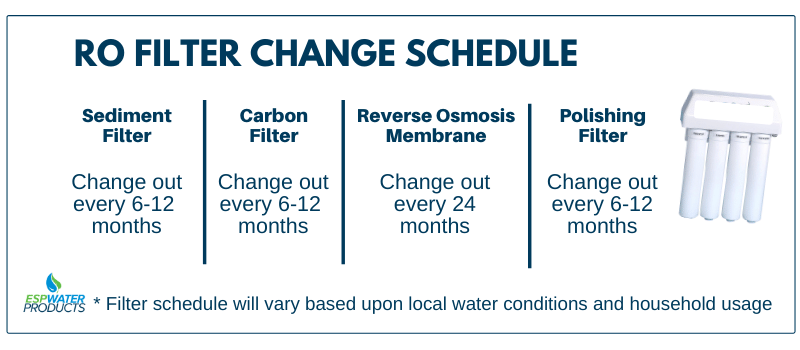
Your RO system has three main acts. First, the sediment filter catches sand, rust, and whatnot. Then the carbon pre-filter tackles chlorine and funky tastes. Finally, the RO membrane does the heavy lifting—it’s the star of the show.
Must Read
After that, a post-filter polishes your water before it hits your glass. Think of it as the final handshake. Each part has its own retirement age.
Sediment and Carbon Pre-Filters: Swap Every 6–12 Months
These guys are the workhorses. Change them every 6 to 12 months. If you live in a dusty town or have well water, lean toward the 6-month mark. Trust me, a clogged pre-filter makes your RO system work twice as hard—and your water flow drops to a sad trickle.
Fun fact: a single carbon filter can trap over 1,000 gallons of chlorine before it says “I’m done.” That’s like filtering a whole swimming pool’s worth of grossness. You wouldn’t ask that filter to go another round, would you?
The RO Membrane: The Diva—Replace Every 2–3 Years
The membrane is the expensive, finicky rockstar. It lasts 2 to 3 years, but it hates two things: chlorine and silence. If your pre-filters are slack, chlorine will shred the membrane like a bad review. Always replace pre-filters first—your membrane will thank you with sweet, low-TDS water.
Here’s the quirky part: the membrane works by pushing water through pores so tiny that only H₂O molecules fit. Viruses, minerals, even some bacteria? They get the boot. Imagine a bouncer at a club who only lets in one specific molecule—that’s your RO membrane. Respect the bouncer.
Post-Filter: Swap Every 12 Months
This is the polisher. It removes any lingering “plastic taste” from the storage tank. Replace it every 12 months. Forget to do that? Your water might taste like you’re drinking from a garden hose. Nobody wants that.
Pro tip: When you change the post-filter, run the system for 10 minutes and toss the first batch of water. It’s like warming up a pizza oven—you don’t eat the first slice that falls on the floor, right?
 Reverse Osmosis Maintenance: Filter Change Schedule | Tap Tech
Signs Your Filters Are Screaming for Help
Your RO system will tell you when it’s unhappy. Listen for these clues: water pressure drops, the water tastes salty or flat, or you see white flakes in your glass. Those flakes? That’s calcium scale—your membrane is waving a white flag.
Another dead giveaway: the water starts smelling like rotten eggs. That’s sulfur bacteria having a party inside your filters. Change them, or your kitchen will smell like a swamp.
The Myth of the “One-Size-Fits-All” Schedule
Some folks say “replace everything once a year.” That’s like saying “change your tires every 12 months”—it ignores how much you drive. If you use 10 gallons a day, your filters wear out faster than someone who uses 2 gallons. Track your water usage like a nerd. Your taste buds will high-five you.
Here’s a fun challenge: set a calendar reminder for the 1st of every month to check your system. Just a glance—look for leaks, listen for gurgles. It takes ten seconds. That’s less time than staring at your phone in an elevator.
Why You Should Actually Care
Ignoring your RO filter schedule is like ignoring your car’s oil change. The system works, but slowly, and then suddenly—you’re drinking water that tastes like a forgotten gym sock. Worse, you might get a bacterial bloom. Ew. Literally poop microbes can colonize old filters. You don’t want that in your iced tea.
And here’s the kicker: a fresh filter system saves you money. Bottled water is expensive, and plastic is a villain. Your RO system gives you pristine water for pennies a gallon—but only if you swap the parts on time.
The Bottom Line (Seriously, It’s Short)
Pre-filters: every 6–12 months. Membrane: every 2–3 years. Post-filter: every year. And when in doubt, buy a TDS meter—it’s a $10 gadget that tells you exactly how much gunk your membrane is missing. If the number jumps above 50, your membrane is toast.
So go ahead. Mark your calendar. High-five your faucet. Your RO system will reward you with water so pure, it’s basically a hug in a glass. Just don’t forget to swap those filters—your future self (and your mouth) will thank you.
