Commercial Drinking Water Filtration System

Alright, let’s talk about something thrilling—commercial drinking water filtration systems. I know, I know, it doesn’t exactly scream “party,” but stick with me. This is the h...

Alright, let’s talk about something thrilling—commercial drinking water filtration systems. I know, I know, it doesn’t exactly scream “party,” but stick with me. This is the hidden hero of every office, café, and restaurant you love.
Why Bother? Your Water Might Be a Little… Mehh
Think about it: tap water is fine, but it’s not always great. Sometimes it tastes like a swimming pool, or worse, like someone’s old pipe.
That’s where a commercial filtration system struts in like a caped crusader. It takes that “mehh” water and turns it into something you’d actually pay for—without the plastic bottle guilt.
Must Read
Your customers and coworkers will thank you, even if they don’t know why. They’ll just notice the coffee tastes better and the ice isn’t trying to fight them.
What’s Actually Inside That Magic Box?
Okay, grab a snack or a drink (maybe some filtered water, ironically). I’ll break down the tech without making your eyes glaze over.
Most commercial systems use a cocktail of carbon filters, sediment filters, and sometimes a reverse osmosis membrane. Think of it as a spa day for your water—it gets a deep clean, a polish, and a pep talk.
Carbon filters grab the weird tastes and smells, like that faint hint of chlorine. Sediment filters catch the gritty stuff that might make your teeth feel like sandpaper—yuck.
If you go full-blown reverse osmosis? That’s the heavy artillery. It pushes water through a super-fine membrane that kicks out almost everything—lead, pesticides, even tiny things you didn’t know were there.
The Office Hero: No More Awkward Water Cooler Drama
Remember that time you filled a glass at the office cooler and it came out slow and sad? Or worse, it tasted like the plastic bottle it sat in for a week? A commercial system fixes that.
It hooks directly into your plumbing, so you get unlimited, crisp water on demand. No more waiting for a delivery truck or wrestling with a five-gallon jug that weighs more than your nephew.
Plus, your office will instantly become more popular. “Hey, wanna grab some really good water from the break room?”—yes, that’s a real conversation starter.
Restaurants & Cafés: The Secret Ingredient
If you run a coffee shop or a diner, listen up: your water quality is the secret ingredient. Bad water ruins good espresso, makes tea taste flat, and turns soup into a sad story.
A solid commercial filter makes your espresso syrupy and your tea bright. It also protects your expensive machines from scale buildup—that chalky monster that kills equipment slowly and painfully.
Your customers will taste the difference, even if they can’t name it. They’ll just think you’re a genius barista or a master chef. You can take the credit. I won’t tell.
Cost vs. Value: Less Than You Think, More Than You Hope
Let’s talk money, because nobody likes surprise bills. A commercial system isn’t cheap upfront—usually a few hundred to a couple thousand bucks. But think about the long game.
You’ll save on plastic bottles, delivery fees, and the time you spend changing those heavy jugs. Over a year, that’s like buying yourself a small vacation, or at least a really nice dinner.
And don’t forget the “goodwill” factor. Employees who drink better water are slightly less grumpy. That’s a scientific fact—okay, I made that up, but it feels true.
Common Filters: A Quick Cheat Sheet (No Boring Charts)
Here’s the simple version, because I hate reading instruction manuals too.
Carbon-only systems are great for taste improvement. They’re the “lightweight” champ for offices that just want decent water without the fuss.
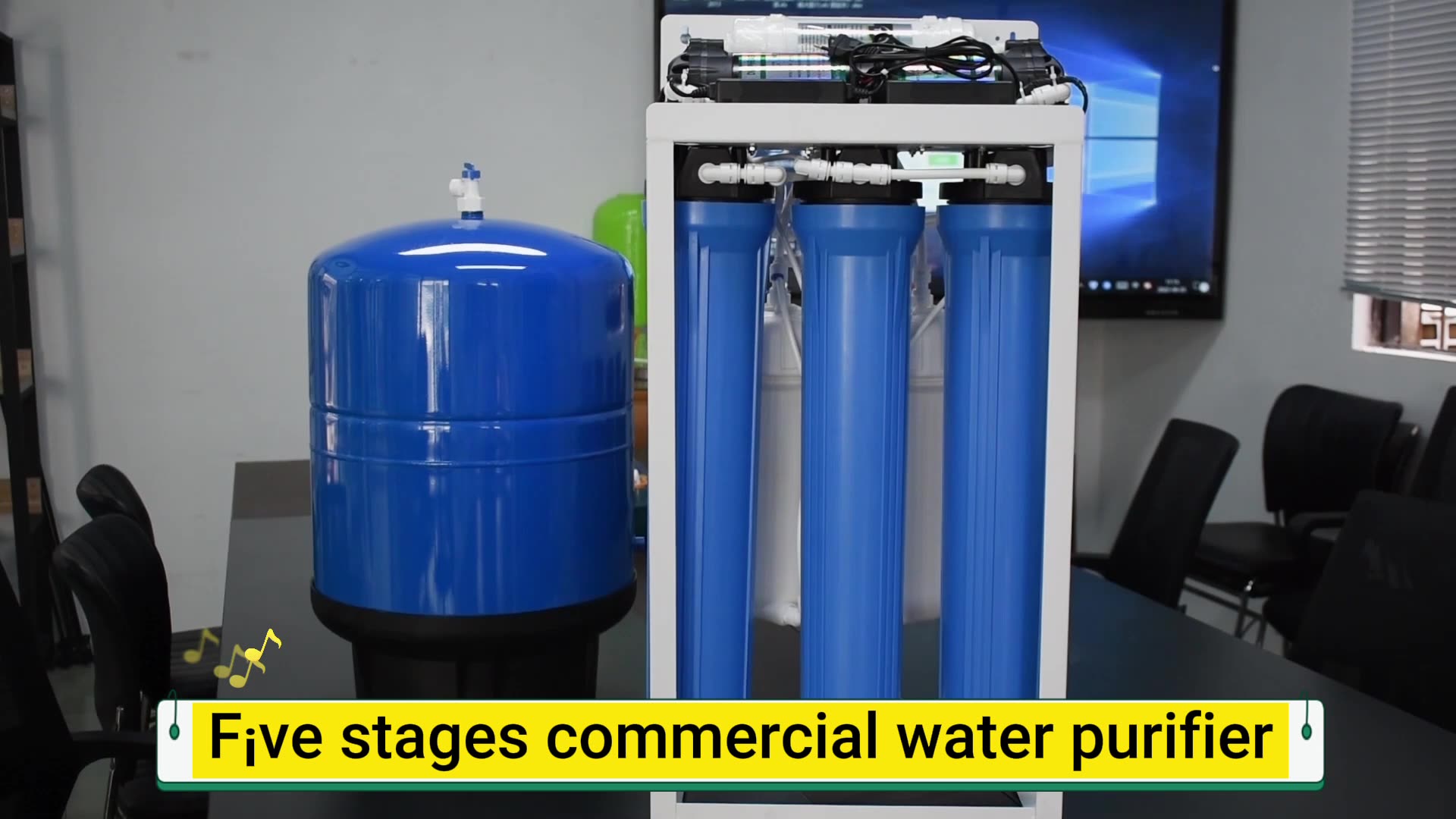 5 Stages Commercial Drinking Water Filter System Water Filter
Reverse osmosis (RO) systems are the overachievers. They remove almost everything, including minerals. Some people add a remineralization filter after to make it taste more like spring water—fancy.
And then there are UV filters, which zap bacteria with light. Think of it as a tanning bed for germs, except they don’t get a tan—they get destroyed.
Installation: Easier Than Assembling IKEA Furniture
I promise, setting up a commercial system is usually simpler than you imagine. Most models come with clear instructions, and a plumber can have it running in under an hour.
Some systems are even “point-of-use,” meaning they attach right to your sink or fridge. No need to reroute your entire building’s piping—just connect, flush, and enjoy.
The hardest part, honestly, is deciding which filter to buy. That’s where you might need to annoy a friendly salesperson for five minutes. But hey, that’s their job, right?
Maintenance: Don’t Panic, It’s Not a Pet
Filters need to be changed every six to twelve months, depending on use. It’s like changing the oil in your car, but way less greasy and with fewer dirty looks.
Most systems have a little indicator light or a button that yells at you to swap the cartridge. You just twist, pull, and pop in a new one. Boom—clean water again.
Neglecting it? That’s how you get that weird cloudy water that tastes like basement. Don’t be that person. Be the hero who changes the filter on time.
The Environment Likes You More Now
Switching to a commercial filtration system is like giving the planet a hug—a really refreshing hug. You’re cutting down on plastic waste, truck emissions, and the energy it takes to ship heavy bottles.
Every time someone fills a reusable bottle from your filtered tap, a dolphin does a little happy flip. Okay, maybe not, but it’s close to science.
Your office or café can even brag about it. Put up a little sign: “Our water is filtered. Save a turtle, use a glass.” Instant eco-cred.
One Last Thing: The “Ugh, What’s That Smell?” Fix
Ever walked into a break room and smelled something funky from the water? That’s usually a sign of a filter that’s past its prime. A good commercial system keeps everything smelling like nothing—which is exactly what water should do.
Also, no more hard-water stains on your countertops. Your cleaning crew will send you a fruit basket. Probably.
The Smile-Inducing Conclusion
So here’s the uplifting truth: you don’t need a degree in chemistry to have amazing water. A commercial drinking water filtration system is like hiring a tiny, invisible janitor for your hydration—no fuss, no drama, just crisp, clean sips all day.
Your coffee will taste like coffee again. Your coworkers will stop stealing bottled water from the break room fridge. And you’ll feel like a smart, responsible human who cares about both their taste buds and the planet.
Go ahead, take a sip. That’s the sound of you winning at life. And hey, if you ever forget to change the filter, just blame it on “that one guy” in maintenance. We don’t know him, but he seems okay with taking the heat. Cheers to better water—and smile, because now you know the secret.
