Water Filtration Systems For Commercial Use

So my buddy Dave, who runs a small coffee chain, calls me last week in a full-blown panic. He’s got three espresso machines down, a sink full of lime-scale, and customers comp...

So my buddy Dave, who runs a small coffee chain, calls me last week in a full-blown panic. He’s got three espresso machines down, a sink full of lime-scale, and customers complaining about a “weird aftertaste.” Turns out, his water was basically liquid rock. One bad municipal supply was costing him thousands in repairs and lost business. That’s when I realized: ignoring commercial water filtration is like ignoring a leaky roof—you don’t notice it until the ceiling caves in.
Why Tap Water is Your Business’s Frenemy
Look, tap water is fine for brushing your teeth. But for commercial use? It’s a sneaky saboteur. Minerals like calcium and magnesium are the usual suspects—they crust up your pipes, scale up your boilers, and ruin your product consistency. And let’s not forget chlorine, which makes your coffee taste like a swimming pool. (Ever wonder why your iced tea looks cloudy? That’s the water, buddy.)
Here’s the kicker: most business owners don’t even know their water is the problem. They blame the beans, the equipment, or the barista. But the water is the silent partner in every glass, every batch, every cup. Fixed that, and suddenly your equipment lives longer and your product actually tastes like it should.
Must Read
The Big Three Filtration Types (And Why They Matter)
Okay, let’s cut through the jargon. You don’t need a chemistry degree. You just need to know which system hates your specific water problem. Here’s the cheat sheet:
1. Reverse Osmosis (The Overachiever)
This thing removes almost everything—minerals, bacteria, salt, even the fluoride they put in to make you smile. It’s like a bouncer at a club: nothing gets past. Great for bakeries, breweries, and labs where you need pure H2O. But it’s slow and wasteful (it flushes a lot of water down the drain). Only use it if your water is truly nasty.
2. Carbon Filtration (The Coffee Lover’s Choice)
This is your workhorse. It tackles chlorine, bad odors, and funky tastes. Almost every decent coffee shop uses carbon filters. They’re cheap, simple, and keep your espresso shots from tasting like a public swimming pool. But they won’t soften hard water—so if you’ve got scale problems, you need a buddy system.
3. Water Softeners (The Pipe Protector)
These swap hard minerals (calcium) for soft ones (sodium). It’s like magic, but with salt. Your pipes will thank you. Your boiler will last twice as long. Your ice machine won’t churn out white flakes. The downside? The water gets a little salty—okay for cleaning, not great for drinking straight. Use it with a carbon filter for the best of both worlds.
Size Matters: Don’t Overthink the Flow Rate
Business owners always ask me, “Which system is best?” and I ask them: “How fast do you need the water?” A tiny under-sink filter for a break room is not the same as a whole-building system for a restaurant. If you run a car wash, you need volume. If you run a microbrewery, you need purity. Don’t buy a garden hose when you need a fire hydrant.
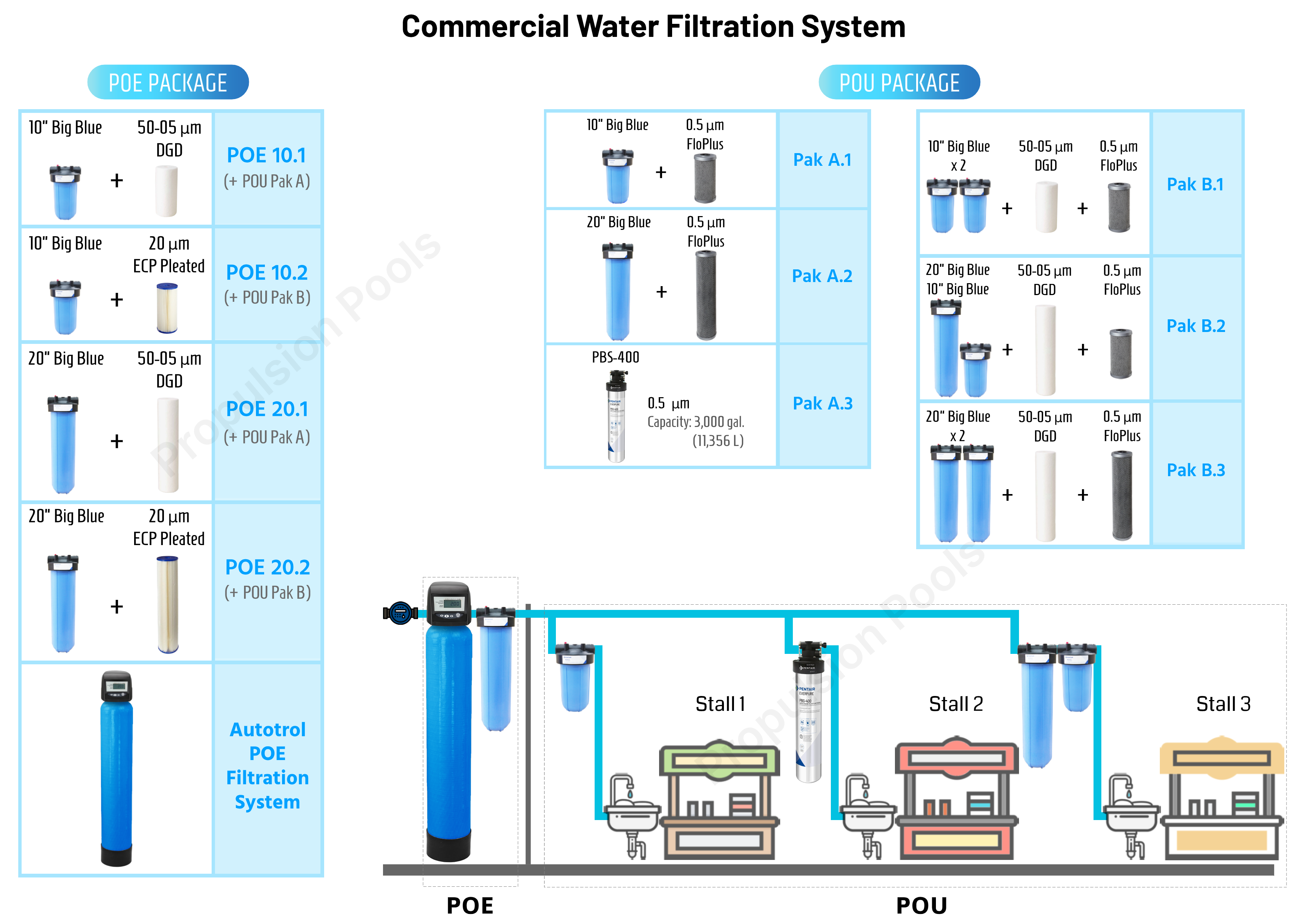 Water Filtration System For Commercial Use at Charlotte Mcgowan blog
Pro tip: look at the GPM (gallons per minute) rating. If your dishwasher demands 4 GPM and your filter only delivers 2, you’ll be waiting forever. And customers hate waiting.
The Hidden Cost of Cheaping Out
I get it—budgets are tight. But buying a $50 home filter for a commercial kitchen? That’s like bringing a butter knife to a gunfight. Cheap filters clog fast, bypass contaminants, and cost you more in repairs than a proper system would. Dave’s coffee chain? He spent $2,000 fixing machines before dropping $800 on a real commercial filter. Do the math.
Also, consider maintenance. If you can’t remember the last time you changed a filter, your water is now running through a science experiment. Set a calendar reminder. Please.
The “Secret Sauce” You Didn’t Know You Needed
Here’s the ironic part: most businesses spend a fortune on ingredients, marketing, and fancy equipment. But they forget the one thing that touches every product—the water. Better water makes better beer, better coffee, better bread, and better ice. It’s the cheapest upgrade you’ll ever make.
And no, you don’t need to become a water snob. Just test your water (many companies do it for free), find the enemy (scale? chlorine? iron?), and pick the system that fights it. Your customers won’t know why everything suddenly tastes better—but they’ll notice.
Now go check your filter. And tell Dave I said hi.
