How Do You Turn Off The Water In Your House

Picture this: You’re standing in a puddle that’s growing faster than your panic. Water is geysering from under your sink, and you have no idea where the off switch lives in yo...
Picture this: You’re standing in a puddle that’s growing faster than your panic. Water is geysering from under your sink, and you have no idea where the off switch lives in your house. Don't worry, we’ve all been there—usually in our pajamas, holding a dripping sponge like a useless scepter.
First, take a deep breath. That water isn’t going to swallow you whole, no matter how much it looks like the opening scene of a disaster movie. The real hero of this story lives near your water meter, and it’s waiting for you to give it a good, firm twist.
The Main Event: Your Main Water Shut-Off Valve
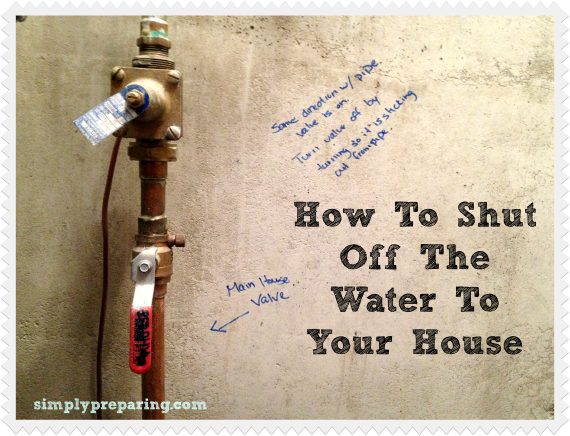
Every house has one main shut-off valve that controls all the water flowing in from the street. Think of it as the boss level—turn this, and every faucet, toilet, and sprinkler in your home instantly goes silent. Find it now, before the next plumbing apocalypse hits.
Must Read
Where is this magical knob? Usually, it’s in your basement, crawl space, or garage, right where the water pipe enters the house. If you don’t have a basement, look outside near your foundation, inside a metal or plastic box buried in the ground. It’s basically a secret treasure chest, except the treasure is dry socks.
Surprising fact: Some houses have a valve INSIDE the house, and others have one outside. If yours is outside, you’ll need a special “curb key” tool, but for now, just locate it. You can always use a big wrench and a lot of swearing in a pinch.
Practice Makes Panic-Free
Go find your valve right now—seriously, pause this article. Walk to your basement or garage. If you have to move a stack of old National Geographics, do it. This is live fire training, but with water.
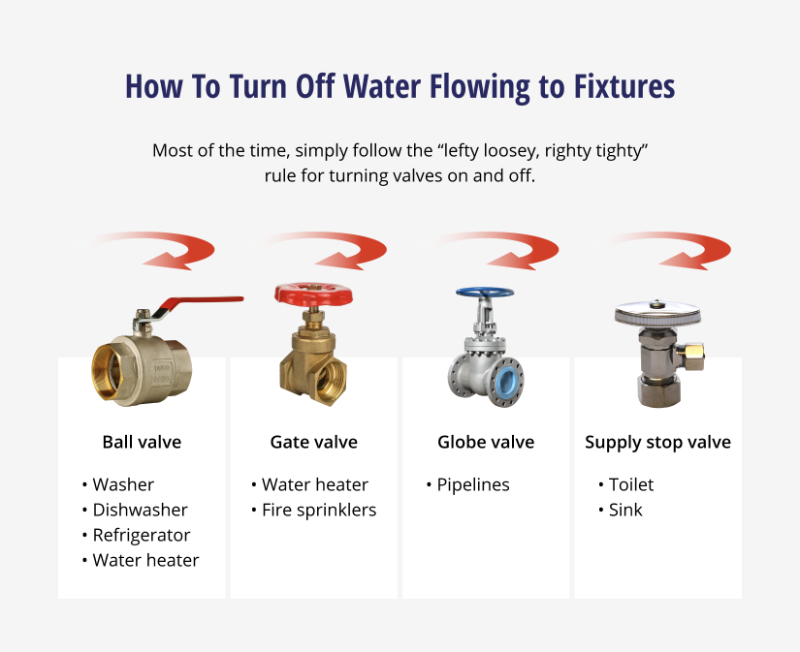
Once you find it, test it. Turn the valve clockwise (righty-tighty) until it stops, then turn it back open (lefty-loosey). Do this once a year so it doesn’t rust into a useless hunk of metal. Nothing is more tragic than a frozen valve during a leak.
Fun fact: The first homeowner who ever searched for their shut-off valve was so frustrated, archaeologists found their skeleton still gripping a wrench. Don’t be that skeleton.
The Emergency Sink & Toilet Trick
If the flood is coming from a single sink or toilet, you don’t always need the nuclear option. Under your sink, you’ll usually see two small, chrome handles—one for hot, one for cold. Turn them clockwise to kill the flow to only that sink.
For toilets, look at the wall behind the throne. There’s a little valve—usually oval or a straight handle—connected to a metal hose. Turn that clockwise and your toilet becomes a passive, non-terrifying piece of porcelain. Just don’t flush it while you’re fixing things, or you’ll be very, very sorry.
When The Valve Is Stuck (Because Of Course It Is)
You turn the handle, and nothing happens. It’s stuck. Now you’re sweating, the water is rising, and your dog is watching you like you’re failing a test. Don’t force it—you’ll snap the stem, and then you’re in a whole new circle of hell.
 How To Find & Turn Off a Main Water Shut-off Valve
Spray the valve with a penetrating oil like WD-40 and wait ten seconds. Then use a pair of pliers or a wrench for extra grip. If it still won’t budge, you have my permission to scream, but then call a plumber. They have secret handshakes that loosen valves.
Bizarre fact: Some old houses have a valve inside the house that’s actually a gate valve—they look like a steering wheel. These break easily, so treat them like a grumpy cat: gently.
Don’t Forget The Water Heater & Outside Spigots
Your water heater also has a shut-off valve, usually on the cold water pipe above it. If the heater springs a leak (and they do, often at 3 AM), turn that off separately. Otherwise, your main valve will kill everything, including your hot shower.
Outside spigots (hose bibs) often have their own shut-off inside the house. If you don’t turn those off in winter, your pipes will freeze, burst, and you’ll be mopping your garage floor until spring. Yes, this happened to my uncle. Twice.
Mind-blowing statistic: A single burst pipe can shoot out 200 gallons of water per hour. That’s enough to fill a bathtub every six minutes. Your water bill will look like you bought a swimming pool.
The Secret Weapon: Your Neighbor
If you absolutely cannot find the valve and water is spraying like a Trumpet of Doom, call your neighbor. They probably know where the city shut-off is for your whole street. It’s a civic duty, like helping someone move, but wetter.
As a last resort, call the water company. They can shut off your water from the street—but that might take an hour, and your floorboards will be a memory by then. So know your valve.
One more surprising fact: In ancient Rome, they didn’t have shut-off valves. When a pipe burst, they just sacrificed a goat to the water gods. Your valve is cheaper and less messy. Use it.
So go now. Find that valve. Give it a practice twist. Your future self—standing in a dry kitchen, sipping coffee—will hug you. Probably.
