Is Water Softener Salt The Same As Rock Salt

Ever stood in the grocery aisle, squinting at a bag of salt and wondering, "Can I just use this for my water softener?" You're not alone. The difference between water softener...

Ever stood in the grocery aisle, squinting at a bag of salt and wondering, "Can I just use this for my water softener?" You're not alone. The difference between water softener salt and rock salt feels like one of those kitchen mysteries nobody explains. Let’s crack it open together.
Here’s the short answer: they are not the same thing, even though they look like long-lost cousins. Water softener salt is highly refined and purified, while rock salt is basically just crushed-up, dirty crystals from the earth. Think of it like the difference between table sugar and raw, unwashed sugarcane—both sweet, but only one is ready for your coffee machine.
What’s Actually In That Bag?
Water softener salt is designed for one job: regenerating the resin beads inside your softener. It’s usually made from evaporated salt, which is 99.9% pure sodium chloride. That’s it—no extra minerals, no dirt, no surprises.
Must Read
Rock salt, on the other hand, is the wild child of the salt family. It’s mined directly from underground deposits and still contains insoluble impurities like clay, sand, and even trace amounts of heavy metals. Pretty cool for melting ice on your driveway, right? Not so cool for your expensive water softener.
Why does purity matter? Because those impurities in rock salt can build up like gunk in a drainpipe. They form a nasty sludge called "mush" that clogs your softener’s valve and turns your appliance into a paperweight. Your machine doesn’t want a gritty mud bath—it wants clean, dissolved salt water.
But Wait—Can’t I Just Use Rock Salt Anyway?
Technically, you could pour rock salt into your brine tank. It’s salt, after all. But imagine using garden dirt in your espresso machine—it might work once, but you’ll regret it. Rock salt’s impurities will slowly suffocate your softener, leading to repairs that cost way more than a bag of proper salt.
Also, rock salt dissolves much slower than water softener salt. Your system needs a consistent, fast dissolution to keep the resin beads regenerating on schedule. Rock salt is like a slow, grumpy tortoise; softener salt is a reliable rabbit.
And here’s a fun fact: rock salt often contains calcium sulfate, which can create white, chalky deposits inside your tank. Ever seen those crusty rings in a tea kettle? That’s exactly what you’re inviting in.
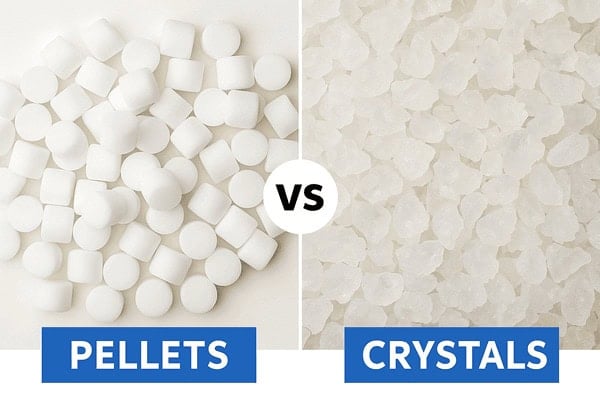 Water Softener Pellets vs. Crystals: What’s Best for Your System?
The Three Main Types of Water Softener Salt
Let’s geek out for a second. The salt you should use comes in three forms: pellets, crystals, and blocks. Pellets are the most popular—they’re small, uniform, and dissolve cleanly, like compact ice cubes. Crystals are cheaper but can clump weirdly in humid weather. Blocks are giant, heavy bricks that last forever, but they’re awkward to lift.
Rock salt, meanwhile, comes in irregular, jagged chunks. It’s perfect for making ice cream melt faster on a sidewalk, but it’s absolutely terrible at keeping your water softener happy. It’s like using a sledgehammer to hang a picture frame—overkill and messy.
A Quick Taste Test (Don’t Actually Do This)
If you licked a piece of water softener salt, it would taste purely salty, with no weird aftertaste. Rock salt? You’d get a little grit, maybe a hint of bitter minerals, and a strange earthiness. Your water softener doesn’t have taste buds, but it can definitely "feel" the difference in quality.
So, can you swap them? No way. Not unless you’re ready to replace your softener’s control head or deal with spotty dishes. Save rock salt for your driveway, and treat your water softener to the good stuff. Your pipes—and your wallet—will thank you.
And hey, next time you pass that bag of rock salt in the hardware store, give it a little nod. It’s tough, it’s wild, and it’s definitely not for your water softener.
