Whole House Water Softener Installation Cost

The other day, my friend Sarah sent me a photo of her laundry. It looked like someone had dumped a bag of orange wood chips into the wash. “My white shirts are ruined,” she te...
The other day, my friend Sarah sent me a photo of her laundry. It looked like someone had dumped a bag of orange wood chips into the wash. “My white shirts are ruined,” she texted, followed by a crying-laughing emoji.
Her water was so hard, it was literally turning her clothes orange. That’s when she looked into a whole house water softener, and the first thing she asked me was, “So, how much is this going to hurt?”
If you’re in Sarah’s shoes—staring at crusty faucets and squeaky-clean hair that somehow feels like straw—you’re probably wondering the same thing. Spoiler alert: the cost isn’t as scary as you think, but it’s not pocket change either.
Must Read
The Big Number: What You’re Really Paying For
A typical whole house water softener installation runs between $1,500 and $5,500. Notice the big gap? That’s because you’re not just buying a metal box—you’re paying for the unit, the labor, and a pinch of your sanity if things go sideways.
The cheap end often involves a basic “demand-initiated” system with less fancy features. The high end gets you a “dual-tank” setup that never runs out of soft water, perfect if you have more bathrooms than friends.
Don’t forget the permits. Some cities require them, and skipping one can double your headache later. Yes, I’m talking to you, DIY warrior who thinks rules are optional.
The Unit Itself: Salt, Salt, and More Salt?
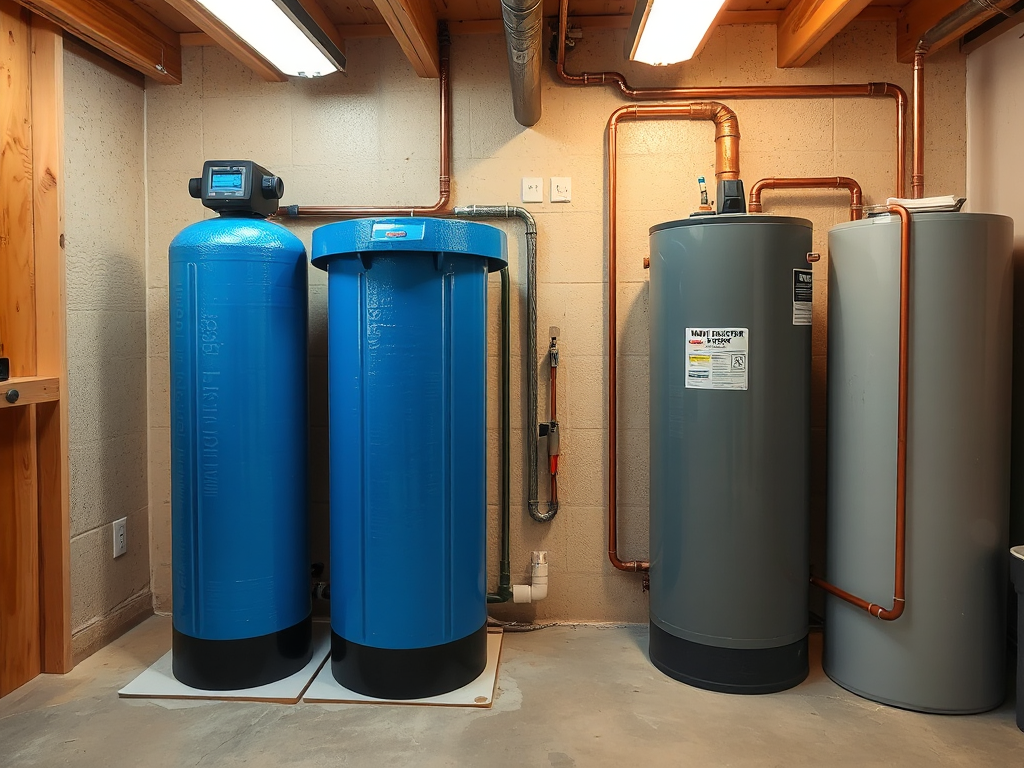
The actual water softener unit is the priciest component, usually $600 to $2,500. You’ll see “salt-based” (most common) and “salt-free” (which don’t actually remove hardness, just condition it).
Salt-based systems are the heavy lifters—they swap calcium and magnesium for sodium, giving you that silky, lathery water. Salt-free systems are cheaper, but they basically just clog up the minerals so they don’t stick to your pipes. It’s like putting a Band-Aid on a leaky faucet.
Size matters here. A unit for a family of four is bigger than one for a solo renter. Pro tip: buying an undersized system to save fifty bucks is like buying a Smart car to haul a couch—it’s going to end badly.
Labor: The Hidden Inflation
Installation labor usually costs $200 to $800, depending on how creative your plumber needs to get. If your house has perfectly accessible pipes under the kitchen sink, you’re in luck.
But if your plumbing is from the 1950s and your water main is buried behind a wall that also holds up the second floor? That’s when the invoice makes you twitch. One neighbor told me his plumber charged extra just to move a water heater out of the way.
Always get three quotes. The guy who quotes $300 might not have insurance, and the one who quotes $700 might show up with a team and a coffee machine. Guess which one you want when a pipe bursts?
Additional Costs That Slink In Unannounced
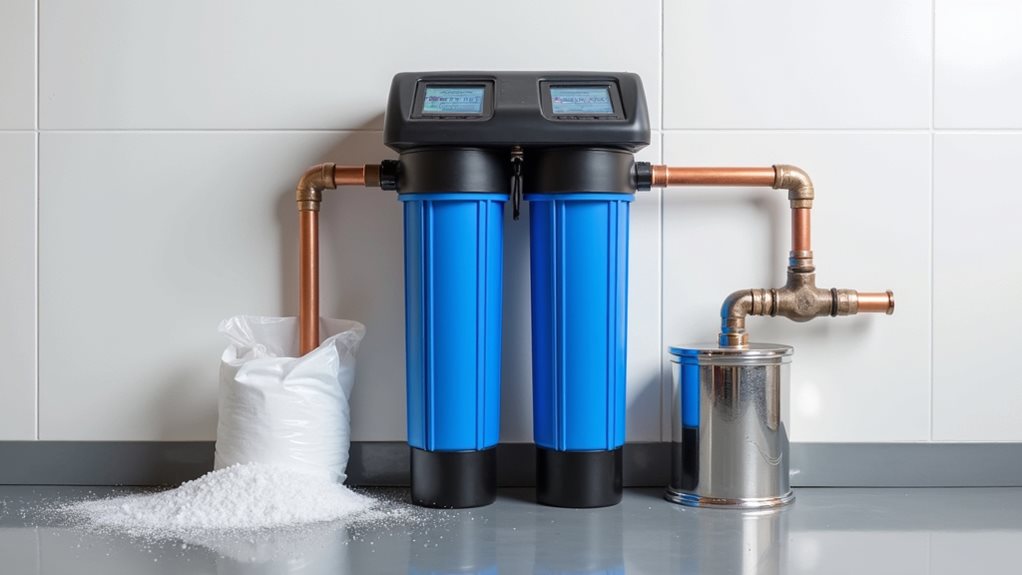
You’ll likely need a drain line for the backwash, which could add $50 to $150. If your water is high in iron, you’ll want a pre-filter—add another $100 to $300.
Then there’s the fancy digital display option. Do you need a screen that tells you the water’s hardness like a fitness tracker for your pipes? Probably not, but marketing says you do. I’m looking at you, Wi-Fi-enabled salt tank.
 How Much Does a Whole House Water Softener Cost? Buyer’s Guide - Yardique
And don’t forget salt bags themselves. You’ll spend about $50 to $100 per year on salt, unless you buy in bulk at a warehouse store and feel very, very adult about it.
DIY vs. Pro: The Eternal Internet Debate
Installing a softener yourself can save you $300 to $700. YouTube makes it look easy—a guy with a beard and a pipe wrench does it in fifteen minutes flat.
But unless you’re comfortable cutting copper pipes and possibly flooding your basement, leave it to a pro. I watched a friend try to DIY, and he ended up paying double to fix a cross-threaded valve. Ouch.
If you rent, check your lease. Landlords might allow a portable “single-tank” softener that hooks up like a big filter—those cost $400 to $900 and require zero permanent plumbing.
Location, Location, Location (Yes, It Matters)
Water hardness varies wildly. If you live in the Southwest or Midwest, your water is basically liquid rock—you’ll need a beast of a machine. If you’re on a well, you might need extra filtration (iron, sulfur, etc.), adding $500 to $2,000 to the bill.
Your local plumber knows your water’s personality. Ask them, “Is my water harder than a math exam?” Their answer will guide your budget.
Also, some states tax water softener installations because of brine discharge. My cousin in California paid an extra $200 in fees. Always check local regulations.
Is It Worth the Money?
Sarah paid $2,100 for a solid salt-based system with installation. She messaged me last week: “My hair is not a dry sponge anymore. Also, the dishes sparkle. I’m never going back.”
Think of it like this: a water softener extends the life of your water heater, washer, and dishwasher. You’ll use less soap, less shampoo, and less elbow grease scrubbing limescale. Your plumbing will thank you by not costing you thousands in repairs.
If your utility bills feel high or your coffee tastes like a mineral deposit, the $1,500 to $5,500 cost is an investment in your sanity. And your white shirts.
So grab a few quotes, check your water report, and maybe skip the Wi-Fi-enabled version. Unless you really want to know your water’s steps per day.
