Difference Between Well Water And City Water

Picture this: you’re sipping a glass of water at a friend’s countryside cabin, and it tastes like the Earth itself—mineral-rich, cool, and faintly metallic. Back home in the c...

Picture this: you’re sipping a glass of water at a friend’s countryside cabin, and it tastes like the Earth itself—mineral-rich, cool, and faintly metallic. Back home in the city, your tap water is a crisp, neutral blank slate, almost sterile in its reliability. These two worlds, well water and city water, aren’t just different in taste; they’re fundamentally different in how they’re born, treated, and managed. Let’s dive into the underground river of differences, shall we?
The Source: Nature’s Tap vs. The Municipal Plant
Well water is straight-up wild. It comes from a private well drilled into an underground aquifer, meaning you are the utility company. You own the pump, the tank, and the entire responsibility for what bubbles up. City water, on the other hand, is a communal affair: it’s sourced from rivers, lakes, or reservoirs, then shipped to a massive treatment plant where it’s filtered, chlorinated, and fluoridated before arriving at your faucet.
Fun fact: about 15% of Americans rely on private wells, which means they drink water that hasn’t been touched by a government lab. That freedom is romantic, but it also means you’re one power outage away from a dry shower.
Must Read
The Taste Test: Mineral vs. Chemical
Well water often earns cult-like devotion for its taste—think high mineral content from calcium, magnesium, and iron that can make it feel “hard” but also satisfying. City water, by contrast, is engineered to be neutral, but that process can leave behind a faint chlorine aftertaste, especially in hot months when treatment boosts disinfectant levels. Some people swear by a carbon filter just to smooth out that municipal twang.
Pop culture nod: Remember that scene in Mad Men where Don Draper pours a glass of tap water and stares at it like it’s a status symbol? That’s city water—polished, predictable, and a little corporate. Well water is more like the unfiltered character in a Coen Brothers film: rugged, unpredictable, and sometimes carrying a whiff of sulfur.
The Safety Equation: Testing vs. Regulation
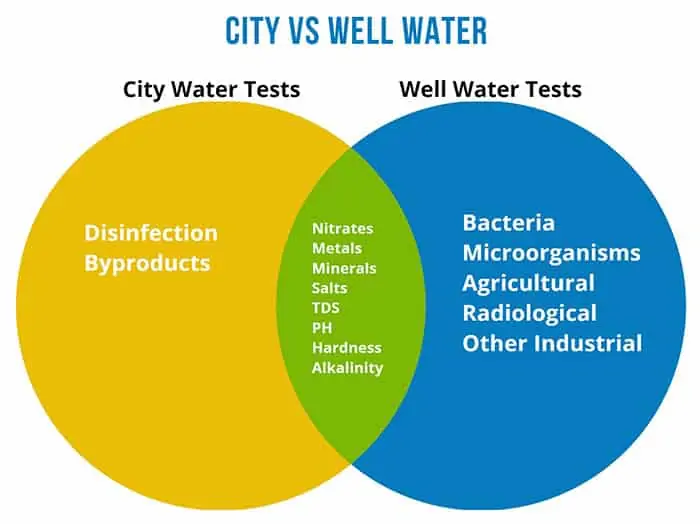
Here’s the biggie: city water is tested hundreds of times a month by law, and results are public. You can look up your local water quality report online, which lists everything from lead levels to pH. Well water has no such oversight. The EPA doesn’t regulate private wells, so the safety of your water is entirely on you. That means annual testing for bacteria, nitrates, and heavy metals isn’t just a good idea—it’s essential.
Practical tip: If you’re on well water, buy a simple test kit from a hardware store for about $30. Check for coliform bacteria and nitrates first. If you’ve got a baby or pregnant person in the house, consider lead and arsenic tests too. City dwellers, you’re not off the hook either—old pipes in your building can leach lead, so let your water run for 30 seconds before drinking in the morning.
The Cost and Maintenance: Free Water? Not Quite
Well water feels like a steal—no monthly bill from the utility company. But the reality is that wells require ongoing love: pumps that last about 10–15 years ($500–$1,000 to replace), pressure tanks, and occasional water softeners if your water is hard. A well owner’s annual maintenance is about $200–$300, not counting emergency repairs. City water, meanwhile, comes with a predictable monthly bill (average $40–$70 in the U.S.), but you never worry about a pump dying at 3 a.m. on a holiday weekend.
 Best Water Pitcher Filters - Based on 3rd Party Laboratory Testing
Fun little fact: In parts of the world like rural Australia, well water is so prized that neighbors dig deep into their own pockets to share a community borehole. It’s a literal wellspring of neighborly drama and bonding.
The Environmental Angle: Local vs. Commodity
Well water is profoundly local. You’re tapping into a finite groundwater supply that can be depleted if you over-pump or if drought hits. City water, by contrast, is often trucked or piped in from distant sources, which carries a carbon footprint—especially if it’s desalinated or pumped across mountains. Both systems have ecological trade-offs, but well water gives you a direct connection to the land beneath your feet.
Practical tip: If you’re on well water, practice conservation like a pro. Fix leaks fast, install low-flow fixtures, and water your garden in the early morning. For city water, opt for a reusable bottle and skip the plastic. Every drop has a story, whether it’s a thousand-year-old aquifer or a lake that was a glacier 10,000 years ago.
The Aesthetic: Rust, Stains, and White Clothes
Let’s get real about the visual drama. Well water, especially if it’s hard or high in iron, can leave orange-brown stains on sinks, tubs, and laundry. That white T-shirt you love? It might start looking a little rustic after a few washes. City water, with its softer composition, rarely stains, but it can leave chalky calcium deposits on glassware if your local supply is on the hard side. A water softener is the ultimate fix for both worlds.
Cultural reference: Ever notice how in old cowboy movies, the hero always “tests” well water by spitting it out dramatically? That’s because straight well water can smell like rotten eggs if sulfur bacteria are present. Modern well owners just install a simple carbon filter and keep sipping.
A Short Reflection for Your Daily Life
Here’s the thing: whether you fill your glass from a well or a municipal pipe, you’re participating in an ancient ritual. Water connects you to geology, to infrastructure, to your neighbors. The next time you pour a glass, pause for two seconds. If it’s well water, thank the rain that fell centuries ago and the pump that just woke up. If it’s city water, thank the engineers, the chlorinators, and the river that gave you life. In the end, both are miracles—just delivered through different pipes.
