Difference Between Hard Water And Soft Water

You step out of the shower, skin feeling oddly tight. Or maybe you’ve just run a glass of tap water that looks a little cloudy. Welcome to the quiet tension in your plumbing—t...

You step out of the shower, skin feeling oddly tight. Or maybe you’ve just run a glass of tap water that looks a little cloudy. Welcome to the quiet tension in your plumbing—the eternal debate between hard water and soft water.
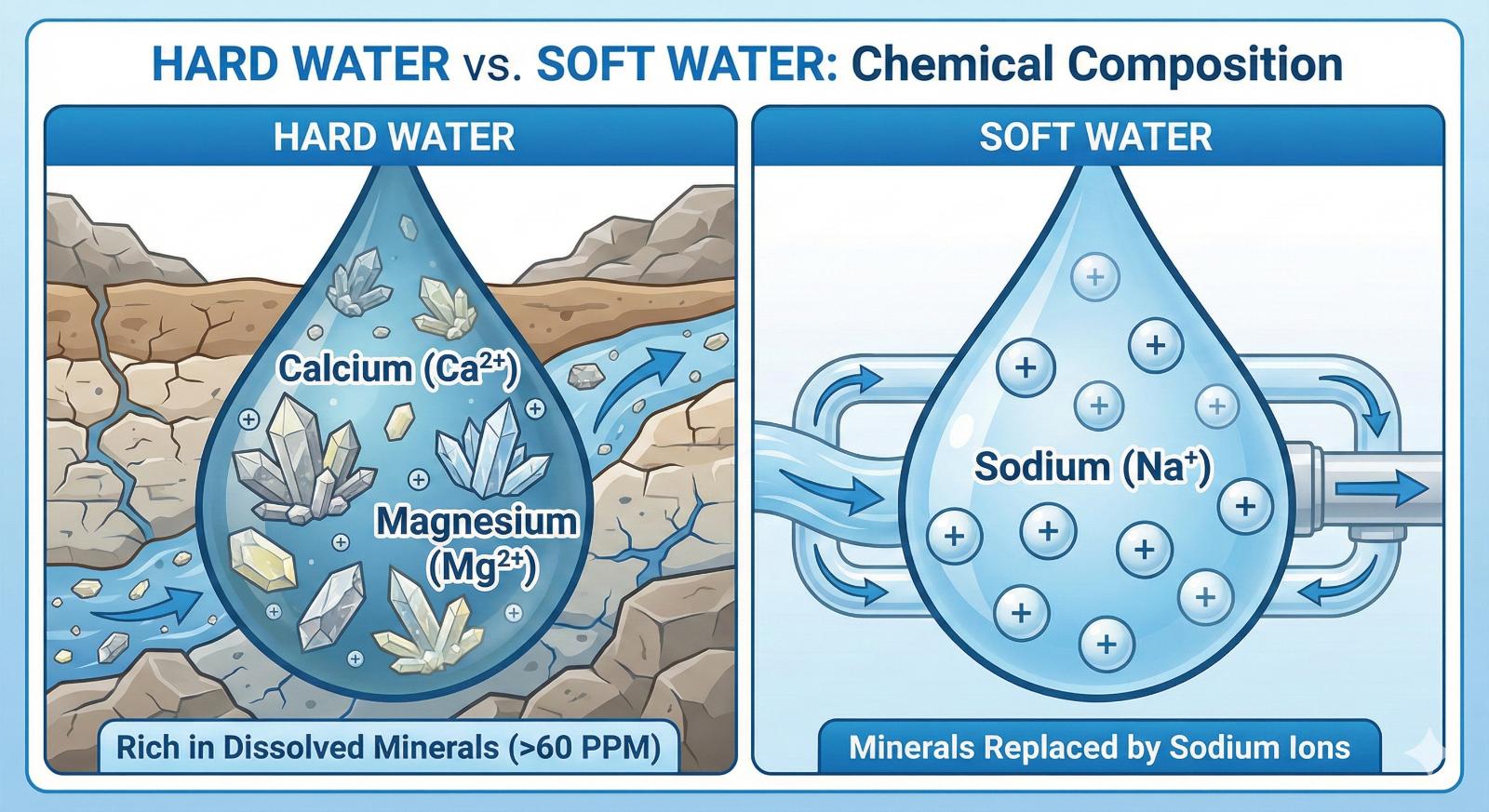
Think of it as the difference between a gritty indie film and a polished blockbuster. Hard water is packed with minerals like calcium and magnesium; soft water has been stripped down to almost nothing but H₂O. Both have their fans, but which one is really right for your daily life?
The Mineral-Heavy Drama of Hard Water
Hard water is essentially rainwater that has traveled through limestone or chalk, picking up excess calcium and magnesium along the way. It’s like a well-traveled tourist who picks up souvenirs everywhere they go—except those souvenirs leave stubborn white scale on your faucets.
Must Read
You’ve probably seen the signs: cloudy wine glasses, a bathtub ring that fights back, and that chalky deposit on your kettle’s heating element. About 85% of American homes deal with hard water, according to the USGS, making it the norm in most regions.
Fun fact: The word “hard” comes from the fact that it’s tougher to get soap to lather. That’s why your shampoo feels like it’s working overtime—and why your hair might feel straw-like after a wash. You’re not imagining it.
Cultural Connections: The “Old School” Charm
In many European villages, hard water is a point of pride—mineral-rich and supposedly better for your bones. The French love it for their coffee, claiming it adds a subtle depth. On the flip side, hard water is terrible for your pipes, costing the average household $200–$600 annually in appliance repairs or cleaning products.
It’s also why your favorite white shirt turned gray after those first few washes. The minerals bind to fabric fibers, dulling colors and stiffening towels. Your laundry detergent is fighting a losing battle—you’ll need to add borax or a water softener to the load.
But don’t trash your hard water entirely. It contains essential minerals that some studies link to better cardiovascular health. It’s a trade-off: shiny dishes versus strong bones.
Soft Water: The Smooth Operator
Soft water feels different—literally. When you wash your hands with it, the soap lathers into a rich, fluffy cloud. Your skin feels slippery clean, not dry. That’s because soft water has had its calcium and magnesium swapped for sodium or potassium ions via a water softener system.
Practical tip: If you’ve ever washed your hair in a hotel with a water softener, you know the feeling—a silky, almost too-smooth texture. Some people adore it; others find it leaves a faintly “slimy” residue. That’s the salt receptors on your skin reacting to the sodium.
Soft water is a miracle for appliances. Your dishwasher won’t leave spots; your coffee maker won’t clog; your water heater runs more efficiently. You’ll also use about 30–50% less soap and detergent because the suds work faster.
The Catch: Taste and Health Trade-offs
Here’s the curveball: soft water tastes flat to many people. The minerals that give water its “crispness” are gone, replaced by a slightly metallic or salty note. It’s like drinking a familiar beer that’s been watered down—technically fine, but bland.
Health-wise, soft water adds sodium to your diet. For someone on a low-salt regimen, that’s a real concern. The good news? Most modern systems let you bypass the kitchen tap, so you can still enjoy mineral-rich drinking water while your shower gets the soft treatment.
 Is Soft Water Better for Your Hair? Hard vs Soft Water Compared (2026)
And if you’re a plant parent, beware: soft water can be toxic to some houseplants due to the salt. Your fern will throw a fit. Stick to rainwater or filtered hard water for your green babies.
How to Tell Which One You Have
It’s easier than you think. Fill a clear water bottle halfway, add a few drops of pure liquid soap (no detergents), shake it for 10 seconds. If the water gets cloudy and has few bubbles, you’ve got hard water. If it’s clear with a thick layer of suds, that’s soft.
Another telltale sign: check your showerhead. White, crusty buildup? Hard. No spots? Likely soft—or you’ve been cleaning like a maniac. Fun fact: In Japan, hard water is so rare that many tourists panic when they see limescale, thinking it’s a health hazard. Cultural whiplash.
If you’re still unsure, most hardware stores sell cheap test strips. They’ll tell you your water’s hardness in grains per gallon (gpg). For reference, anything over 7 gpg is considered hard—and your coffee maker is silently weeping.
Practical Tips for Living with Either
If you’re stuck with hard water and hate it, install a whole-house water softener (about $500–$2,000) or a point-of-use filter for your shower and kitchen. A cheaper hack: add a tablespoon of white vinegar to your wash cycle to lift mineral deposits from clothes.
If you prefer soft water but miss the taste, buy a simple carbon filter pitcher. It strips chlorine and improves flavor without removing the salt. Or, just embrace your local water’s quirks—like a true creative who turns flaws into style.
Cultural observation: Denmark is famous for its hard water, yet Danes are among the healthiest populations on Earth. They just use a lot of descaling tablets. Meanwhile, New York City’s famously soft water is why their bagels and pizza dough are legendary—the lack of minerals affects gluten development. Science meets carb culture.
The Final Reflection: Water as a Mirror
Ultimately, the difference between hard and soft water is a reminder that everything in life is a trade-off. Hard water gives you minerals and character, but extra cleaning. Soft water gives you efficiency and silky skin, but bland taste.
You can’t choose the water that comes out of your tap—but you can choose how you work with it. Whether you’re scrubbing limescale or craving a little more minerality in your morning glass, your water is a quiet partner in your day-to-day story.
So next time you step out of the shower or pour a glass of tap, take a moment. That water is doing its job, no matter how hard or soft it is. And honestly, so are you.
