Large Ceramic Plates Too Thick For Dishwasher

So there I was, standing in my kitchen like a detective at a crime scene. A perfectly crafted, hand-thrown ceramic plate—massive, rustic, absolutely beautiful—stared back at m...

So there I was, standing in my kitchen like a detective at a crime scene. A perfectly crafted, hand-thrown ceramic plate—massive, rustic, absolutely beautiful—stared back at me from the sink. It was nearly an inch thick. I looked at the dishwasher, then back at the plate. I swear it whispered, “You wouldn’t dare.”
That plate was a gift from a local potter, and it had zero intention of fitting into a standard dishwasher rack. It sat there, radiating judgment. I tried to angle it sideways. Nope. I tried the top rack, which is supposedly for “delicate items.” That was a joke—it weighed as much as a small cat. Have you ever tried to force a dinner plate into a slot designed for a teacup? It’s not pretty.
Let’s be real: we’ve all bought that stunning, oversized ceramic platter at a market. It’s the one you know will never see the inside of a machine. But why? Why are these beautiful monsters so stubbornly… thick?
Must Read
The anatomy of a dishwasher-proof plate
First, let’s talk science—or at least, the kitchen kind. Most standard dishwashers have fixed tines and a maximum clearance of about 10 to 12 inches on the bottom rack. Your typical dinner plate is around 10 inches wide and thin, maybe a quarter-inch thick. That’s fine.
Now imagine a large ceramic plate—say, 13 inches across, with walls so thick they could stop a gentle breeze. These are often hand-thrown or slab-built, meaning the potter intentionally made them chunky for durability or aesthetic. The problem? The rack is not built for bulk. The plate hits the tines, the spray arm gets blocked, and your dishwasher starts making sounds like a dying robot.
I’ve actually seen a plate lift the bottom spray arm, causing water to shoot sideways. My kitchen floor learned that lesson before I did.
It’s not just about the size—it’s about the heat
Here’s the really ironic part: even if you could jam that plate in, the heat might betray you. Many handmade ceramics are fired at lower temperatures (like mid-range stoneware or earthenware). They’re porous. A dishwasher’s high heat and dry cycle can cause thermal shock.
You know that satisfying crack sound? It’s not a good one. I once heard a plate sigh before splitting into two perfect halves right in the rack. Moral of the story: if the potter didn’t glaze the bottom fully, water seeps in, expands, and—poof—your platter becomes a puzzle.
Even food-safe glaze isn’t always dishwasher-safe. Some glazes contain metallic pigments that fade or leach. So you’re not just risking a broken plate; you’re serving rust-colored sauce next Thanksgiving.
Why do we keep buying them?
Because they’re gorgeous. A thick, heavy ceramic plate feels like you’re eating off a sculpture. It doesn’t slide around when you cut a steak. It keeps food warm longer. Let’s be honest—they make you look like you have your life together, even when you’re eating cereal for dinner.
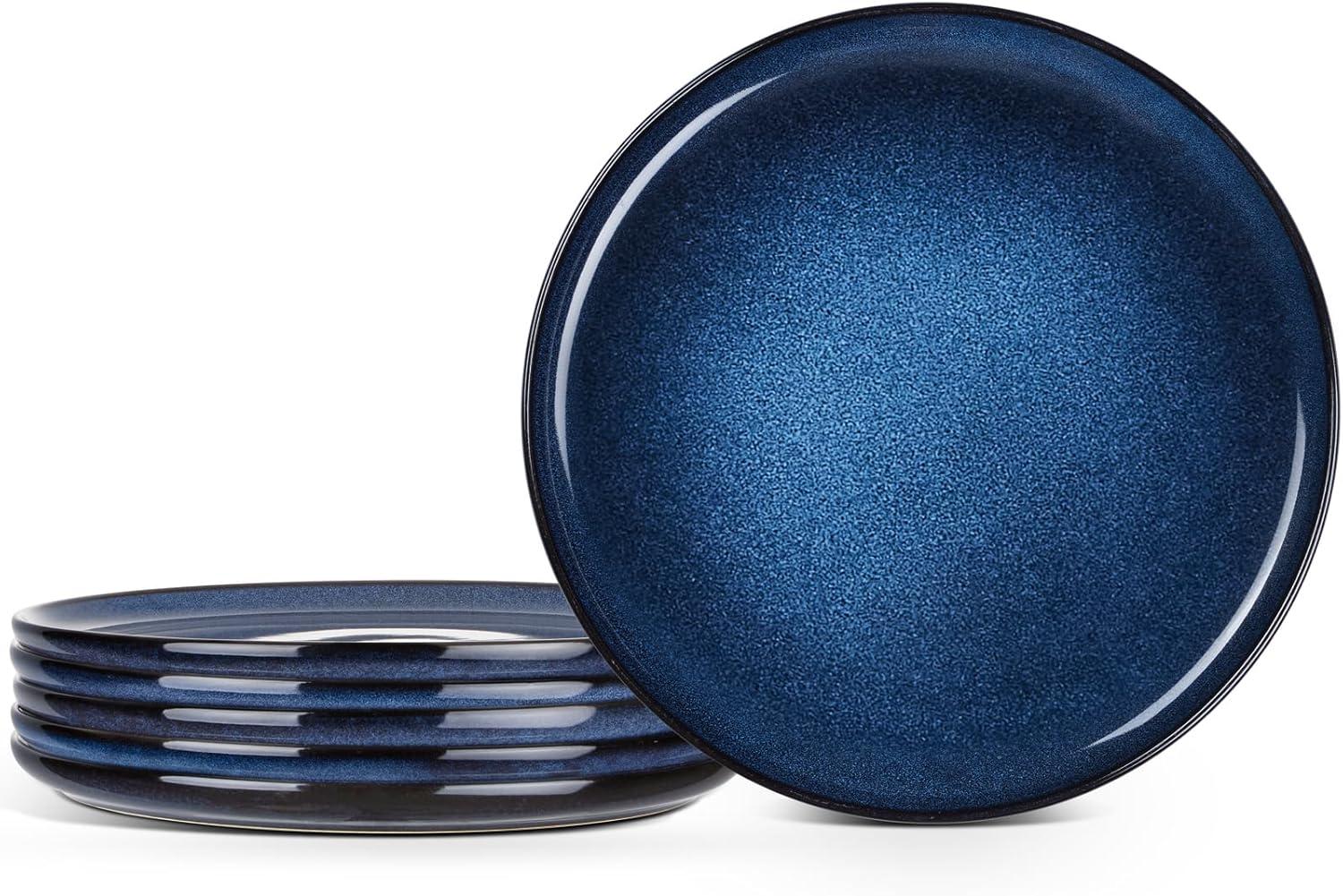 E-far 10.5” Ceramic Dinner Plates Set of 6, Large Reactive Glaze
Plus, there’s a quiet rebellion in owning something that refuses to be convenient. Every time I hand-wash my oversized platter, I feel like I’m honoring some ancient culinary ritual. Or I’m just complaining about soggy hands.
But here’s the trick: you can have both. Look for plates labeled “oven-to-table” or “full vitrification.” Those are usually dishwasher-safe because they’ve been fired hot enough to become non-porous. Also, measure your racks before you buy. I know, it’s unsexy, but it saves heartbreak.
The hand-washing conspiracy
Funny thing—once you start hand-washing these thick beauties, you realize it’s not that bad. It’s actually a moment. You scrub the clay, you admire the glaze, you accidentally drop a sponge on the floor. It’s meditative. Or it’s just a chore you didn’t sign up for. Your call.
I’ve developed a system: I use my big ceramic platter for serving only. That way, it never needs a deep clean—just a rinse and a wipe. The real work? That’s for the everyday plates that do fit in the dishwasher. Let the machine handle the boring stuff; your art deserves a sponge bath.
Final rinse
If you own a plate that’s too thick for the dishwasher, you’re not alone. You’re part of a tribe that values beauty over efficiency. And honestly? That’s okay. Just don’t break the machine trying to prove a point.
Next time you see a massive ceramic plate at a fair, ask the potter: “Can this survive a heat cycle?” If they laugh nervously, walk away. If they smile and say “it’s fully vitrified,” buy two. One for your table, and one to hand-wash while you plot your revenge on modern appliances.
And if you ever feel guilty about hand-washing, just remember: that plate chose to be thick. It knew what it was getting into. So take your time, enjoy the warm water, and let the dishwasher eat its plastic heart out.
