Do Refrigerator Water Filters Remove Chlorine

Let's get one thing straight: your fridge is a miracle machine. It keeps your milk cold, your ice cream hard, and your leftovers from becoming science experiments. But does th...
Let's get one thing straight: your fridge is a miracle machine. It keeps your milk cold, your ice cream hard, and your leftovers from becoming science experiments. But does that little water filter in the corner actually kill the dreaded chlorine? Spoiler alert: it totally does. And the story of how it works is weirder and more fun than you think.
The invisible villain in your glass
Chlorine is like that overzealous friend who shows up to a party and sanitizes everything. Water treatment plants add it to kill bacteria and viruses. It's a lifesaver, but it makes your tap water taste like a swimming pool.
You know that faint "bleach" smell when you fill a glass? That's chlorine gas escaping. Your fridge filter is on a secret mission to capture that gas before it hits your taste buds.
Must Read
If you've ever turned on a faucet and thought, "Ugh, this tastes like a hospital," your fridge filter is the hero you didn't know you needed.
How does the magic box work?
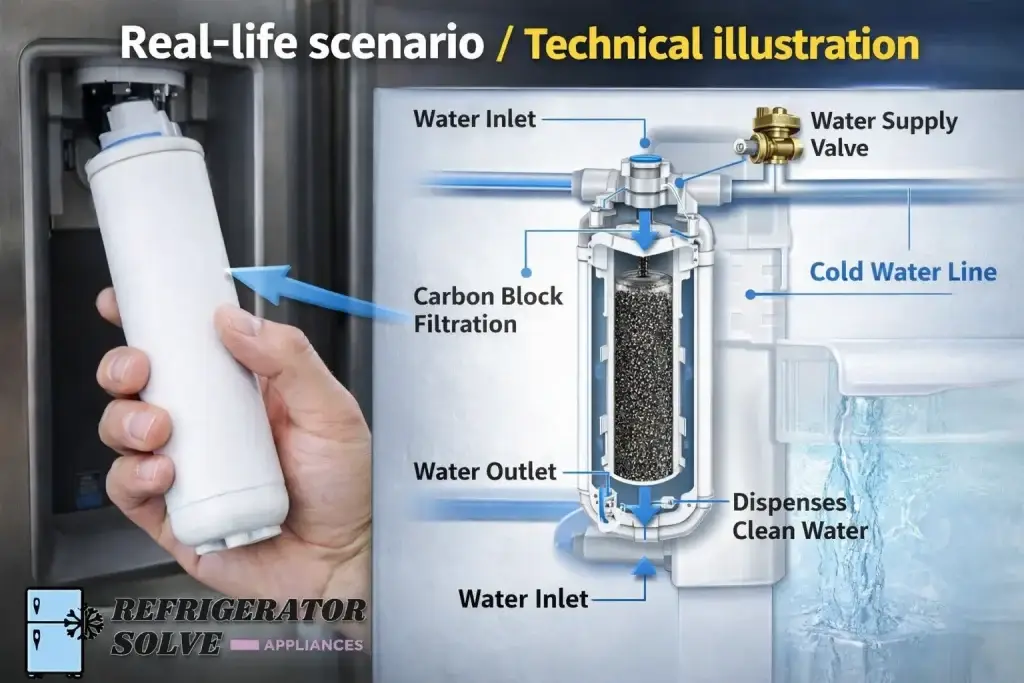
Inside that plastic cartridge is a block of activated carbon. It's not the charcoal you use for a BBQ. This stuff is super porous—like a microscopic sponge with a grudge against chemicals.
When water flows through, chlorine molecules get physically trapped in the carbon's nooks and crannies. It's basically a chemical kidnapping. Bye-bye, chlorine.
But here's the kicker: carbon also performs a trick called catalytic reduction. It chemically transforms chlorine into harmless chloride ions. Your water gets a makeover without any glitter.
Why this is actually hilarious
Think about it: you're paying extra for a filter that removes something the city added on purpose. It's like buying a jacket specifically to remove the sleeves. We're ridiculous creatures.
But here's a quirky fact: chlorine wasn't even used in water until the early 1900s. Before that, people just drank whatever bacteria-filled liquid came out of the river. Yikes. Your fridge filter is a modern luxury that our ancestors would have killed for.
And guess what? The activated carbon in your fridge is the same stuff used in gas masks. So technically, your fridge is wearing a tiny gas mask for your water. Adorable.
Not all filters are created equal
Most fridge filters are certified to remove chlorine. Look for a NSF/ANSI Standard 42 label. That's the secret handshake that says, "Yes, I will punch chlorine in the face."
But some cheap knockoffs? They're just fancy plastic tubes. You might as well filter your water through a sock. Don't let the store fool you—read the fine print.
Also, filters have a lifespan. Replace them every six months. A clogged filter is like a tired superhero. It just lets chlorine waltz right through. Not cool.
What about taste?
Chlorine isn't just a smell—it messes with your entire water experience. It can make coffee taste metallic and tea taste like dirty socks. Your fridge filter saves your morning brew from disaster.
But here's the plot twist: removing chlorine also removes some of the water's disinfectant power. So if you let filtered water sit in a glass for a day, it might start growing tiny life forms. Gross but true.
 Are Fridge Water Filters Necessary? The Truth Most People Miss
That's why you should drink it fresh. Your fridge isn't a time machine. It's a water-improvement machine. Use it wisely.
The wild science of "why we care"
Chlorine is a volatile molecule. It evaporates into the air faster than your motivation on a Monday. If you leave tap water in an open pitcher for an hour, most chlorine just floats away. Your fridge filter just speeds up the process.
Some people swear by letting water "breathe" to remove chlorine. That works, but it takes forever. Your fridge does it in seconds. Technology, baby.
And if you're really curious: the chlorine in your water is usually chloramine—a mix of chlorine and ammonia. It's harder to remove, but good fridge filters handle it like a pro. Now you can impress your friends at parties with chemistry trivia.
But is it worth the money?
Filters cost anywhere from $20 to $60. That's a lot of fancy coffee. But think of the taste: no more pool-water vibes. Your ice cubes will be pure, your lemonade will be crisp, and your cat won't turn its nose up at the bowl.
Also, you're saving the planet from plastic bottles. Every glass of filtered water is a tiny "screw you" to single-use waste. Feels good, right?
Plus, your fridge filter removes other stuff too—like sediment and weird odors. Chlorine is just the star of the show. It's the lead singer in the band of water grossness.
The weirdest part you'll ever hear
Chlorine actually reacts with organic matter in pipes to form something called trihalomethanes. That sounds like a dinosaur, but it's actually a potential carcinogen. Your fridge filter reduces those too. So you're not just fixing taste, you're being a health ninja.
Scientists call this process "adsorption," not absorption. The difference? Absorption is like a sponge soaking up water. Adsorption is like sticky notes grabbing molecules. Language is weird.
Bottom line: your fridge is basically doing a chemistry dance every time you pour a glass. And you're the audience. Give it a round of applause.
Final zingers
So yes, refrigerator water filters do remove chlorine. And they do it with style, science, and a little bit of carbon magic. Your water is now safe, tasty, and ready for action.
Next time you chug a glass, remember: you're drinking something that has literally been kidnapped and reformed. That's not gross—it's awesome.
Now go fill that cup. Your fridge is waiting to show off.
