How Do I Tell If My Water Softener Is Working

So, you bought a water softener. Great! You’re expecting silky hair, spotless dishes, and that mythical “bottle-feel” water. But then, a little doubt creeps in. Is the thing a...

So, you bought a water softener. Great! You’re expecting silky hair, spotless dishes, and that mythical “bottle-feel” water. But then, a little doubt creeps in. Is the thing actually working?
Silence Isn’t Always Golden
Let’s start with the easiest test: your hands. After washing them, do they feel a bit squeaky? That’s the good stuff.
If your hands feel almost slippery, like you can’t quite rinse off the soap, that’s a win. Hard water leaves a sticky, film-like residue. Soft water lets soap actually lather.
Must Read
Try the soap test in a glass. Fill it with tap water, add a drop of dish soap, and shake.
If it goes cloudy fast with tons of suds, your softener is probably stirring. If it stays clear with barely any bubbles, your system might be napping on the job.
Spot Check, Literally
Look at your glassware. After they dry, do they have those white, crusty spots? That’s calcium and magnesium throwing a party on your cups.
No spots? Gold star. A few spots? Your resin might be exhausted. A thousand spots? Your softener is basically a very expensive paperweight right now.
Also, check your faucets. If you see white buildup around the aerator, that’s a big red flag. Hard water loves turning metal into ugly chalk.
The Water Pressure Follies
Here’s a subtle clue: low water pressure. If your shower feels like a sad drizzle, your softener might be clogged up with gunk.
Alternatively, if your pressure is suddenly massive and then drops, you could have a stuck valve. But don’t panic—pipes aren’t just decorative.
Remember: water softeners need to regenerate to work. Most do this at night. If you hear a loud whirring or gurgling from the brine tank, it’s taking a salt bath.
Salt: The Secret Ingredient
This one sounds obvious, but stick with me. Open your brine tank (the big plastic bin). Is there salt? Really look.
If the salt looks like a solid brick of cheese, you have “salt bridging.” If it’s just a mushy sludge at the bottom, you might have “salt mushing.” Both mean no softening happening.
Grab a wooden spoon (yes, really) and poke the salt. It should crumble into separate pellets. If it doesn’t, your system is likely starved and useless.
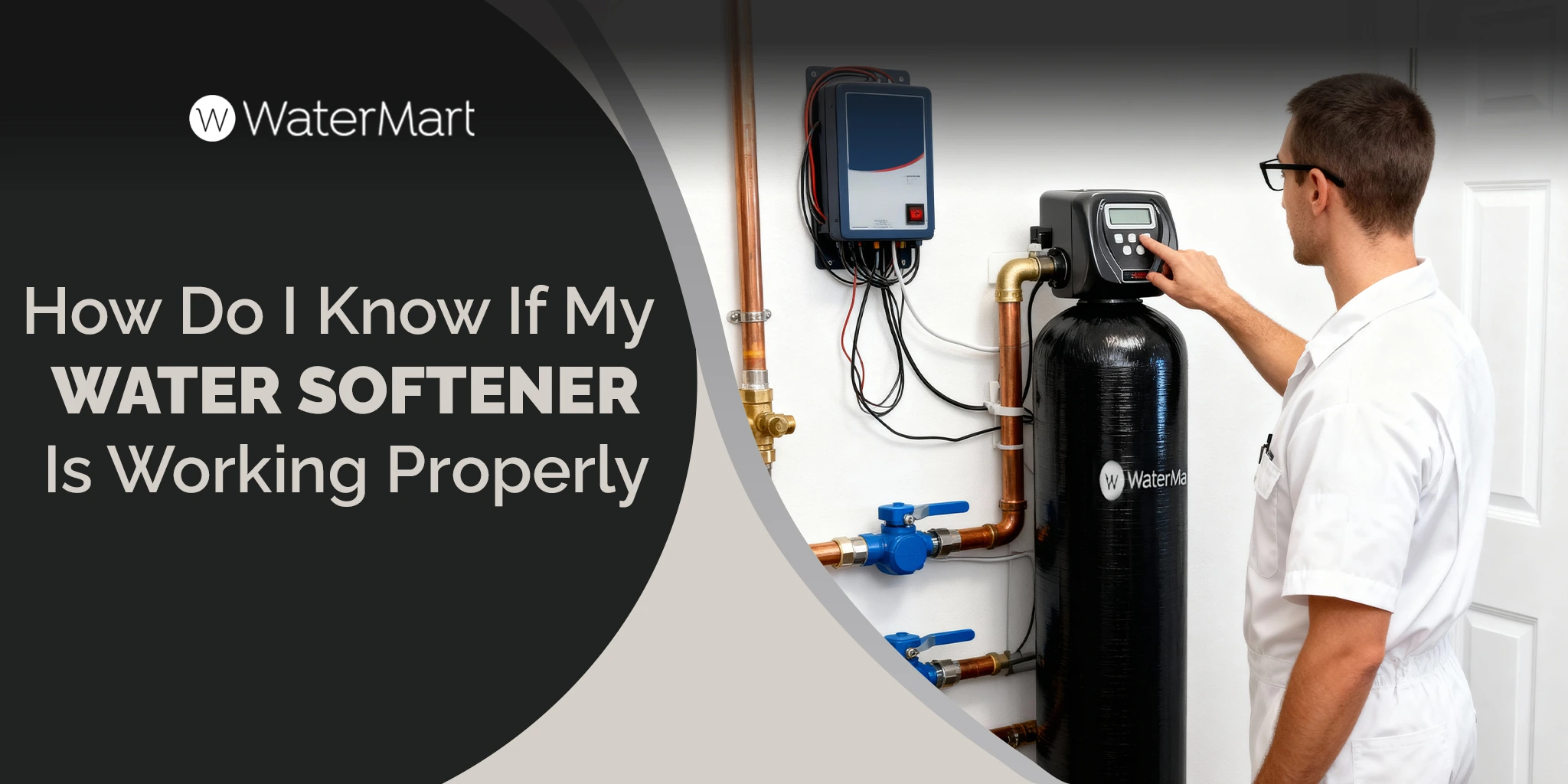 How do I know if my water softener is working properly?
The Penny Trick (Seriously)
Take a shiny new penny and rub it across your skin under the water. If the penny leaves a metallic taste or smell, you’ve got hard water.
Wait, that’s not a perfect test. Just ignore that one. But do this: fill a spray bottle with tap water and spray it on a clean mirror. Let it dry.
If you see a hazy white film, your softener is losing the fight. A crystal-clear mirror? Your softener is pulling its weight like a champ.
When to Call for Backup
You can check your softener’s control panel. Most newer models have a “test” button or a blinking light that says “oops.”
If the time is set incorrectly (like it thinks it’s 3 AM when it’s noon), the system won’t regenerate. That’s a common, silly little mistake.
You can also buy a water hardness test kit at any hardware store for five bucks. It’s a tiny vial with a drop count. Trust me, it’s easier than guessing.
The Final, Foolproof Check
Boil a pot of tap water. Let it cool completely. Look at the bottom of the pot. See white flakes? That’s scalding proof your water is still hard.
If the pot is clean, you’re golden. If it looks like someone dumped flour in it, your softener is broken. Or you left the bag of salt in the driveway.
Here’s the truth: most softeners are actually working fine. We just forget about them because they’re boring. But a little detective work—a soap test, a mirror check, or just feeling your own hair—will tell you everything.
If in doubt, call a plumber. They have meters. They have magic. And they won’t judge you for having a cheese-brick of salt in your tank. Probably.
Now go drink some gloriously soft water. You earned it, you magnificent water-softener-owner you.
