Do Refrigerator Water Filters Remove Nitrates

Okay, let’s be real for a second. You’ve probably stared at your fridge’s water filter, wondering if it’s secretly a superhero cape for your tap water. Specifically, can it ki...

Okay, let’s be real for a second. You’ve probably stared at your fridge’s water filter, wondering if it’s secretly a superhero cape for your tap water. Specifically, can it kick out those sneaky little villains called nitrates? Grab a glass of water (filtered or not, I won’t judge), and let’s dive into this watery mystery together.
What Even Are Nitrates? (And Why Should You Care?)
Think of nitrates as the uninvited guests at a pool party. They’re natural compounds made of nitrogen and oxygen, but they crash the water supply through fertilizers, manure, or leaky septic tanks. They’re not all bad—plants love them—but in high doses in drinking water, they can mess with your body’s oxygen delivery. That’s scary, but don’t panic! It’s mostly a concern for babies under six months and pregnant folks.
For the rest of us, a little nitrate is like a bad joke: annoying but usually harmless. Still, you want them out for peace of mind, right? Good news: your fridge filter might be the bouncer you need. Bad news: it might be the bouncer who’s asleep at the door.
Must Read
The Big Question: Can a Fridge Filter Remove Nitrates?
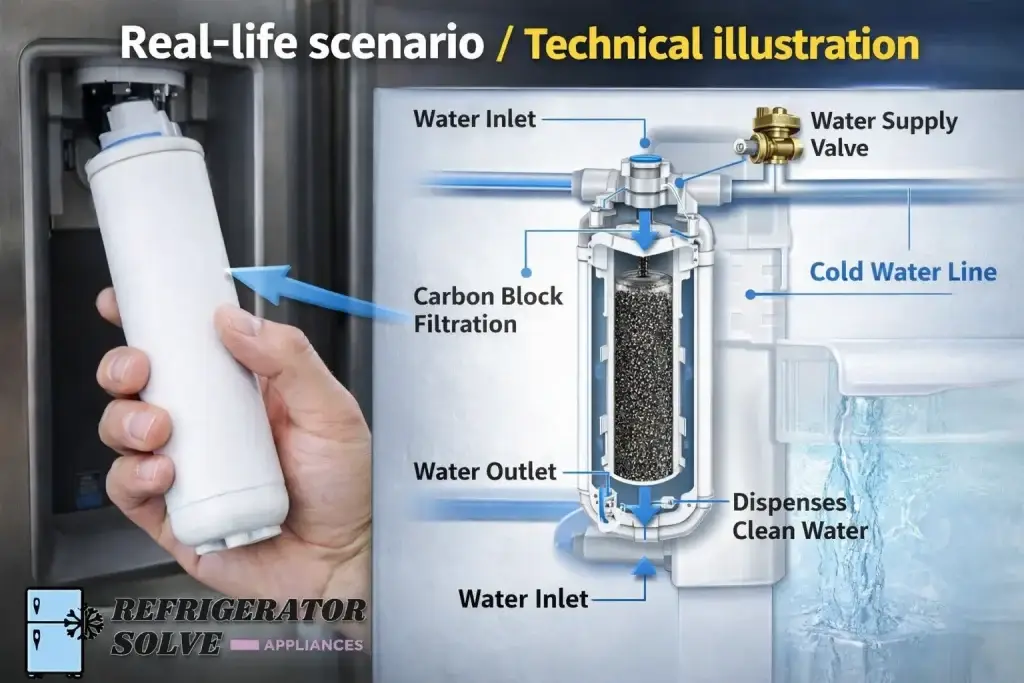
Drumroll, please. The short answer is: It depends on the filter. Most standard refrigerator filters (the ones built into your fridge door or a pitcher) use activated carbon. This is amazing at removing chlorine, bad tastes, and weird smells. It’s like a bartender who’s great at mixing drinks but terrible at spotting fake IDs.
Activated carbon is not designed to remove nitrates. Think of nitrates as tiny, water-loving ninjas. They slip right through the carbon pores because they’re small and don’t stick to the charcoal. So, if your fridge filter is the basic carbon-only type, nitrates are basically having a pool day in your glass.
The Exception: When Your Fridge Filter Does Remove Nitrates
Hold your horses—there’s a twist. Some premium, high-end refrigerator filters or aftermarket cartridges use a special resin called ion exchange. This is the superhero upgrade. An ion exchange filter swaps harmful nitrates for harmless chloride ions (like a magic trick where it trades your enemy for a friendly neighbor).
But here’s the catch: you have to check the label. Look for words like “nitrate reduction,” “NSF/ANSI Standard 53,” or “ion exchange.” Not all fancy filters have this. Many just brag about “better taste” because they’re basically fancy carbon-only models. So, unless your filter’s box specifically says “Removes Nitrates,” assume it’s a no-go.
Also, even if your fridge filter can remove nitrates, it’s like a tiny sponge fighting a flood. If your water has very high nitrate levels (over 10 mg/L, the EPA safety limit), the filter might give up quickly. You’d need to change it more often, which is a drag for your wallet and your patience.
But Wait—What About Pitcher Filters? (Brita, Pur, and Friends)
Ah, the good old Brita. I love mine, but let’s be honest: it’s a stubbornly single-tasking diva. Standard pitcher filters, like those from Brita or generic brands, rely mostly on activated carbon. They’re great for improving taste and reducing lead or chlorine. Nitrates? They laugh at them. They laugh while sipping filtered water.
Pur does have special filters (like the Ultimate line) that use ion exchange to remove nitrates, but check the model. Most basic pitchers don’t. So, if you’re using a regular Brita, you’re not removing nitrates. You’re just making your water taste like a spring morning—which is nice, but not the same as chemical warfare.
 Are Fridge Water Filters Necessary? The Truth Most People Miss
So, What Does Work Against Nitrates?
If your fridge filter isn’t cutting it, don’t worry—you have options. The gold standard is reverse osmosis (RO). This is like a water superhero with a very strict door policy: it blocks almost everything, including nitrates, heavy metals, and even some bacteria. The downside? It’s slow, wastes some water, and takes up space under your sink.
Another option is distillation. Boil water, catch the steam, and voilà—pure H2O with no nitrates. But it tastes flat (like a party without soda) and uses a ton of energy. Or you can get a whole-house nitrate filter, but that’s expensive and overkill unless your entire home’s water is a nitrate soup.
For most people, a simple tap check and a call to your local water utility will tell you if nitrates are even a problem. Spoiler: they’re usually not at dangerous levels in city water. If they are, then it’s time to invest in a proper filter.
The Verdict (With a Smile)
Here’s the bottom line, my filtered friend: Your standard fridge water filter probably won’t remove nitrates. But don’t kick your fridge to the curb! It’s still doing a great job improving taste and removing gross stuff like chlorine. Think of it as your water’s personal stylist, not a security guard.
If you’re worried about nitrates, just read the filter’s box (yes, the tiny print on the side). Or get a reverse osmosis system. But honestly? Most of us are fine. Unless you live next to a farm, have a private well, or drink an entire water bottle jug per day, nitrates are usually not a big deal. Your kidneys actually handle them pretty well, like a bouncer who’s already inside your body.
So drink up, smile, and remember: water filters are amazing, but they’re not magical. You are the hero of your own hydration story. And whether it’s tap, filtered, or from a fancy bottle, staying hydrated is what truly matters. Cheers to you, your funny little fridge filter, and the wonderful, complicated journey of every sip.
P.S. If your water tastes funny after reading this, it’s probably placebo. Or nitrates. You decide.
