Types Of Whole House Water Filtration Systems

So, picture this. It’s a Tuesday morning, and I’m pouring myself a glass of water from the tap. I take a sip, and for a second, I swear my tongue just signed a petition for be...

So, picture this. It’s a Tuesday morning, and I’m pouring myself a glass of water from the tap. I take a sip, and for a second, I swear my tongue just signed a petition for better working conditions. That faint taste of chlorine, that weird metallic twang—you know the one. I stared at my glass and thought, “My whole house is drinking this conspirator’s brew?”
That moment of clarity (and bad flavor) led me down a rabbit hole. I discovered that whole house water filtration systems aren’t just for survivalists or people with fancy countertops. They’re for anyone who wants every shower—and every sip—to stop feeling like a chemistry experiment gone wrong. And yes, your skin will probably thank you, too.
Let’s be real: you can’t just slap a Brita pitcher on your entire plumbing. Whole house systems treat water at the point of entry, right where it comes in from the main line. That means every tap, every showerhead, and even your washing machine gets the VIP treatment. No more “good water” in the kitchen and “questionable water” in the bathroom.
Must Read
The Heavy Lifter: Sediment Filters
First up, we’ve got the sediment filter. This guy is the bouncer of your water system—he kicks out the big, dumb particles like sand, rust, and dirt. If your water comes from a well or an ancient municipal pipe, this is your first line of defense.
Think of it as a sieve with attitude. It won’t remove chemicals or bacteria, but it does stop your pipes from getting clogged and your showerhead from spitting out gritty surprises. Side note: checking one of these filters after six months is a humbling experience—you’ll see exactly what you were drinking.
The Mighty Warrior: Carbon Filters
Next, we enter carbon filter territory. This is the workhorse for taste and odor. Activated carbon grabs onto chlorine, volatile organic compounds (VOCs), and those weird off-flavors that make your coffee taste like a swimming pool.
Most budget-friendly whole house systems use granular activated carbon (GAC). They’re cheap and effective, but they can get worn out fast if your water is heavily chlorinated. If you want beefier performance, go for a carbon block filter—it’s denser and lasts longer, though it slows water flow a smidge.
Here’s the irony: carbon filters remove the stuff that makes tap water smell like a public pool, but they don’t remove fluoride or heavy metals. So if you’re worried about lead, keep reading. This isn’t a one-stop shop.
The Chemistry Set: Water Softeners
Now we get into the science lab. A water softener uses ion exchange to yank out calcium and magnesium—the minerals that make your water “hard.” Hard water is the reason your soap doesn’t lather, your dishes have spots, and your hair feels like straw.
It works by swapping those rock-hard minerals for sodium or potassium ions. Yes, it adds a tiny amount of salt to your water—barely noticeable unless you’re on a strict low-sodium diet. And yes, you will probably start calling your friends to brag about your “silky shower water.” I’m not saying I did that. Okay, I did.
But be warned: softeners don’t filter out contaminants. They only soften. So if you have sketchy city water with lead or pesticides, you’ll need a separate filter downstream. It’s like buying a fancy car with no airbags—it’s comfy, but you still want protection.
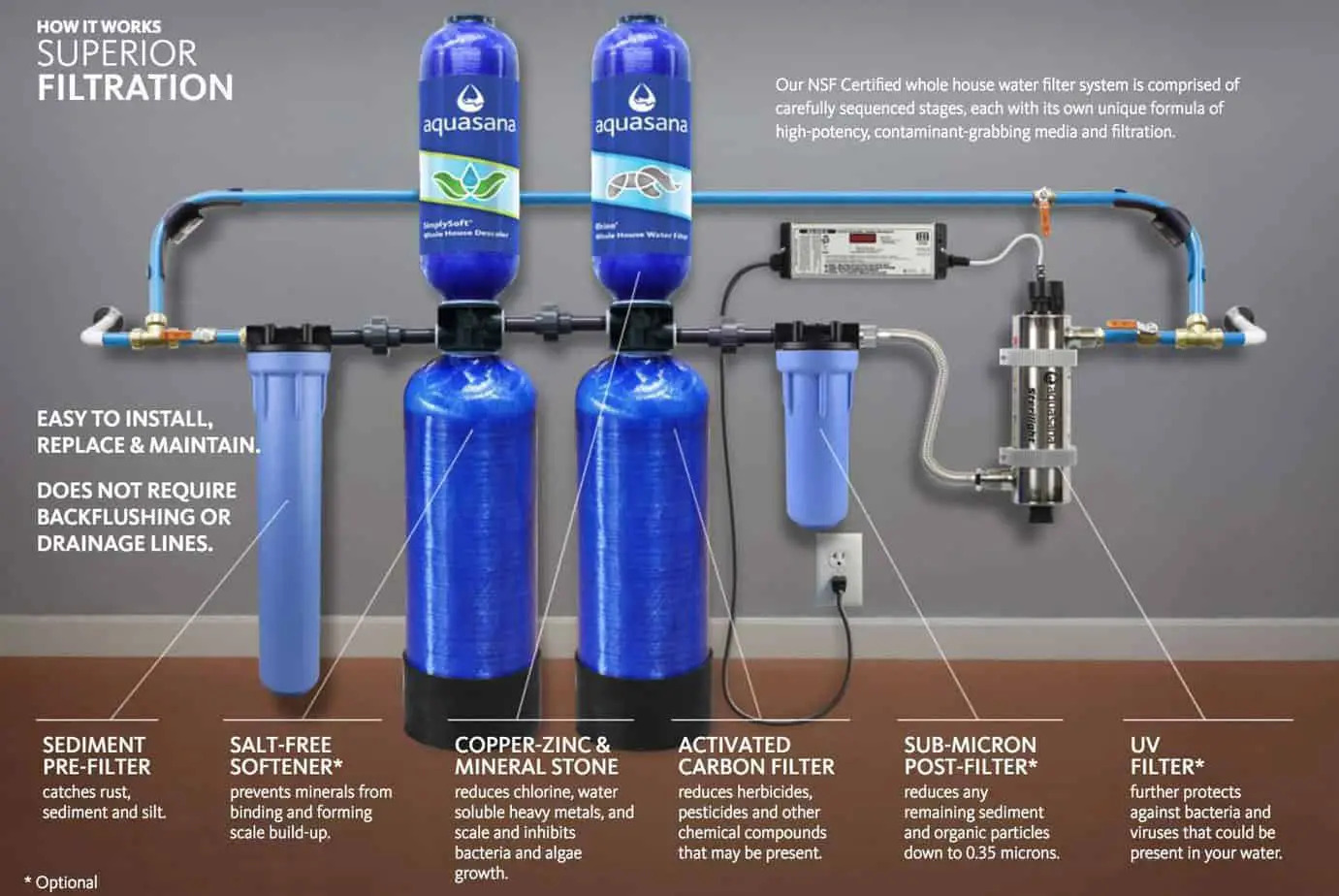 WHOLE HOUSE WATER FILTERS - Express Drainage Solutions
The Overachiever: Reverse Osmosis (RO) Systems
This is the endgame for purification nerds. Reverse osmosis forces water through a semipermeable membrane that blocks almost everything: lead, fluoride, arsenic, bacteria, viruses, and even dissolved salts. The output is essentially distilled water, but without the “plastic jug guilt.”
Whole house RO systems exist, but they’re expensive and waste a lot of water (about 3–4 gallons for every gallon filtered). Most people use a smaller under-sink RO unit for drinking water instead. Pro tip: if you install a whole house RO, your plants might hate you because the water is too “empty.” Yes, that’s a real problem.
Also, RO strips out good minerals like calcium and magnesium. Some people add a remineralization cartridge afterward to give the water back its “personality.” Fancy, right? It’s like editing a book and then rewriting the ending.
The Swiss Army Knife: Multi-Stage Systems
Can’t choose just one? Welcome to multi-stage filtration. These combine a sediment filter, a carbon filter, and sometimes a UV light or a catalytic media in one big tank. They’re the Swiss Army knife of water treatment—versatile but sometimes pricey.
Look for systems that use backwashing technology, which cleans itself automatically. You don’t want to swap cartridges every few weeks like a mad scientist. The downside? Multi-stage units take up space—think “miniature water treatment plant” in your basement.
On the bright side, they handle almost everything: chlorine, sediment, iron, manganese, and even some bacteria if you add UV. It’s the “all-you-can-eat” buffet of clean water. Just be ready to pay for the buffet ticket—these systems run $800 to $3,000 installed.
The Last Word: What’s Your Water Telling You?
Before you buy anything, test your water. Seriously. Pick up a home test kit or send a sample to a lab. Don’t guess what’s in there—you might be fighting a ghost while ignoring a monster. For example, if your water smells like rotten eggs, that’s sulfur, and a carbon filter won’t fix it. You’ll need a special catalytic media system.
Remember: no single system does it all. A sediment filter stops the mud, a carbon filter kills the taste, a softener handles the hardness, and an RO system scrubs the scary stuff. You’re building a team of plumbers for your pipes.
So, next time you take a sip of tap water and grimace, smile instead. You now know exactly what to do. And hey, your future showers will feel like a spa visit—no tiny plastic bottles required. Good luck, and may your water be boring (in the best way possible).
