How Long Do Home Water Filtration Systems Last

The other day, my friend Sarah texted me a photo of her kitchen faucet. The water coming out was the color of weak iced tea. “Is my filter trying to poison me?” she asked. I l...
The other day, my friend Sarah texted me a photo of her kitchen faucet. The water coming out was the color of weak iced tea. “Is my filter trying to poison me?” she asked. I laughed, but then I felt a familiar dread—because I knew exactly what was happening: her water filter was way, way past its prime.
That murky water was a cry for help from an overworked system. It’s a moment every homeowner knows, that sudden realization that your water gizmo isn’t doing its job anymore. And it begs the question nobody seems to want to answer: how long do these things actually last?
The Short Answer (Spoiler: It’s Not That Simple)
Here’s the honest truth: a home water filtration system doesn’t have a single expiration date like a carton of milk. Instead, its lifespan is split into two very different parts: the system itself and the replacement filters inside it.
Must Read
The hardware—the fancy tanks, faucets, and pipes—can last anywhere from 10 to 15 years if you treat it decently. But the cartridges? Those little workhorses need swapping every few months or your water will start looking like Sarah’s iced tea special. Funny how that works, right?
Under-Sink and Countertop Filters: The Quick Faders
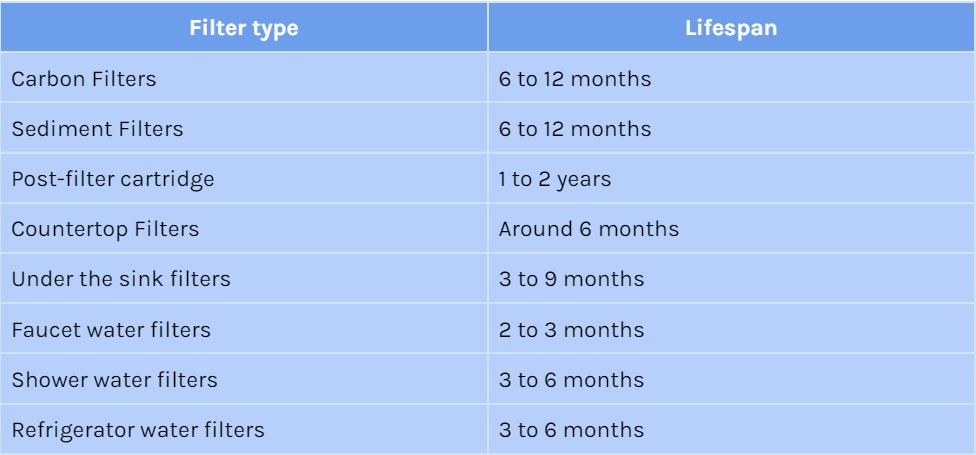
If you’ve got a carbon block or sediment filter under your sink, you’re looking at a lifespan of about 6 to 12 months. That’s the standard advice from the manual you probably threw away.
But here’s the kicker: if your water is super hard or your household drinks like a football team after practice, you might need to change it every 4 to 6 months. And please, don’t trust the “taste test”—by the time it tastes off, your filter is already a breeding ground for bacteria. Gross, but true.
Whole-House Systems: The Big, Lazy Giants
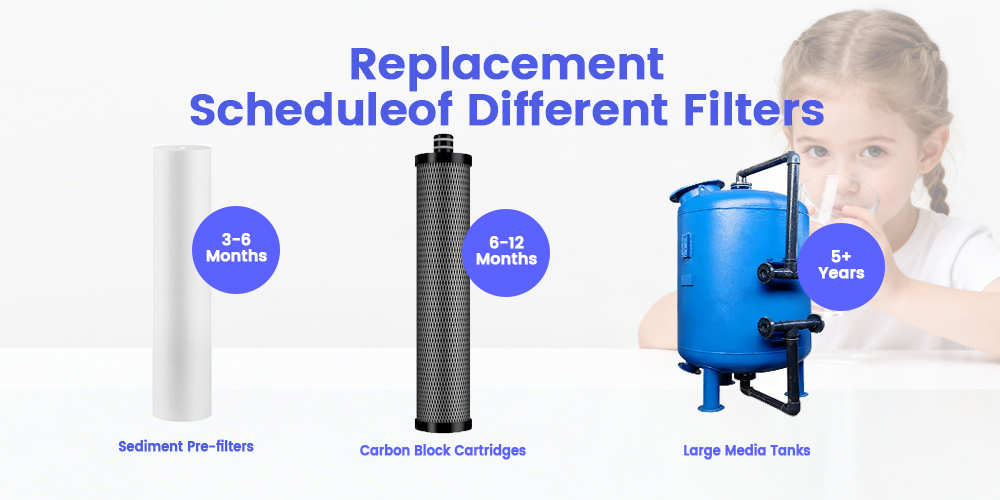
A whole-house filter is like that one friend who seems chill but needs attention every few years. The main unit can last 10 to 15 years, but the large sediment pre-filter needs replacing every 3 to 6 months. Seriously, mark it on your calendar.
The carbon tank inside? That’s a 5 to 7 year job. If you have an iron or sulfur problem, your system might start grumbling earlier. You’ll notice it when your shower starts smelling like a swamp—then you’ll remember my advice.
Reverse Osmosis Systems: The Drama Queens
RO systems are the most effective, but also the most high-maintenance. They have multiple stages: a sediment filter, a carbon block, the fancy membrane, and a post-filter. Each one has its own little life clock.
The sediment and carbon pre-filters need swapping every 6 to 12 months. The RO membrane is the star—it lasts 2 to 3 years, but only if you change those pre-filters. The post-filter? Every 12 months. Miss one, and the whole system throws a tantrum (read: slow flow, bad taste).
 How Long Do Home Water Filtration Systems Last? | AMwater Guide
Salt-Based Water Softeners: The Old Soldiers
These guys are built like tanks. The resin tank can last 15 to 20 years, but the control valve might give out after 10 years. And you’ll constantly be buying salt—please don’t forget the salt, or your water will get rock-hard again.
The resin beads themselves can get fouled by chlorine or iron and need cleaning or replacement every 5 to 7 years. If your water feels slimy or your skin gets dry? That’s a resin problem. Sorry in advance for your skin.
The Secret Sauce: What Makes Them Die Young?
Your system’s lifespan isn’t written in stone—it’s written in your water quality. If you have high sediment, chlorine, or hardness, everything gets clogged faster. City water is actually worse for filters than well water (yes, really) because of added chlorine.
Also, temperature matters. Hot water kills filters faster (most filter systems are designed for cold water only). And please, don’t install it near a heater duct—your filter will age like a vampire in sunlight.
Signs Your System Is Begging for a Replacement
Your water tastes like metal. Your pressure drops to a pathetic trickle. Or you see that disgusting brown sludge Sarah discovered. If you notice any of these, replace the filter immediately. Don’t wait for the weekend.
The entire system might need retirement if water leaks from the housing when you change the cartridge (cracked plastic!) or if the shut-off valve stops working. At that point, just admit defeat and buy a new one. Your water—and your sanity—will thank you.
The Bottom Line (I Promise This Is Almost Over)
Here’s the cheat sheet: change your filter cartridges every 6-12 months, and expect the full system to last 10-15 years. Write the date on the filter with a marker—yes, actually do it. Your future self will high-five you.
And if you’re like Sarah and your water looks like tea? Don’t panic. Just run the faucet for a minute, change the filter immediately, and swear aloud that you’ll never procrastinate again. We all know that’s a lie—but at least now you know what your filter is whispering when you ignore it.
