How Long Can Store Water In Plastic Containers

Let’s talk about something we all do: stash water in plastic containers. You know, that jug you filled for an emergency, or the soda bottle you rinsed out for a camping trip....
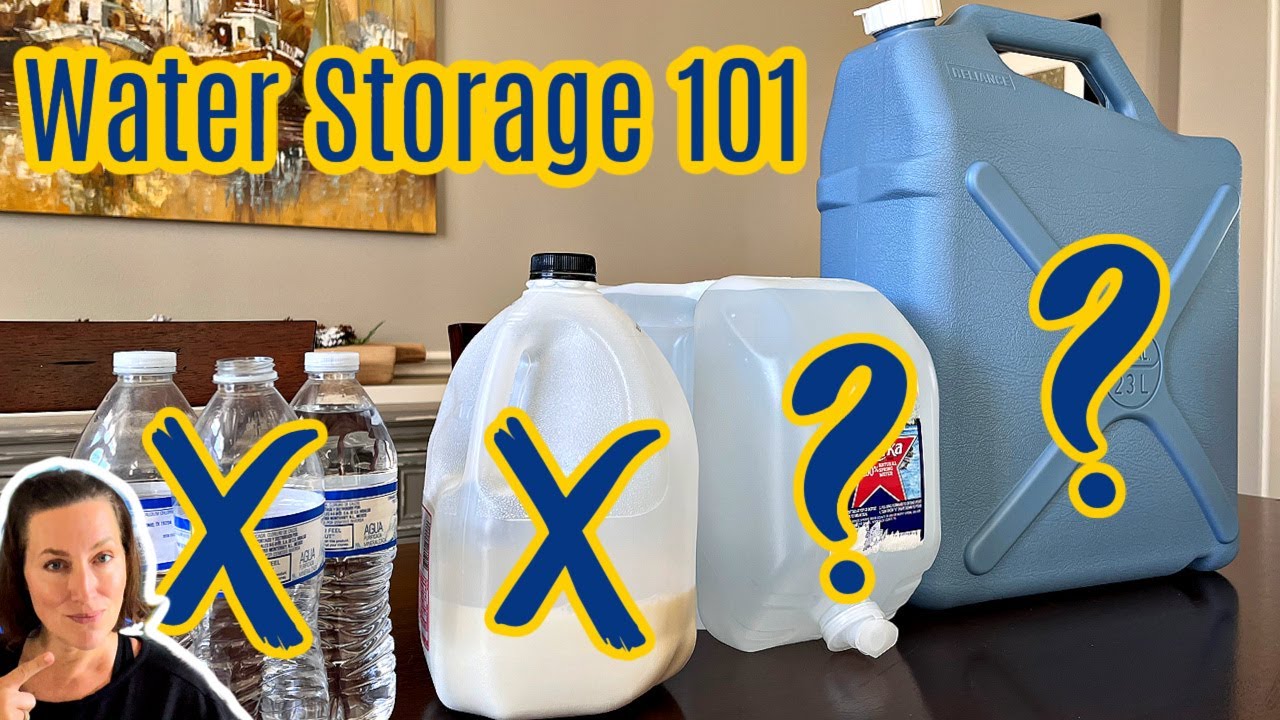
Let’s talk about something we all do: stash water in plastic containers. You know, that jug you filled for an emergency, or the soda bottle you rinsed out for a camping trip. It seems simple enough, right? But then comes the nagging question: how long can this water actually last?
The Short Answer (Spoiler: It’s Longer Than You Think)
If you’re using a clean, food-grade plastic container, water can stay good for six months to a year. But hold on—don’t go chugging that dusty bottle from 2019 just yet. The trick is all in how you store it, not just when you filled it.
Think of your water like a grumpy cat: it needs a dark, cool, and quiet place. Sunlight is its nemesis, heat is its archrival, and weird smells are its mortal enemy. If you treat it right, that water will stay fresh longer than your New Year’s resolutions.
Must Read
Why Plastic? And Which Plastic?
Plastic is the MVP of water storage because it’s cheap, light, and won’t shatter like glass on a tile floor (ask me how I know). But not all plastic is created equal. Look for the recycling symbol with a #1 (PETE) or #2 (HDPE) on the bottom—those are the good guys. Avoid #3 (PVC) or anything that smells like a science experiment.
Here’s a fun fact: those single-use water bottles you buy at the store? They’re made for short-term use, not a decade-long apocalypse. The plastic can start to leach chemicals over time, especially if you leave them in a hot car. So please, don’t let your emergency water become a chemistry set.
The Big Enemies: Light, Heat, and Oxygen
Think of plastic as a semi-permeable superhero. It keeps water in, but it’s not a total fortress. Over months, tiny amounts of oxygen and flavors from the air can sneak in, making your water taste like yesterday’s Tupperware. To fight this, store your containers in a dark closet or basement, away from direct sunlight.
Heat is even sneakier. A plastic bottle sitting in a garage that hits 100°F (38°C) will degrade faster than a snowman in July. Always keep your water below 70°F (21°C) if you want it to last. And for the love of all things crisp, don’t store it near paint thinner, cleaning supplies, or your gym socks—plastic absorbs odors like a sponge.
What About That “Expiration Date” on Bottled Water?
Have you noticed plastic water bottles often have a date stamped on them? That’s not the water expiring—it’s the bottle starting to break down. The water itself doesn’t go bad like milk; it doesn’t curdle or grow hairy mold monsters (unless you opened it and drank from it, in which case, gross). After a year, the water might taste flat or slightly “plastic-y,” but it’s usually still safe to drink.
Still, I wouldn’t recommend sipping on a bottle that’s been sitting in your trunk since the Obama administration. A good rule of thumb: rotate your stash every six months. Mark your calendar with a silly reminder like “SIP CHECK 2025” to swap out old water for fresh.
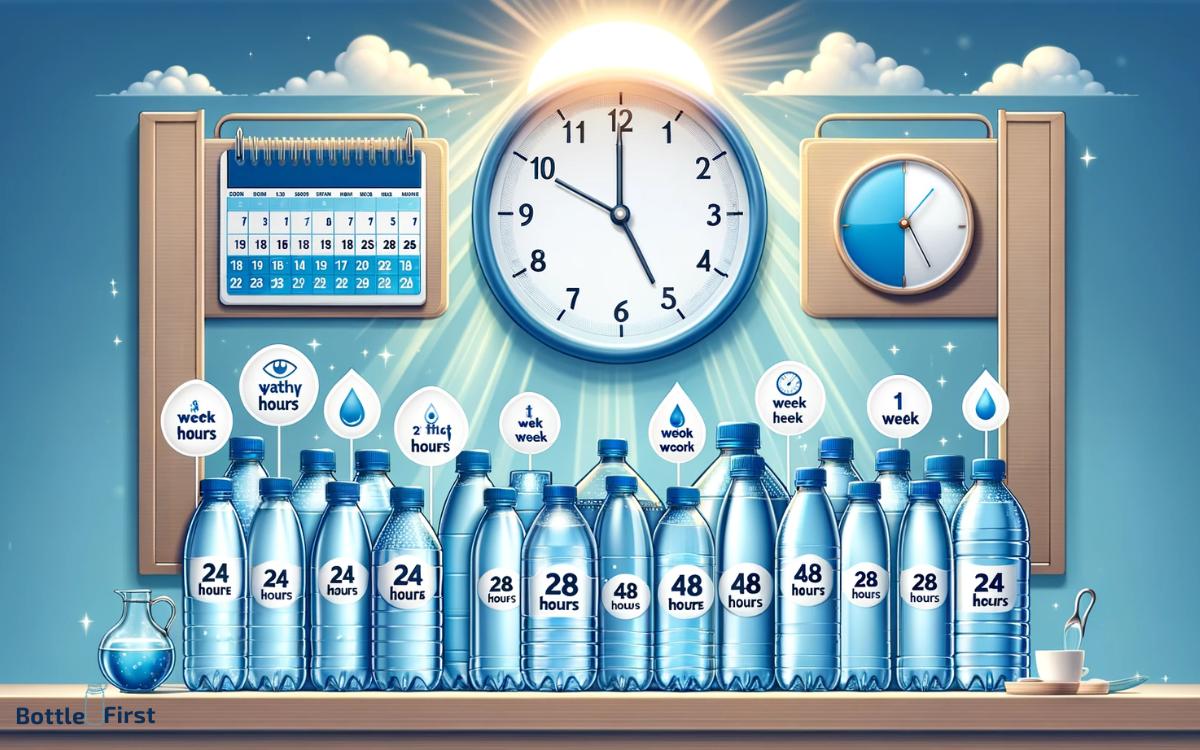 How Long To Store Water In Plastic Bottles? 5 Easy Steps!
How to Store Water Like a Pro (Without Losing Your Sanity)
Ready to go full prepper? Start with food-grade containers—you can buy large 5-gallon water jugs or use clean 2-liter soda bottles. Wash them with soap and hot water, then rinse like your life depends on it (because, well, hydration). Fill each container to the very top so there’s no air gap, because less air means less chance for bacteria to move in.
Here’s a secret weapon: add one to two drops of unscented bleach (like Clorox) per gallon of water. That tiny amount acts as a stabilizer and helps kill any microscopic hitchhikers. But don’t use bleach with added scents or “splashless” labels—you want the pure, boring stuff.
Label each container with the date you filled it, and store it in a cool, dark place—under the bed, in a crawlspace, or behind your collection of board games you never play. If you’re feeling fancy, wrap the containers in a black trash bag to block light.
When in Doubt, Check for Signs
If you pull out a container and see cloudiness, floating stuff, or a weird smell, don’t test your luck. Dump it. Water that smells like rotten eggs? That’s sulfur bacteria—not deadly, but your taste buds will file a complaint. A slimy texture? Nope, just nope.
When you’re unsure, you can always boil the water for one minute to kill any bugs, or use a camping filter. But honestly, if you stored it right, it’ll probably taste better than the tap water in some cities (cough Flint, cough).
The Uplifting Conclusion: You’ve Got This!
So here’s the happy truth: storing water in plastic containers is easy, affordable, and totally doable. You don’t need a fancy filtration system or a degree in chemistry. Just grab clean containers, a dark spot, and a calendar reminder to swap them out. Your future self will thank you when the power goes out during a storm and you’re sipping perfectly fine water while your neighbors panic-buy overpriced bottles.
And hey, if you accidentally leave a bottle in the garage for two years? It’s not the end of the world. Probably still fine to drink—but maybe pour it into a plant first, just to be polite. Water is resilient, like your sense of humor after reading this article. So fill up, stash away, and smile knowing you’re one step closer to being a hydration hero. Cheers to that!
