What Happens When A Water Softener Regenerates

You know that feeling when you pour a glass of water and it tastes like something from a mountain stream? That crisp, clean sensation is often the work of a hardworking machin...
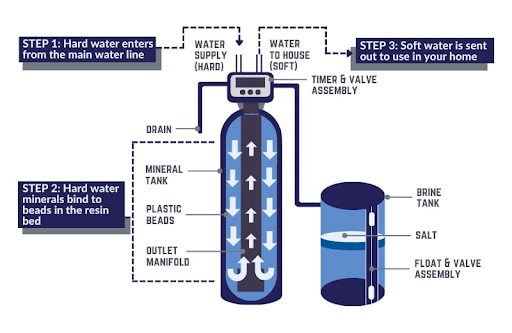
You know that feeling when you pour a glass of water and it tastes like something from a mountain stream? That crisp, clean sensation is often the work of a hardworking machine you never see. But every few days, usually in the dead of night, your water softener goes through a secret ritual called regeneration. It’s part spa day, part industrial cleaning, and it’s way more interesting than it sounds.
The Quiet Night Shift Nobody Talks About
Imagine your water softener as a tiny, diligent concierge. All day long, it catches calcium and magnesium ions—the minerals that leave soap scum on your shower door and make your hair feel like straw. After catching millions of these hard-water guests, its resin beads become full and exhausted. That’s when regeneration kicks in to flush them out.
The process usually starts around 2:00 AM, like a secret club meeting you never attend. The softener goes into a four-stage cycle: backwash, brine draw, slow rinse, and fast rinse. Think of it as a power wash followed by a salt-water exfoliation, then a thorough rinse to restore the bead’s mojo.
Must Read
Stage One: The Big Reverse
First, the system backwashes, sending water rushing backward through the tank. This cleans out any grit, sediment, or tiny debris that’s accumulated like dust bunnies under a couch. It’s the equivalent of shaking out a rug after a party.
Fun fact: A single backwash can shoot water at speeds up to ten gallons per minute. That’s enough to fill a bathtub in under two minutes. So if you hear a distant gurgle at midnight, that’s your softener’s version of a deep exhale.
Stage Two: The Brine Bath
Next comes the brine draw, and this is where the real magic happens. The softener pulls a concentrated saltwater solution from a separate brine tank, creating a powerful ionic exchange. The sodium ions literally kick the calcium and magnesium ions off the resin beads, like bouncers at a nightclub.
This is why you must keep your brine tank stocked with salt. Running out of salt is like running out of coffee for a barista—everything grinds to a halt. A good rule of thumb: check your salt level once a month, and if it looks low, add a bag before bed. Your softener will thank you with silky showers.
Stage Three: The Slow Rinse & Fast Rinse
After the brine does its job, the system slowly rinses away the now-contaminated saltwater. This is the “flushing the toxins” phase. Then it hits a fast rinse to ensure no salty residue remains on the fresh beads. Think of it as the final spin cycle on a washing machine—except it’s for your entire household water supply.
Cultural reference alert: This whole process is surprisingly similar to how ancient Romans cleaned their aqueducts using vinegar and friction. We’ve just swapped vinegar for salt and upgraded to automated valves. Some things never change—we love clean water.
What Should You Do During Regeneration?
Practically speaking, you shouldn’t run large amounts of water while your softener is regenerating. That means no laundry, no long showers, and definitely no filling a swimming pool. The softened water supply is temporarily off, so your taps will deliver hard water straight from the main line.
 What is Water Softener Regeneration Cycle? (5 Stages Explained)
If you hear a soft hum or a trickling sound and it’s after 10 PM, just let it do its thing. Trying to schedule your life around regeneration is like trying to avoid your cat’s 3 AM zoomies—pointless and exhausting. Modern softeners often have timers that set the cycle for low-demand hours, so you’re rarely disrupted.
Practical tip: If you notice your water feels hard again (soap doesn’t lather, spots on dishes), check if the regeneration happened recently. Sometimes a power outage resets the clock, and your softener might be sleeping on the job.
Fun Little Facts to Impress Your Friends
Here’s a mind-bender: a single regeneration cycle can flush out up to 50 gallons of water. Don’t panic—that’s still less than your weekly laundry load. And the salt used? About two to four pounds per cycle, depending on your water’s hardness. That’s roughly the weight of a bag of oranges.
Also, modern softeners are getting smarter. Some models now use demand-initiated regeneration, meaning they only regenerate when the resin beads are actually full. This saves water and salt, making them the Prius of plumbing. High-five, innovation.
One last nugget: your water softener has a lifespan of about 10 to 15 years. That’s longer than most tattoos. So treat it well—maybe name it. I call mine “Salty Steve.” He works the night shift so I don’t have to.
A Short Reflection for Your Daily Routine
In a world obsessed with instant gratification, regeneration is a beautiful reminder of renewal. We clean our clothes, our bodies, our dishes—but the water that touches all of it needs its own moment to recharge. That silent hum in your basement? It’s not just plumbing; it’s a tiny temple of restoration.
Next time you step into a hot shower and the water feels impossibly smooth, take a second to appreciate the invisible cycle that made it possible. Life’s best systems work without applause. And yours, right now, is working for you—even while you sleep.
