Difference Between Purified And Filtered Water

Okay, friend, let’s talk about water. Not just any water, but the stuff that’s supposedly “purified” or “filtered.” You’ve seen those fancy bottles at the store, right? They s...
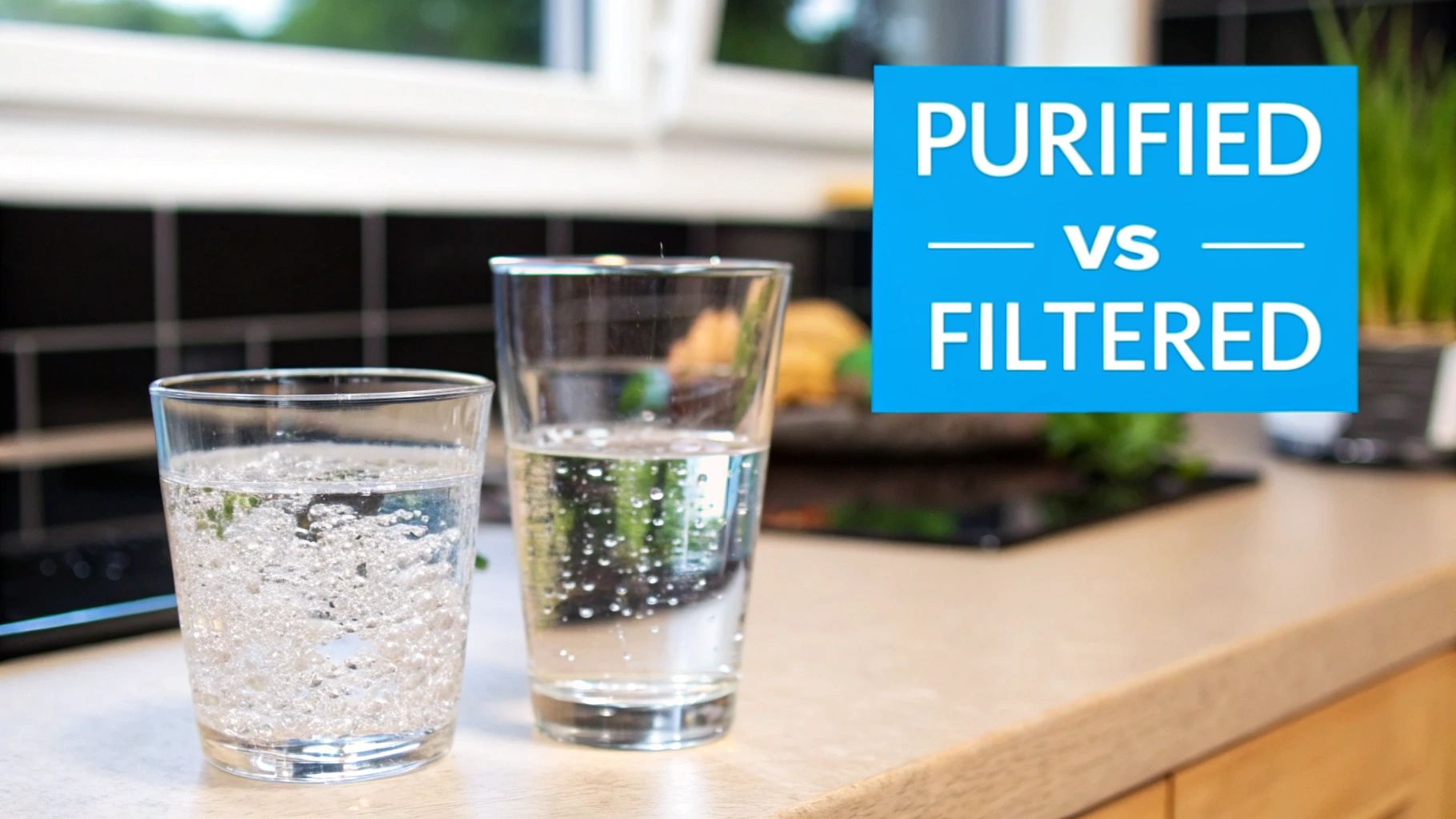
Okay, friend, let’s talk about water. Not just any water, but the stuff that’s supposedly “purified” or “filtered.” You’ve seen those fancy bottles at the store, right? They stare at you with their sleek labels, and you’re left scratching your head like, “Aren’t they… the same thing?”
Spoiler alert: Nope. They are not identical twins. Think of them more like cousins who hang out at the same parties but have totally different day jobs.
Water’s Basic Journey: From Tap to Glass
First, let’s set the scene. All water—whether from a glacier, a river, or your kitchen faucet—comes with a little baggage. We’re talking minerals, chemicals, and maybe some tiny critters you don’t want to meet in a dark alley. Ew.
Must Read
Your job is to kick that baggage out. Filtered and purified water are two ways to do that, but they use different bouncers at the door.
Think of filtering as using a strainer for your pasta. Purification is more like sending the water through a high-security spa retreat.
What Is Filtered Water, Anyway?
Filtered water is the chill, down-to-earth option. It runs through a physical barrier—like a carbon filter or a mesh screen—that catches big particles. Think of bits of dirt, chlorine that makes your water taste like a swimming pool, and maybe some rust from old pipes.
It’s like putting a sieve over your drinking cup to catch the ice cubes. Helpful, but not perfect. Filters are great at removing bad tastes and odors, making your tap water actually pleasant to drink.
But here’s the kicker: filters usually miss the tiny stuff. Viruses, heavy metals like lead, and microscopic bacteria? They can sometimes sneak right through that party gate.
Your typical Brita pitcher is a filter. It’s a solid upgrade from tap, but it’s not the final boss of water cleanliness.
Now, Purified Water: The Overachiever
Purified water is like the overachieving sibling who got straight A’s and also volunteers at the animal shelter. It’s water that has been treated to remove almost everything—including those tiny, invisible villains.
To qualify as “purified” in the US, the water must have fewer than 10 parts per million of total dissolved solids. That’s a fancy way of saying it’s been stripped down to nearly H₂O and nothing else. Clean vibes only.
Purification uses methods like reverse osmosis (pushing water through a super-tiny membrane), distillation (boiling it and catching the steam), or deionization (zapping ions away like a tiny lightning storm).
Imagine a filter as a net that catches fish. Purification is a force field that stops everything—even the plankton and the microscopic ninjas.
The Big Difference: It’s All About What Stays
Here’s the simplest way to remember it: Filtered water removes the big stuff you can taste or see. Purified water removes the big AND tiny stuff you can’t even imagine.
Filtered water keeps some of the healthy minerals, like calcium and magnesium. That can be a good thing for your taste buds and your bones. Purified water, in its purest form, is so naked that it can sometimes taste a little flat—like a joke without a punchline.
 What Is the Difference between Purified and Filtered Water? - Shift Tech BD
But purified water is the gold standard for things like baby formula, science labs, and people with sensitive immune systems. It’s the safest water money can buy. Filtered water is the “pretty good” everyday buddy.
Real-World Examples: Your Pitcher vs. Your Grocery Store
That water from your fridge dispenser? It’s usually filtered, not purified. It’s doing a happy dance to remove chlorine taste, but it’s not eliminating every bug.
Those big jugs of “drinking water” at the store? Most are purified via reverse osmosis. They’ve been through a rigorous process, then often have minerals added back for flavor. Fancy, huh?
Spring water is a whole different beast—it comes from a natural source and is typically filtered minimally. It’s like the hipster cousin who only drinks from a mountain stream. Do not confuse it with purified.
Which One Should You Choose?
Here’s a truth bomb: unless you have a specific health concern, filtered water is totally fine. It’s affordable, improves taste, and reduces common contaminants.
If you live in an area with old pipes (hello, potential lead) or you have a weak immune system, go for purified water for peace of mind. Think of it as an insurance policy for your insides.
And hey, if you just want to hydrate without a science lesson, drink whatever tastes good. Your body is a boss at handling minor contaminants anyway. Don’t overthink it.
A Gentle Reminder About Plastic
Oh, one more thing: if you buy those plastic bottles of purified water, please recycle them. Or better yet, get a reusable bottle and a filter pitcher. Your wallet and the planet will high-five you.
You don’t need to be a water snob. You just need to not drink from a puddle. We’ve evolved past that. Mostly.
The Uplifting Ending (You’ve Earned It)
So, the next time someone tries to impress you by saying, “I only drink purified artisanal water,” you can smile, nod, and think, “Cool, but my filtered tap water is perfectly fine and half the price.”
Remember: water is water. It’s the stuff of life, the thing that makes up about 60% of your wonderful, quirky body. Whether it’s purified, filtered, or poured from a fancy glass carafe, it’s doing the most important job: keeping you alive and hydrated so you can laugh, dance, and eat tacos.
And honestly? A little bit of mineral flavor—or even a silly ice cube—just makes life more interesting. So cheers to you, your glass of water, and the simple joy of not being thirsty. You are awesome. Stay hydrated, friend.
