Difference Between Sterile And Distilled Water

You’re standing in the grocery aisle, bottle in each hand, staring at two very similar labels: “sterile” and “distilled.” It’s a classic modern dilemma, right up there with oa...
You’re standing in the grocery aisle, bottle in each hand, staring at two very similar labels: “sterile” and “distilled.” It’s a classic modern dilemma, right up there with oat vs. almond milk. Let’s clear the air—and the water.
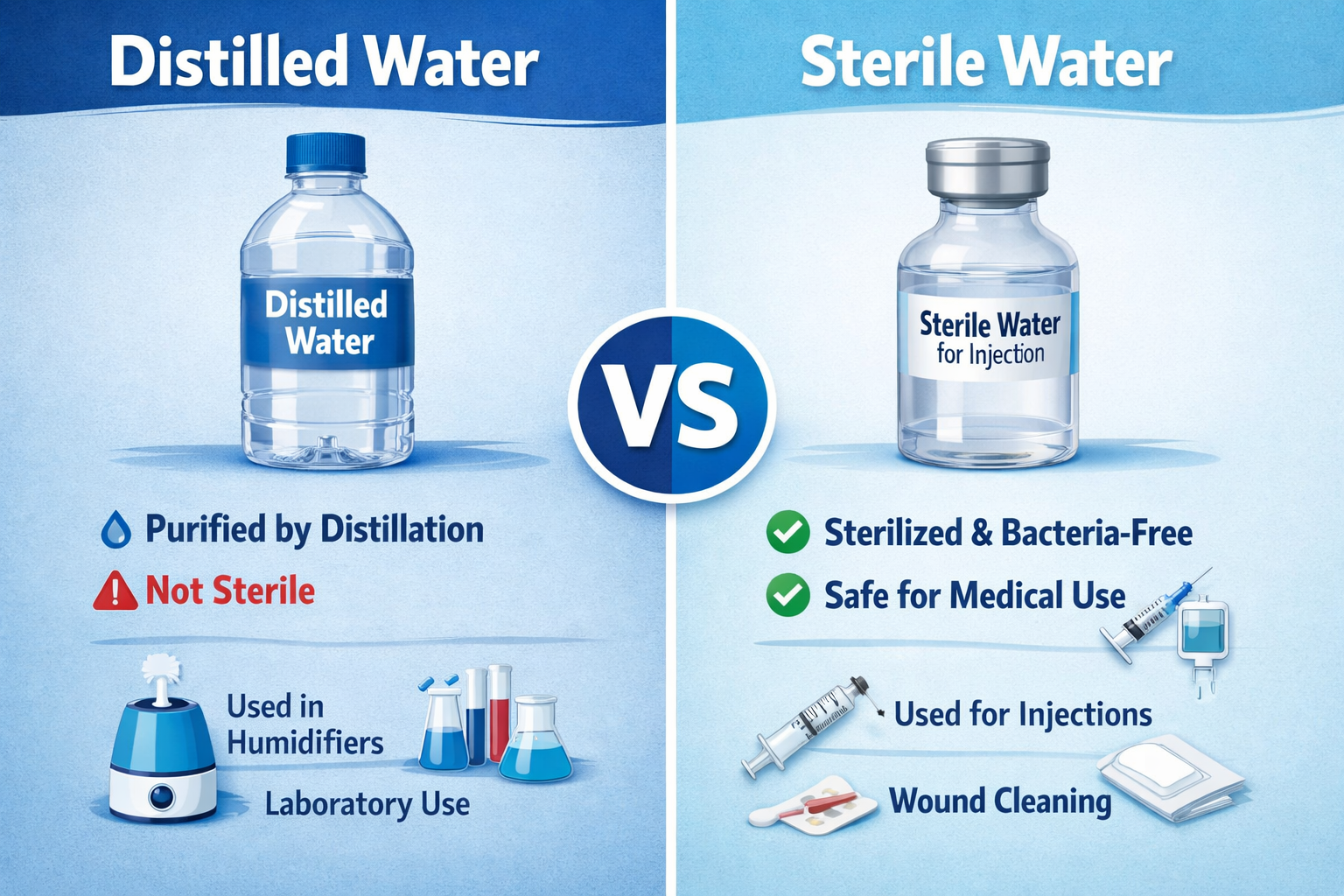
Both are purified, but they got there on very different journeys. Distilled water is the introvert who became a hermit, boiled into steam and then condensed back into liquid, leaving everything else behind. Sterile water, on the other hand, is the socialite who just got a total decontamination spray—it’s been heated to kill all life forms, but it keeps its mineral passengers.
So, What’s Actually In the Bottle?
Distilled water is the purest H₂O you can buy. The distillation process strips away minerals like calcium, magnesium, and iron, along with bacteria, viruses, and even heavy metals. It’s basically water that forgot its entire identity.
Must Read
Sterile water has been treated (usually by autoclaving or irradiation) to kill every last microbe, but it may still contain minerals. Think of it as a clean, safe blank canvas—but not a blank slate. It’s typically used in medical settings, like diluting medications or cleaning wounds.
Fun fact: sterile water isn’t always distilled. You can get sterile saline or sterile filtered water, which aren’t technically distilled. The label “sterile” is about biological safety, not chemical purity.
Practical Tips for the Curious Consumer
Tip one: If you’re using water for a CPAP machine, baby formula, or a humidifier, go with distilled. Why? Because minerals can leave scale and deposit junk in your devices. Distilled keeps things running smooth.
Tip two: For contact lens solution or wound cleaning, always choose sterile—and make sure it says “sterile” explicitly. Distilled water is not guaranteed germ-free if the bottle has been opened. Sterile water is sealed with a guarantee of zero microbes.
Tip three: Please don’t drink sterile water from a medical bottle. It’s for topical use and might taste like a hospital room. Distilled water is fine to drink, though it’s flat and lacks minerals—some people say it tastes “empty.”
The Cultural Deep Dive
Remember that scene in Breaking Bad where Walter White uses distilled water for his chemistry experiments? He’s a purist. Distilled water is the choice of chemists, car batteries, and lab nerds everywhere. It’s the standard for precision.
Sterile water, meanwhile, is the unsung hero of your doctor’s office. Every IV drip, every injection, every wound irrigation relies on it. It’s the quiet professional that doesn’t need to be pure—just safe.
Fun little fact: Astronauts on the International Space Station drink recycled water that’s both distilled and sterilized. They’re drinking the gold standard—and yes, it’s way cleaner than your tap water.
 Sterile Water Vs Distilled Water: Key Differences Explained
But Chemically, Are They the Same?
No. Distilled water has a conductivity near zero because it lacks dissolved ions. Sterile water can still conduct electricity if minerals are present. So if you’re building a DIY battery, go distilled. If you’re prepping a bandage, go sterile.
One common myth: “Sterile water is safer to drink.” False. Drinking sterile water is fine, but it’s not better than distilled. The main risk is that medical-grade sterile water bottles are not meant for consumption—they may contain residual additives or non-food-grade plastics.
Another myth: “Distilled water is dead and will leach minerals from your body.” Not exactly. While pure water can pull small amounts of minerals from your gut, your body is way smarter—it balances electrolytes. Drinking distilled water occasionally won’t hurt you.
A Quick Cheat Sheet for Your Daily Life
Use distilled water for: your iron, your car’s cooling system, making clear ice cubes (chef’s secret), and aquarium fills. Use sterile water for: first aid, nasal rinses, mixing baby formula (if your pediatrician recommends it), and cleaning contact lenses.
And here’s a real-life hack: If you run out of distilled water for your humidifier, tap water works fine—just clean it weekly with vinegar. The world won’t end. Sterile water is best reserved for medical needs, but if you’re stuck, boiled and cooled tap water is a decent stand-in for minor wound care.
Final Reflection: It’s About Intent, Not Purity
When you hold those two bottles, you’re really asking: What do I need this water for? Distilled water is about composition—stripping everything away. Sterile water is about contamination—killing everything alive. One is chemistry, the other is biology.
In a world that often tells us more is better, distilled water reminds us that subtraction can be a form of clarity. And sterile water reminds us that safety is its own kind of care. Maybe that’s the real lesson: the best choice depends on the intention behind the action.
So next time you’re in that grocery aisle, you’ll know. Distilled for purity, sterile for safety. Both are humbly doing their job—and isn’t that something we can all relate to?
