Commercial Ultraviolet Water Filtration System

Last summer, my friend Sarah filled a glass from her tap, held it up to the light, and whispered, “It looks fine, right?” Right. But we both knew that “looking fine” is not th...

Last summer, my friend Sarah filled a glass from her tap, held it up to the light, and whispered, “It looks fine, right?” Right. But we both knew that “looking fine” is not the same as being safe. She’d just spent a week in a rural cabin where the water tasted like a petri dish, and the paranoia lingered.
That’s when I introduced her to the commercial ultraviolet water filtration system—the silent bouncer of the water world. It doesn’t filter out minerals or make things taste fancy. It just murders bacteria, viruses, and protozoa with pure, unfiltered light.
The UV Trick: Light That Kills (and Doesn’t Bother Anyone)
Imagine a tiny, enclosed chamber inside your pipes. Water flows through it, and a UV lamp hits every drop with a specific wavelength—254 nanometers. This isn’t tanning-bed light; it’s the sweet spot that scrambles the DNA of microscopic nasties.
Must Read
Those little guys? They can’t reproduce anymore. They’re dead in the water. Literally. No chemicals, no weird aftertaste, and no need to call in a hazmat team. You just… ignore it, and it works.
(Side note: The lamp is always on. It’s that roommate who never sleeps, but actually pulls its weight. Respect the lamp.)
Why “Commercial” Matters (Your Home Fridge Won’t Cut It)
You’ve seen those tiny UV wands for campers? Cute. But a commercial system handles gallons per minute, not sips. It’s built for restaurants, breweries, schools, or a home that drinks water like a frat party.
The difference is flow rate and dwell time. Water needs to hang out under the UV light long enough for the carnage to happen. Small units rush it. Commercial ones have beefy chambers and high-output lamps. They don’t mess around.
Trust me: if you’ve ever had a whole-house well water system that tastes like “forest floor,” this is the upgrade you didn’t know you needed. And your guests will stop asking if the water is “from the hose.”
The Quadruple Threat (Or: Why UV Alone Is a Bit Cocky)
Let’s be real: UV is a badass on microbes, but it’s dumb about dirt. If your water has sediment, rust, or cloudy particles, those shadow-boys will shield the bad bugs from the light. The UV becomes a fancy nightlight. Useless.
So a pro setup pairs UV with a sediment filter upfront. Then a carbon filter after for taste. It’s the Avengers of water treatment: UV punches the germs, carbon picks up the slack, and sediment makes sure nothing gets in the way.
Side comment: Don’t be that person who buys a $2,000 UV system and feeds it murky pond water. The lamp will cry. Not literally, but the repair bill will make you cry.
Installation: Less Scary Than Assembling IKEA Furniture
Most commercial UV units come as a pre-assembled skid—all the parts bolted to a metal plate. You connect the inlet and outlet, plug it in, and you’re basically a water wizard. No soldering, no magic incantations.
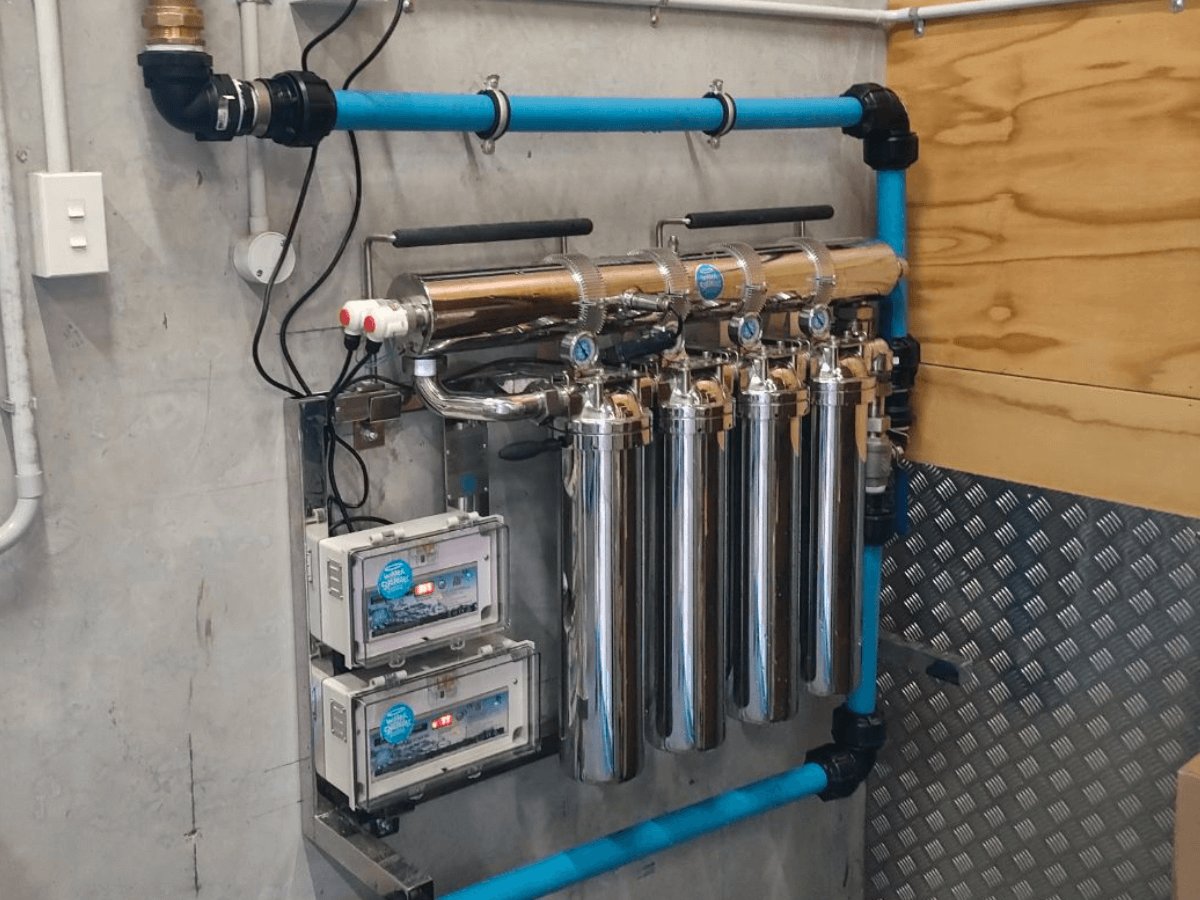 Water Filtration & Purifier Solutions | UV Water Systems Auckland, NZ
That said, you do need a plumber if your house was built in the 1950s and the pipes are held together with hopes and duct tape. But for newer homes? It’s a weekend project. You’ll feel like an engineering hero.
Word to the wise: Buy a spare UV lamp when you order the system. The lamp dies every 9–12 months, and you don’t want to be that person Googling “water sickness after UV burnout” at 2 AM.
Cost: Your Wallet Might Groan, But Your Gut Will Thank You
A solid commercial UV system runs from $700 to $2,500, depending on flow rate and brand. That sounds like real money, and it is. But compare it to buying bottled water for a family of four for a year? Easy math.
Plus, no plastic waste. No stacks of cases in your garage. No neighbor judging you at the store. You just turn on the tap and get water that’s as clean as lab-grade stuff—without the lab coat.
Also: UV systems use about the same electricity as a 60-watt lightbulb. So you’re not running a crypto mine down there. Chill.
The One Thing UV Can’t Do (And Why It’s Fine)
UV doesn’t remove chemicals—pesticides, chlorine, heavy metals, or that weird “pool” taste from city water. It only disinfects. So if your water smells like a swimming pool, you still need a carbon filter or reverse osmosis.
But let’s be honest: most people are scared of the invisible bugs. Giardia, Cryptosporidium, E. coli—those are the headline villains. UV is the action hero that takes them out without a single “boom.” And for well water owners? It’s basically a legal requirement for peace of mind.
Final Verdict: Should You Buy One?
If you have well water, travel a lot, or just hate the idea of drinking “municipal recycled mystery,” yes. Get one. It’s the simplest, most hands-off whole-home disinfection you can buy.
If you’re on city water that’s already chlorinated? You probably don’t need UV. Unless you enjoy paying extra for zero-taste. (And some people do—no judgment.)
So, end of the story: Sarah bought a commercial UV system after that cabin trip. Her water now tastes like… nothing. And nothing, in water, is everything. Drink up.
